- Inicio
- Ecosistema AECO
- _ATLAS AECO
- __Mapa Global Obras
- __Serie Const. Vanguardistas
- _Estudios de Arquitectura
- __en Madrid
- __en Barcelona
- _Estudios de Ingeniería
- __en Madrid
- _Estudios de Interiorismo
- __en Madrid
- __en Barcelona
- _Empresas Constructoras
- __en Madrid
- __en Barcelona
- _Empresas de Reformas
- __en Madrid
- _Empresas AECO en España
- __Fabricantes de Materiales
- __Modelado BIM
- __Consultoras BIM
- __Inmobiliarias y Real Estate
- __Const. Industrializada
- _Biblioteca Técnica AECO
- __Glosario AECO Global
- __Glosario de Construcción
- __Glosario de Edificación
- __Glosario BIM GTB-300
- __Edificación Circular
- _Entrevistas AECO
- __Jaime Sánchez-Álvarez
- _Visibilidad B2B y Partners AECO
- Arquitectura
- _RASCACIELOS
- __Burj Khalifa Dubai
- __Edificio Chrysler, NY
- _Estilos Arquitectónicos
- __Arquitectura Posmoderna
- __Deconstructivismo
- __Arquitectura High Tech
- Arte
- _Arte Universal
- _Arte Contemporáneo
- __Serge Marshennikov
- __Damian Lechoszest
- __John Kacere
- _Escultura
- __El Ángel del Norte
- __La Musa Dormida
- __Venus de Milo
- __Moisés de Miguel Ángel
- __Baldaquino de San Pedro
- __El rapto de Proserpina
- __La Verdad Velada
- __Perseo con cabeza de Medusa
- __Venus de Willendorf
- _Pintura
- __Capilla Sixtina
- __Cuadros Famosos
- __La Creación de Adán
- __Venus del Espejo Velázquez
- __Hipómenes y Atalanta
- __Venus Boticelli
- __Silla de van Gogh
- __Jugadores de Cartas Cézanne
- __Cabeza de Medusa Caravaggio
- __Impresionismo
- __Posimpresionismo
- _Historia
- __Edad Moderna
- Curiosidades
- _Arquitectura y Arte
- _Tumba de Miguel Ángel
- FRASES
- _Frases de la semana
- _Arquitectos
- __Frank Gehry
- _Escultores
- __Miguel Ángel Buonarroti
- __Bernini
- __Rodin
- _Pintores
- __Picasso
- __Vincent van Gogh
- __Cézanne
- __Claude Monet
- __Henri Matisse
- __René Magritte
- __Caravaggio
- __Miguel Ángel
- Formación AECO
- _Másteres en España
- __Másteres BIM en España
- __Másteres de Arquitectura
- __Másteres de Ingeniería
- __Másteres de Construcción
- __Másteres en Interiorismo
- __Másteres Inmobiliarios
- __Máster Facility Management
- __Másteres de Smart Building
- __Máster Energía y Edificación
- __Máster en Infraestructuras
- __Másteres en Urbanismo
- __M. Project Management
- __M. Construcción Sostenible
- __M. Instalaciones MEP
- _Cursos BIM
- __Cursos BIM Online
- __Cursos Revit Online
- __Cursos Revit MEP online
- _Partner de Formación AECO
- _Formación AECO Empresas
- __en España
- __Capacitación en México
- __en Colombia


Arquitectura, Escultura, Pintura, Ingeniería, Software-Programas de Diseño Arquitectónico: Metodología BIM, Revit, AutoCAD, 3ds max, Animación; Software de Adobe; Cursos online, Libros, Historia, Cultura, Timelapse y Dronelapse sobre Arquitectura y ciudades, Frases Célebres, Curiosidades, Rascacielos, Puentes, Edificios interesantes, Construcciones vanguardistas, Construcciones famosas, Diseño, Arte, Fotografía Arquitectónica / Architecture, Sculpture, Painting, Engineering, Software-Architectural Design Programs: BIM Methodology, Revit, AutoCAD, 3ds max, Animation; Adobe software; Online courses, Books, History, Culture, Timelapse and Dronelapse on Architecture and cities, Famous Phrases, Curiosities, Skyscrapers, Bridges, Interesting buildings, Avant-garde constructions, Famous constructions, Design, Art, Architectural Photography

Turning Torso: The Structural Synthesis of Anatomy in Motion

Series: Avant-Garde Constructions
Architectural and Engineering Masterpieces: #26 Turning Torso, Malmö
How Do You Translate Marble into Steel and Motion into Stability Under Baltic Wind Loads?
The HSB Turning Torso (1999–2005) is not merely a skyscraper; it is the physical manifestation of Santiago Calatrava’s "Living Architecture." Under the project management of Ingvar Nohlin and the development of HSB Malmö, a marble sculpture was successfully transformed into a 190-meter-high habitable structure. Its geometry is segmented into nine cubes of five floors each, executing a total rotation of 90 degrees from the base to the penthouse, establishing itself as the undisputed pioneer of helical skyscrapers on an urban scale.
There were no standard blueprints for this. Each of the nine five-story cubes features a unique geometry that rotates relative to the previous one. In conventional construction, you repeat the same procedures floor after floor, and the site crew gains efficiency as they ascend; here, every time we started a new cube, it was like beginning a completely different building from scratch. We had to invent the surveying methods and the formwork systems on the fly; there was no instruction manual for erecting something like this.
— Ingvar Nohlin (Project Director, HSB Malmö)

The Challenge of a Zero "Learning Curve" and the Loss of On-Site Construction Momentum
In traditional skyscraper construction, financial viability and logistical success heavily rely on cyclic repetition. By the time a conventional tower reaches its tenth floor, the site crew has mastered the geometry, concrete curing times, and facade assembly. Labor movements become automated, the learning curve is optimized, and floor cycle times drop drastically. The Turning Torso completely dismantled this industrial and constructive principle.
By executing a rotation of 1.6 degrees per floor organized into nine independent modules, the engineering consortium faced an unprecedented scenario:
The Geometric "Reset" per Cube: Upon starting each of the nine five-story cubes, the technical team experienced an absolute operational reset. The relative position of the steel exoskeleton anchorages fabricated by EMESA, the beam connections, and the orientation of the radial MEP installations changed three-dimensionally. There was no construction momentum; each module functioned as an independent, complex building erected on top of the previous one.
State-of-the-Art Surveying and Geodetic Engineering: In the early 2000s, positioning systems and parametric modeling software had not yet reached today's maturity. Controlling the vertical alignment and torsion of the central cylindrical core under the severe winds of the Öresund Strait forced SWECO AB engineers to develop real-time geodetic monitoring systems. Each concrete pour required millimeter-level tolerance calculations to prevent rotational errors from accumulating catastrophically toward the pinnacle.
Dynamic Self-Climbing Formwork Systems: The self-climbing formwork utilized for the central core, executed by NCC, not only had to advance vertically but also required mechanical adaptation to precisely guide the tower's subtle geometric spiral, while simultaneously accommodating the progressive reduction in the reinforced concrete wall thickness.

The Structural System: Core and Backbone
The mechanical stability of the entire structure depends on a technical symbiosis between two massive systems:
The Central Core: A reinforced concrete cylinder measuring 10.6 meters in diameter. Its wall thickness varies, decreasing from 2.5 meters at the base to 0.4 meters at the top to optimize dead weight. This core houses the vertical circulation of elevators, stairs, and most primary utilities, acting as the rigid rotational axis for the thin, 27-cm-thick concrete slabs.

Sculpture: "Twisting Torso"
Sketch: Helical Torso
The Turning Torso is based on a sculpture I sculpted in the early nineties. It represents a human torso in motion, a figure twisting on its own axis. My intention has always been to explore the relationship between the statics of construction and the dynamics of organic movement.
— Santiago Calatrava: Complete Works 1975-2015 (Ed. Taschen)
The Backbone (Exoskeleton and External Structural Wall): This is the critical component for resisting torsion. It consists of an 820-ton external steel truss that climbs the facade. It connects to the core via 20 horizontal and diagonal stabilizers per cube. This metallic "spine" channels lateral forces directly down to the foundation, allowing the interior spaces to remain completely open-plan and column-free.

Detailed Engineering: Solid Concrete Load-Transfer Blocking
Coupling this perimeter steel framework by EMESA with the concrete mass required resolving massive stress concentrations. At the critical nodes and terminal abutments where the heavy tie-rods of the external steel truss anchor and transfer their loads, conventional slabs and joints would have failed due to punching shear or fatigue.To absorb and redistribute these vector forces back into the core, high-strength solid concrete blocking was executed exclusively at these precise contact nodes. These solid zones act as rigid transfer blocks that solidify the connection of the exoskeleton, ensuring that the monumental tensile and torsional stresses induced by the spine are cleanly dissipated into the primary structural matrix of the building without fracturing the perimeter concrete.

Facade and Plan Geometry: The Real Anatomy of the Twist
One of the greatest technical milestones was engineering the aluminum and glass building envelope. Although the tower appears curved, a ruled geometry engineering method was applied: the facade consists of approximately 2,800 aluminum panels and 2,250 flat window units.
The floor plan of the Turning Torso rejects conventional symmetry through an irregular, asymmetric polyhedral geometry divided into two distinct zones integrated within the usable space of the tower, which is structured into nine cubes of five floors each:
The Curved Facade Envelope: The perimeter space allocated for the main living areas is bounded by three slightly arched faces. From an aesthetic perspective, the architect suggested closing the corners to house 8 flat windows (24 total per level), allowing the unitized modular curtain wall to visually absorb the twist through a subtle angulation between flat panels. To track the tower's rotation, the panels are installed with a minor tilt relative to one another; the curvature is, therefore, an optical illusion achieved by segmenting flat planes.
The Functional Triangular Wedge: The remaining two facades are straight and converge into an "arrowhead" shape. This zone is not a mere structural appendix; it is fully integrated into the usable space of the premium offices and apartments. Its angular fold generates the necessary rigidity for the external steel spine to anchor into it at every floor, critically containing the torsional forces.

Typical Luxury Apartment Distribution Plan: Enclosing the functional corners allowed the strategic integration of an MEP service shaft and enabled a bathroom at both ends equipped with a circular window. Operating like a porthole, it breaks the uniformity and contrasts cleanly with the rest of the curtain wall system.
This irregular cross-section rotates cleanly at 1.6 degrees per level around its central cylindrical axis. When stacked vertically, the three-dimensional volume rejects the cylinder or the regular prism to consolidate a true living sculpture, whose perspective changes radically depending on the observer's viewing angle.
Folcrá engineered an envelope system that allows the facade to "breathe" and absorb differential structural movements between the concrete core and the steel exoskeleton without compromising weather tightness under severe climate demands.

Calculations predict that, under a severe storm with wind speeds of 44 m/s, the tower will sway barely 30 centimeters at its pinnacle through a slow, long-period motion. This slight movement is unlikely to be perceptible. However, the wind at this coastal site has been our biggest complication: the gusts caused more than 150 days of cumulative delay in concrete pours and in the hoisting of the steel exoskeleton. Malmö is an extremely windy place, particularly during the winter.
— Ingvar Nohlin (Project Director, HSB Malmö)
Helical Aerodynamics: Demolishing Vortex Shedding Phenomena
The spiral design of the Turning Torso is not merely an aesthetic choice; it functions as a passive aerodynamic dissipator. In pure prismatic or cylindrical structures, wind induces the Von Kármán vortex street phenomenon (vortex shedding)—alternating wake shedding that triggers critical transverse dynamic forces and resonance-induced oscillations.By rotating the section 90 degrees, the helical geometry continuously disrupts the incoming wind flow, preventing the vortices from synchronizing across the tower's height. To maximize this performance and allow aerodynamic decompression, a perimeter open-air mechanical floor is located between each of the nine cubes. Except for the reinforced concrete central cylindrical core—which remains continuous and unyielding—these open interstitial breaks disrupt the laminar flow of the Baltic wind (*allowing the air to pass through*), drastically reducing drag forces and dynamic pressures on the curtain wall system.
Other Issues in the Series:
ISSUE #01 | Burj Khalifa: The Wind Code
Stepping technique: how geometric variation tames vortices at 828 meters.
ISSUE #16 | Infinity Bridge: The Geometry of Technical Resilience
Expedition Engineering & Chris Wise: A prodigy of structural lightness merging biomimicry with reactive precision engineering.
ISSUE #18 | MAC Niterói: The Paradox of the Central Support
How can 5,500 tons be supported by a single 2.74-meter pier? A technical analysis of the symbiosis between Niemeyer and Contarini: from bedrock anchoring to the structural behavior of the prestressed radial system.
ISSUE #19 | Alamillo Bridge: The Triumph of Gravity and Counterweight
How does a giant stand without backstays? A technical journey through Santiago Calatrava's pylon cross-section and box girder. The absolute equilibrium between sculpture and civil engineering.

Interior Architecture and Spatial Distribution
The 1.6-degree rotation per floor necessitated a complete redefinition of interior architecture (led by Samark Arkitektur & Design):
Evolving Floor Plans: No two layouts share the exact same orientation. This requires the MEP installations (HVAC, electrical, and plumbing) to shift radially outward from the central core as the building ascends.
The first two cubes above ground level are dedicated to premium commercial offices, while cubes three through nine house 147 luxury apartments. The complete absence of perimeter interior columns guarantees unobstructed panoramic views of the Öresund Strait and Copenhagen.

Foundation Engineering and the Water Table
The tower's extreme proximity to the sea demanded a civil engineering feat coordinated between Calatrava's design team, geotechnical consultants from SWECO AB / Dr. Vollenweider AG, and the main contractor PEAB:
Substrate Anchorage: The skyscraper rests on a 7-meter-thick solid concrete foundation mat, poured in a continuous operation and anchored directly into the deep bedrock limestone layer.
Water Management: Due to the coastal site's critical water table level, technical feasibility assessments ruled out excavating subgrade basement levels under the tower. To safeguard the structural sub-elements from extreme hydrostatic pressure loads and potential saline infiltration, the decision was made to displace parking functions above grade to an adjacent annex building. This complex logistical and construction solution was successfully managed and brought to completion under the comprehensive direction of Ingvar Nohlin.
This is the most complicated thing that has ever been built in Sweden. Many questions had to be solved, and a lot of creativity was required.
— Ingvar Nohlin (Project Director, HSB Malmö)

Industrial Specifications & Solutions
PROJECT PARTNERS| Component | Partner / Brand | Detailed Technical Execution |
|---|---|---|
| Main Construction | NCC | Served as the Main Contractor responsible for the complex structural execution of the tower's monolithic core and framework. |
| Construction Management | Ingvar Nohlin (HSB Malmö) |
Site manager in charge of comprehensive construction management, logistical planning, and advanced high-rise construction operations. |
| Curtain Wall / Facade | Grupo Folcrá Edificación S.A. | Engineering, technical development, and execution of the unitized curtain wall system, in collaboration with Nicholas Green & Anthony Hunt. |
| Interior Design | Samark Arkitektur & Design | Full resolution of the Design AB and complex spatial coordination for variable interior layouts within the modular floor plans. |
| Structural Steelwork | EMESA | Fabrication and supply of the high-strength structural steel framework utilized for the stabilizing perimeter exoskeleton. |
| Flooring Systems | Armstrong World Industries | Supply and integration of high-performance flooring technologies and efficient interior finishes. |
| Vertical Transportation | KONE | Installation of high-speed elevator systems, fully integrated and dynamically optimized for the central concrete core. |
| Construction Hoists | Alimak Hek | Strategic deployment of high-capacity construction hoists and platforms during the structural execution phase. |
| Tower Cranes | Lambertsson Kran AB | Supply and operation of specialized tower cranes required for heavy lifting under severe high-altitude weather conditions. |
Are you the manufacturer, installer, or specifier of any of these components?
Request your partner link activation by writing to:
info@jmhdezhdez.com

An Eternal Icon: Where Engineering Sculpts the Skyline and Freezes Motion
The HSB Turning Torso transcends conventional engineering to establish itself as the supreme manifesto of Santiago Calatrava's living architecture. By defying the rigidity of the traditional prism with its 90-degree rotation, this masterpiece proved that the organic dynamism of human anatomy can be translated into absolute structural stability against the severe Baltic winds. Backed by milestones such as the MIPIM Award for the World's Best Residential Building and its historic recognition by the CTBUH, the project's success lies in the fact that its formal audacity is fully justified by its technical rigor: a perfect symbiosis between the concrete core by NCC, the external steel spine by EMESA, and the articulated facade by Folcrá.
"The tower twists, yes. And it may happen that from now on other architects will start making twisting towers and claim to have discovered the helix. Fine. I did not discover it. It was discovered by Pere Compte, in the columns of the Silk Exchange in Valencia, it was discovered by Borromini." — Santiago Calatrava
Under the comprehensive direction of Ingvar Nohlin for HSB Malmö, the Turning Torso stands not only as the undisputed pioneer of twisting skyscrapers globally, but as irrefutable proof that when artistic avant-garde and high civil engineering merge into an impeccable mechanism, architecture is capable of sculpting the skyline and freezing motion into an eternal icon.
The structure is the element that generates space and defines form. In the Turning Torso, the external steel backbone absorbs the torsional forces caused by the Baltic Sea winds. There is no separation between the art of sculpture and the physics of counterweight.
— Santiago Calatrava: The Poetics of Movement (Universe Publishing)
Want to delve deeper into this structural analysis?
Discover all the engineering secrets and construction challenges of this masterpiece in my bilingual monograph book (Spanish-English). A technical journey of 144 pages and 109 detailed illustrations about the twisting skyscraper that defied the Baltic winds.
Buy "TURNING TORSO - SANTIAGO CALATRAVA"Available in premium technical digital edition on Amazon KDP for immediate download.
Frequently Asked Questions about Calatrava's HSB Turning Torso Design:
Why was an external steel spine manufactured by EMESA used instead of an all-concrete structure?
To resolve the torsion while completely eliminating intermediate columns and achieving column-free floor plans. While the cylindrical concrete core executed by NCC absorbs pure compressive loads, the high-strength perimeter steel framework by EMESA (820 metric tons) handles the severe tensile and torsional stresses. This external structure connects to the core via 20 stabilizers per cube, transferring lateral forces directly down to the foundation.
How does the Folcrá curtain wall absorb the stresses and movements of the tower?
The unitized facade designed by Grupo Folcrá Edificación S.A. in collaboration with Nicholas Green & Anthony Hunt achieves the twist through faceted planar fragmentation: a system of independent aluminum panels and flat windows that, mounted with a subtle angle to one another, create an optical illusion of curvature. Since it is not a rigid structure, this articulated layout allows the building envelope to "breathe" and mechanically absorb both differential movements between the core and the exoskeleton, as well as oscillations of up to 30 cm at the apex, without transferring stresses to the glass or compromising water tightness.
How were the interior design and MEP networks resolved given the rotation of the floor plans?
The challenge of Design AB and interiors was led by Samark Arkitektur & Design. Due to the axial twist of 1.6° per floor, the relative position of the rooms changes at every single level. To solve this, the main risers and vertical ducts remain strictly vertical within the rigid core, while the secondary distribution systems (plumbing, electrical, and HVAC) undergo a specific radial displacement beneath the raised flooring of each level to connect with the varying wet cores.
What role did KONE and Alimak Hek play in the central concrete core?
During the construction phase, Alimak Hek deployed high-capacity construction hoists and platforms for the vertical transportation of materials and workers along the slipformed core. For the definitive building layout, KONE integrated and installed high-speed elevator systems inside the 10.6-meter diameter cylinder, dynamically optimized to operate efficiently without being affected by the subtle geometric deviations of the tower's evolving layout.
Why did project director Ingvar Nohlin decide to discard subgrade basements and place the parking in an adjacent building?
It was a strictly technical decision by Ingvar Nohlin (HSB Malmö) to mitigate risks arising from the high water table and hydrostatic pressure of the Baltic Sea. Excavating basements beneath a 190-meter structure at that coastal location would have generated severe buoyant uplift forces and dangerous risks of saline infiltration. The solution consisted of founding a 7-meter solid mat on bedrock limestone and displacing above-grade parking to an independent annex module connected via a technical tunnel.
What differentiates the technical rigor of the Turning Torso from other high-rise residential projects?
Unlike conventional prismatic skyscrapers, the Turning Torso is the world's first true twisting skyscraper where abstract three-dimensional geometric form is subjected to strict aerodynamic oscillation control. The project's success lies in the fact that its formal audacity is fully vindicated by its structural performance—validated through Peer Review by SWECO AB and comprehensive wind tunnel testing—marking a milestone in contemporary construction engineering.
AECO Architecture & Engineering Glossary | HSB Turning Torso, Malmö
Sway Control: Structural and aerodynamic engineering designed to mitigate lateral accelerations caused by wind load. Through wind tunnel testing, sway is restricted to ensure habitability and occupant comfort. In the helical design of the HSB Turning Torso, maximum deflection at the tip was limited to just 30 cm, an exceptional stiffness value compared to the 125 cm tolerated in high-slenderness macrostructures such as the Burj Khalifa skyscraper.
Structural Exoskeleton (Spine): An exterior load-bearing structure of a building that assumes and distributes the main mechanical loads. In the Turning Torso, this perimeter steel framework (horizontal struts and diagonal diagrid stabilizers) efficiently absorbs combined torsional and tensile stresses. The system channels dynamic forces directly into the deep foundation, freeing the interior floor plates from intermediate columns.
Rigid Central Core: A thick, cylindrical or polygonal reinforced concrete structural element that acts as the main "mast" of the skyscraper. Its primary purpose is to house vertical transportation systems (high-speed elevators and emergency staircases) alongside technical MEP risers. Its high density and mass provide bending and torsional stiffness far superior to conventional steel framing.
Self-Climbing Formwork: An advanced modular molding system for cast-in-place concrete that elevates autonomously using hydraulic jacks. This technology completely eliminates the use of auxiliary tower cranes for vertical repositioning. It stands as the AECO industry standard for the rhythmic, safe, and highly efficient execution of master cores in supertall buildings.
Unitized Facade (Modular Curtain Wall): A technical exterior building envelope composed of shop-prefabricated aluminum and glass panels fixed to the perimeter floor slabs. In the Turning Torso, Folcrá's engineering resolved a ruled surface geometry where flat components are assembled with a subtle relative angle. This articulated panelling absorbs the tower's differential movements without compromising weather-tightness.
Water Table: The geometric distance at which the upper boundary of groundwater is located relative to the ground surface. At Malmö's coastal site, its extreme proximity to ground level required a complete reassessment of the project's vertical section. This critical condition forced the engineering team to rule out basement excavation beneath the tower to mitigate hazardous hydrostatic uplift forces.
Hydrostatic Pressure: The force per unit area exerted by a fluid at rest on submerged structural elements of a building. To safeguard the tower's integrity against saltwater infiltration and severe mechanical stresses derived from this uplift, the project management made the technical decision to construct the parking facilities completely above grade in an annex building.
Variable Geometry MEP Installations: Mechanical, Electrical, and Plumbing engineering distribution networks. In skyscrapers with evolving floor plates or axial rotation (such as the 90-degree twist of the Turning Torso), conduits and risers must be engineered using radial offsets and articulated flexible joints. This precisely accommodates the 1.6-degree angular shift between adjacent floor levels.
Series: Avant-Garde Structures | jmhdezhdez.com
Credits and Documentation
Text and Editing: © José Miguel Hernández Hernández
Photography and Images: © HSB Malmö / Pierre Mens - Ole Jais
Sculpture and Sketch (Twisting Torso): © Santiago Calatrava
Drawings and Renders: © Samark Arkitektur AB (SA) and Cadwalk Media (CAD)
Structural Illustration: © Cmglee (CC BY-SA 3.0)

José Miguel Hernández Hernández
International authority on the technical analysis of iconic and sculptural architecture. Specialist in the intersection of engineering, aesthetics, and avant-garde design. Author of the bilingual technical books Turning Torso – Santiago Calatrava and Famous Constructions / Construcciones Famosas.

Publicado por José Miguel


José Miguel Hernández Hernández
Consultor Smart Home y Movilidad Eléctrica AECO
Servicios Destacados
⚡ Consultoría Movilidad Eléctrica
Proyectos CICE e ITC-BT-52.
🎓 Formación BIM / AECO
Especialización técnica avanzada.
📩 Suscripción Nodo Maestro
Innovación y normativa Smart.


Ecosistemas Smart Home por Tipología Guías técnicas y selección de dispositivos para proyectos de arquitectura e interiorismo en Pisos, Lofts, Casas Grandes, Dúplex, Áticos y Villas de Lujo. Integra automatización adaptada a cada espacio.
Ver Guía por Tipologías →
Directorio de Fotógrafos de Arquitectura en España: Descubre a los Mejores Expertos en Fotografía Arquitectónica para Documentar tus Proyectos y Obras

Fotografía Arquitectónica: La Guía Definitiva para Capturar Diseño, Estética y Función de Edificios y Estructuras

Fotografía y Vídeo Timelapse

El Rol del Fotógrafo de Arquitectura

Cámaras Réflex y Objetivos Tilt-Shift para Fotografía de Arquitectura

Estilos Arquitectónicos Modernos: Un Viaje a Través de la Creatividad y la Innovación

ARQUITECTURA CARRERA: Descubre todas las Opciones de la Carrera en Arquitectura y Grados en España

Comparativa de las Mejores Universidades de Arquitectura del Mundo: Internacional, Europa, LATAM

Los Mejores Libros de Arquitectura para Arquitectos

Libros para Estudiar Arquitectura

Libros para Arquitectos Principiantes: Guías y Recursos Esenciales para Comenzar tu Carrera

Los Mejores Libros de Arquitectura para Estudiantes durante la Carrera

Era Digital de la Construcción: Innovaciones Tecnológicas en Arquitectura y Edificación

Comparativa de Los Mejores Ordenadores para Arquitectos en 2024

Las Mejores Laptops para Arquitectura en 2024

Los Mejores Ordenadores de Arquitectura para Estudiantes

Significado de: Términos Clave sobre Arquitectura, Ingeniería y Construcción

Arquitectos: Descubre el Mejor Directorio de Arquitectos que podrás encontrar en Internet (Sólo en AC)
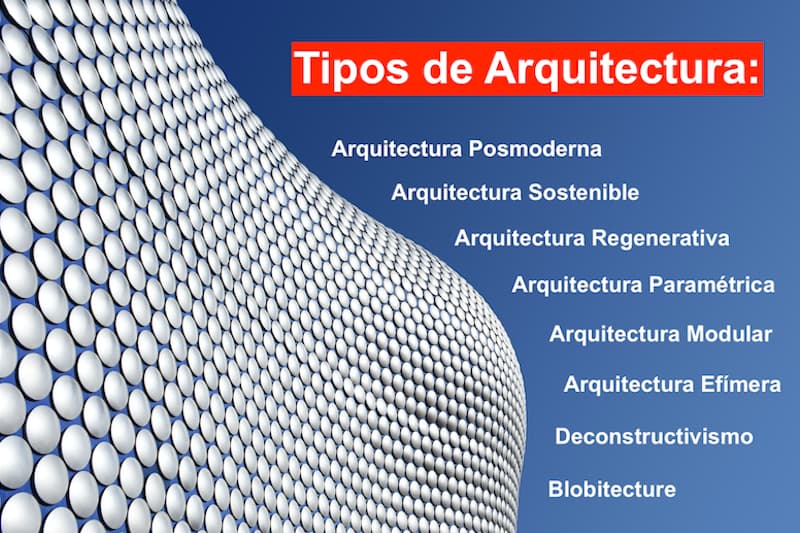
Tipos de Arquitectura: Explorando Más Allá de los Diseños Convencionales

FRASES DE ARQUITECTOS

Roles Arquitectura y Construcción (Profesiones Arquitectura)

Certificaciones para Arquitectos: Avanzando en la Excelencia Profesional

Roles BIM más Demandados en la Industria de la Construcción y el Sector AECO

Software BIM para Proyectos de Arquitectura y Construcción

Tecnología BIM: Beneficios y Ventajas en el sector AECO: Arquitectura, Ingeniería, Construcción y Operaciones

Modelo BIM

Modelo MEP

BIM 3D 4D 5D 6D 7D
AECO: Sector Arquitectura, Ingeniería, Construcción y Operaciones

Avances Tecnológicos en la Industria de la Construcción

Normas Técnicas de Edificación

!Explora el Mejor Directorio de Construcción! 🚧 🏗️ 👷♂️ (Sólo en ArquitecturaCarreras.com)


www.jmhdezhdez.com
jmhdezhdez.com — Arquitectura, Ingeniería y Documentación Técnica AECO
