- Inicio
- Ecosistema AECO
- _ATLAS AECO
- __Mapa Global Obras
- __Serie Const. Vanguardistas
- _Biblioteca Técnica AECO
- __Glosario AECO Global
- __Glosario de Construcción
- __Glosario de Edificación
- __Glosario BIM GTB-300
- _Entrevistas AECO
- __Jaime Sánchez-Álvarez
- _Visibilidad B2B y Partners AECO
- Arquitectura
- _RASCACIELOS
- __Burj Khalifa Dubai
- __Edificio Chrysler, NY
- _Estilos Arquitectónicos
- __Arquitectura Posmoderna
- __Deconstructivismo
- __Arquitectura High Tech
- Arte
- _Arte Universal
- _Arte Contemporáneo
- __Serge Marshennikov
- __Damian Lechoszest
- __John Kacere
- _Escultura
- __El Ángel del Norte
- __La Musa Dormida
- __Venus de Milo
- __Moisés de Miguel Ángel
- __Baldaquino de San Pedro
- __El rapto de Proserpina
- __La Verdad Velada
- __Perseo con cabeza de Medusa
- __Venus de Willendorf
- _Pintura
- __Capilla Sixtina
- __Cuadros Famosos
- __La Creación de Adán
- __Venus del Espejo Velázquez
- __Hipómenes y Atalanta
- __Venus Boticelli
- __Silla de van Gogh
- __Jugadores de Cartas Cézanne
- __Cabeza de Medusa Caravaggio
- __Impresionismo
- __Posimpresionismo
- _Historia
- __Edad Moderna
- Curiosidades
- _Arquitectura y Arte
- _Tumba de Miguel Ángel
- FRASES
- _Frases de la semana
- _Arquitectos
- __Frank Gehry
- _Escultores
- __Miguel Ángel Buonarroti
- __Bernini
- __Rodin
- _Pintores
- __Picasso
- __Vincent van Gogh
- __Cézanne
- __Claude Monet
- __Henri Matisse
- __René Magritte
- __Caravaggio
- __Miguel Ángel
- Formación AECO
- _Másteres en España
- __Másteres BIM en España
- __Másteres de Arquitectura
- __Másteres de Ingeniería
- __Másteres de Construcción
- __Másteres Inmobiliarios
- __Máster Facility Management
- __Másteres de Smart Building
- __Máster Energía y Edificación
- __Máster en Infraestructuras
- __M. Project Management
- _Partner de Formación AECO


Arquitectura, Escultura, Pintura, Ingeniería, Software-Programas de Diseño Arquitectónico: Metodología BIM, Revit, AutoCAD, 3ds max, Animación; Software de Adobe; Cursos online, Libros, Historia, Cultura, Timelapse y Dronelapse sobre Arquitectura y ciudades, Frases Célebres, Curiosidades, Rascacielos, Puentes, Edificios interesantes, Construcciones vanguardistas, Construcciones famosas, Diseño, Arte, Fotografía Arquitectónica / Architecture, Sculpture, Painting, Engineering, Software-Architectural Design Programs: BIM Methodology, Revit, AutoCAD, 3ds max, Animation; Adobe software; Online courses, Books, History, Culture, Timelapse and Dronelapse on Architecture and cities, Famous Phrases, Curiosities, Skyscrapers, Bridges, Interesting buildings, Avant-garde constructions, Famous constructions, Design, Art, Architectural Photography

Espirito Santo Plaza: The Cutting-Edge Parabolic Arch Facade That Redefined Miami's Skyline

Series: Avant-Garde Constructions
Masterpieces of Architecture and Engineering: #27 Espirito Santo Plaza, (Brickell Arch) Miami
How do you design a monumental glass arch capable of absorbing everything from tropical storms to the dynamic pressures of Miami's strict HVHZ hurricane regulations?
The skyline of Brickell Avenue, in the heart of Miami (United States), is defined by a silhouette that challenges traditional orthogonality: the Espirito Santo Plaza. Designed by the prestigious architecture firm Kohn Pedersen Fox (KPF) and structurally engineered by LERA, this building is a manifesto of hybrid architecture that achieved the unthinkable: competing directly with Malmö's Turning Torso for the top award at MIPIM 2005.
Faced with the challenge of erecting a mixed-use tower in one of the most cyclonically complex regions on the planet, the design team did not opt for an opaque, massive fortress, but rather for a concave glass geometry that dialogues with the forces of nature. Its monumental parabolic arch facade, standing at an architectural height of 148 meters, not only redefines Florida's corporate aesthetic but operates as a sophisticated aerodynamic shield capable of taming the severe hurricane-force wind gusts so frequent in the Caribbean Sea.

The design of Espirito Santo Plaza is not an arbitrary shape; it is a modern triumphal arch celebrating arrival in Miami—a structure that utilizes glass technology to reflect tropical light while standing firm against its force. — William Pedersen, KPF

Volumetric subtraction and cylindrical section diagram: Design process starting from a base parallelepiped and an interior cylinder, whose oblique diagonal cut naturally generates the monumental frontal parabolic arch. — KPF / Espirito Santo Plaza
Volumetric and Structural Analysis of the Complex
The volumetrics are articulated through two main cores joined by light-filled, open-span transition spaces. The massing design is the result of a sophisticated geometry of intersection between a parallelepiped and a section of a cylinder, superimposing both forms and capping them with a characteristic diagonal vertical cut.
Access is gained via a pedestrian walkway over a water feature that leads into an impressive 34.5-meter clear-span atrium. This space, naturally illuminated through a translucent glass with greenish hues, acts as the heart of the complex, seamlessly connecting the tower's circulation flows with its amenities.

At a structural level, the arch is not a mere facade skin; it functions as a hybrid system. While the reinforced concrete core absorbs gravitational loads, the concave geometry of the curtain wall is integrated with reinforced mullions that transfer lateral pressures directly to the base, allowing the grand atrium to remain a wide-open space without the need for massive intermediate columns.
In Miami, wind is not a static load—it is a dynamic adversary. The arch of Espirito Santo Plaza is a lesson in structural courtesy: instead of opposing the wind, it offers it a fluid path to pass, minimizing the impact through geometry. — Leslie E. Robertson, LERA
Other Issues in the Series:
ISSUE #01 | Burj Khalifa: The Wind Code
Stepping technique: how geometric variation tames vortices at 828 meters.
ISSUE #04 | Hearst Tower: The NY Diamond
The efficiency of the Diagrid system: saving 20% of steel and redefining sustainability.
ISSUE #05 | Marqués de Riscal: Deconstructing Tradition
Frank Gehry’s parametric maturity: symbiosis between anodized titanium and 1860 heritage via aerospace software.
ISSUE #17 | Allianz Arena: The ETFE Lighthouse
Herzog & de Meuron: Analysis of pneumatic ETFE cushions and the world's first shifting facade.

Façade Engineering: Aerodynamics Against Hurricanes
The main concave façade is a technological marvel that functions as an aerodynamic diffuser against the extreme wind pressures of Florida.
The structural design by LERA allows air currents to be deflected laterally, mitigating aerodynamic phenomena such as vortex shedding. The curtain wall system, executed by Permasteelisa Group, utilizes high-strength laminated glass by Viracon. It is a structure that does not fight against nature, but rather manages it through geometric form.
This configuration not only satisfies aesthetic criteria but strictly complies with the rigorous standards of the Florida Building Code and the requirements of the Miami-Dade High Velocity Hurricane Zone (HVHZ), whose Notice of Acceptance (NOA) product approvals dictate the most demanding regulations worldwide regarding cyclic wind pressure resistance and missile impact protection.
In structures of this nature, engineering must not be an invisible element, but the backbone that allows the architectural vision to survive and thrive under the most severe forces of nature. — Leslie E. Robertson, LERA
Materials Engineering: The Secret Behind the Façade's Striking Green Hues
The translucent, greenish colorations that wash over the concave façade of the Espirito Santo Plaza are not an aesthetic whim, but a solution rooted in materials physics. To mitigate Florida's relentless solar heat gain while preserving the transparency of the grand 34.5-meter atrium, Viracon specified its high-performance VRE2-46 insulating and laminated glass technology featuring an advanced solar control coating, or Low-E spectral filter.
The secret of this beautiful emerald tone lies in combining a standard float glass substrate—which naturally contains iron oxide—with this microscopic layer of metallic oxides. When interacting with tropical light, the system filters infrared and ultraviolet radiation while allowing 46% of visible light transmittance (VLT). This grants a shifting hue that changes in intensity depending on the angle of the Miami sunset and the reflections from Biscayne Bay.

Longitudinal section and street-level floor plan layout: The color-coded diagrams clarify the hybrid program of this mixed-use building: Premium Offices, a Hotel, and Luxury Residences articulated by a monumental, clear-span common atrium. Additionally, an annex parking structure optimizes its rooftop by integrating a health club with a gym, swimming pool, Spa, and two tennis courts, currently utilized as a solarium.

In addition to their optical function, the glass lites featuring VRE2-46 technology required a heat-strengthening treatment prior to being assembled into the curtain wall by Permasteelisa Cladding Technologies, Ltd. Due to the concave geometry and the parabolic curvature designed by KPF, the building casts shifting self-shading patterns onto its own structure, which generates drastic temperature deltas between areas exposed to direct sunlight and those left in shade.
This thermal treatment increases the mechanical strength of the glass panels, preventing thermal stress fractures. Consequently, Viracon's technology acts not only as an energy shield that drastically reduces HVAC consumption, but transforms the building envelope into a dynamic and safe architectural canvas, masterfully photographed by Wes Thompson right on Brickell Avenue.

The Brickell Arch, formerly known as Espirito Santo Plaza, stands victorious and splendid in the heart of Miami's Brickell Avenue, consolidating its cutting-edge architecture at the epicenter of the Financial District.
The Efficiency of the Hybrid Mixed-Use Program
Its 36 stories operate as a vertical ecosystem optimized under the concept of High-Rise Mixed-Use. The internal distribution has been engineered to maximize functionality without sacrificing exclusivity for its occupants. At the base, spanning from levels 3 to 15, are the banking offices that anchor the building's corporate character. As we ascend, between floors 17 and 23, the program transitions to house the luxury rooms of the Conrad Hotel, strategically positioned to offer uninterrupted panoramic views toward the ocean.

The crown of Espirito Santo Plaza is reserved for the upper luxury apartments, which are masterfully distributed around the grand central atrium, taking full advantage of natural daylighting and the expansive spatial feel of the architectural void. This complex is completed by an annexed volume: a 12-level rear podium that not only resolves parking logistics with a capacity for 980 vehicles, but culminates on its top floor with a splendid outdoor swimming pool, creating an elevated social oasis above the dynamism of Brickell Avenue.


Industrial Specifications & Building Solutions
PROJECT PARTNERS| Component | Partner / Brand | Detailed Technical Scope & Execution |
|---|---|---|
| Façade & Building Envelope | Permasteelisa Cladding Technologies, Ltd. | Engineering, manufacturing, and installation of the high-resilience structural curtain wall system. |
| Glass Technology | Viracon | Supply of high-performance (Model VRE2-46) insulating and laminated glass featuring spectrally selective solar control and impact resistance. |
| Vertical Mobility | KONE | Design and integration of intelligent high-speed elevator systems for optimized vertical traffic management. |
| Structural Engineering | LERA (Leslie E. Robertson Associates) | Advanced structural analysis and engineering design focused on mitigating dynamic wind loads. |
| Independent Review | Thornton Tomasetti | Third-party structural integrity verification (Peer Review) and advanced wind engineering studies. |
| Façade Consultancy | Lerch Bates | Continuous maintenance logistics, technical access planning, and building envelope asset management. |
| Construction Management | Bovis Lend Lease | General contractor responsible for construction logistics, procurement, and technical execution across all phases. |
| Geotechnical Engineering | Langan Engineering | Deep foundation design and soil stabilization studies essential for Miami's complex and porous limestone strata. |
| Hospitality Management | Conrad Hotels & Resorts | Specialized operations and premium hospitality management of the tower's mixed-use hotel core. |
Are you the manufacturer, contractor, or technical specifier of any of these building products?
Request the activation of your verified partner link by contacting us at:
info@jmhdezhdez.com

Toward a New Paradigm: Aesthetics as a Shield for Design
The Espirito Santo Plaza in Miami is definitive proof that avant-garde architecture and high-resilience engineering must coexist. Its iconic parabolic arch is not a mere artistic gesture; it is a masterful technical response to one of the most hostile climates on the planet.
This iconic design by KPF and LERA teaches us that true innovation in the AECO sector does not lie in fighting the elements, but in understanding them. Just as the Turning Torso challenged verticality in Europe, this spectacular Miami tower proves that a concave form can capture the light of Biscayne Bay while simultaneously taming the fury of the wind. It is, in essence, technology and art in perfect symbiosis.
Our intention was to create a building that not only responded to the functional needs of the mixed-use program, but also established a symbolic and civic gesture toward the city and the sea. — William Pedersen, Founding Partner of KPF
Frequently Asked Questions about Espirito Santo Plaza (Miami):
Why is the façade considered an avant-garde design against hurricanes?
Because its majestic parabolic curvature functions as a continuous aerodynamic foil that laterally deflects wind flows, drastically reducing dynamic wind pressures acting on the main structural frame.
How does the building manage to "trick" the severe Florida winds?
Through a sophisticated volumetric intersection. By breaking traditional orthogonal planes, the tower disrupts the regular formation of alternating low-pressure air vortexes, mitigating the dangerous phenomenon of vortex shedding.
What specific materials guarantee its physical safety?
A high-resilience curtain wall system integrated with impact-resistant, laminated glass panels engineered by Viracon. This building envelope is designed to withstand severe missile impact and high-velocity windborne debris.
What functions are integrated into this hybrid architectural model?
The complex operates as an optimized vertical ecosystem (High-Rise Mixed-Use): it accommodates corporate banking offices at its base, premium hotel suites for the Conrad Hotel across mid-levels, and exclusive luxury residences at the top, all articulated by a monumental clear-span central atrium.
What prominent leisure urban infrastructure stands out in the complex?
Its spectacular outdoor swimming pool and health club. This recreational zone is strategically placed on the rooftop of the annexed 12-level parking podium, offering an elevated wellness oasis seamlessly integrated above the dynamic pace of Brickell Avenue.
AECO Architecture & Engineering Glossary | Espirito Santo Plaza, Miami (Brickell Arch)
Hybrid Architecture: Mixed-use high-rise buildings that integrate multiple independent functional programs within a single structural frame to optimize urban land use.
Volumetric Subtraction: An advanced design technique that creates complex massing and architectural voids by "extracting" or carving out volumes from a primary solid shape.
Intersecting Geometry: A formal layout design process based on overlapping and cutting core geometric shapes (such as parallelepipeds and cylindrical sections) to generate distinctive architectural volumes.
Clear-Span Atrium: A massive internal multi-story space engineered without intermediate columns or heavy load-bearing vertical elements, designed to unifiy pedestrian flow and maximize daylighting.
Structural Resilience: The intrinsic capacity of a structural system to absorb lateral shocks, dissipate kinetic energy, and maintain full operational integrity following extreme wind or seismic events.
Vortex Shedding: An aerodynamic phenomenon where wind forces striking a structural mass produce alternating low-pressure eddies, inducing crosswind oscillations; mitigated here through the concave façade design.
Curtain Wall System: A continuous, non-load-bearing perimeter façade assembly suspended from the primary structure, designed solely to withstand localized wind loads and transfer them back to the floor slabs.
Insulating & Laminated Glass: A high-security multi-pane glazing setup combining a gas-filled cavity for thermal insulation with inner high-strength polymer layers to prevent glass fallout during hurricane windborne debris impacts.
Spectrally Selective Low-E Filter: A microscopic metallic oxide coating applied to a glass surface that selectively blocks infrared and ultraviolet solar radiation, optimizing solar heat gain coefficients (SHGC) while retaining high visible light transmittance (VLT).
Dynamic Expansion Joint: An engineering detail utilizing independent structural connections at canopies or major volumetric mass interfaces, allowing adjacent structures to undergo differential dynamic movements from wind or seismic loads without transferring destructive stresses.
Series: Avant-Garde Constructions | jmhdezhdez.com
Documentation & Architectural Credits
Text & Technical Editing: © José Miguel Hernández Hernández, Author, Technical Editor, and AECO Consultant
Plans & Concept Drawings (Images 1, 2, 3, 4, 6, and 7): © Woodruff Brown / KPF Architects
Images 5 and 8: Via © LoopNet

José Miguel Hernández Hernández
International authority in the technical analysis of iconic and sculptural architecture. Specialist in the intersection of structural engineering, aesthetics, and avant-garde systems. Author of the bilingual technical monographs Turning Torso – Santiago Calatrava and Construcciones Famosas / Famous Constructions.

Publicado por José Miguel


José Miguel Hernández Hernández
Consultor Smart Home y Movilidad Eléctrica AECO
Servicios Destacados
⚡ Consultoría Movilidad Eléctrica
Proyectos CICE e ITC-BT-52.
🎓 Formación BIM / AECO
Especialización técnica avanzada.
📩 Suscripción Nodo Maestro
Innovación y normativa Smart.


Ecosistemas Smart Home por Tipología Guías técnicas y selección de dispositivos para proyectos de arquitectura e interiorismo en Pisos, Lofts, Casas Grandes, Dúplex, Áticos y Villas de Lujo. Integra automatización adaptada a cada espacio.
Ver Guía por Tipologías →
Directorio de Fotógrafos de Arquitectura en España: Descubre a los Mejores Expertos en Fotografía Arquitectónica para Documentar tus Proyectos y Obras

Fotografía Arquitectónica: La Guía Definitiva para Capturar Diseño, Estética y Función de Edificios y Estructuras

Fotografía y Vídeo Timelapse

El Rol del Fotógrafo de Arquitectura

Cámaras Réflex y Objetivos Tilt-Shift para Fotografía de Arquitectura

Estilos Arquitectónicos Modernos: Un Viaje a Través de la Creatividad y la Innovación

ARQUITECTURA CARRERA: Descubre todas las Opciones de la Carrera en Arquitectura y Grados en España

Comparativa de las Mejores Universidades de Arquitectura del Mundo: Internacional, Europa, LATAM

Los Mejores Libros de Arquitectura para Arquitectos

Libros para Estudiar Arquitectura

Libros para Arquitectos Principiantes: Guías y Recursos Esenciales para Comenzar tu Carrera

Los Mejores Libros de Arquitectura para Estudiantes durante la Carrera

Era Digital de la Construcción: Innovaciones Tecnológicas en Arquitectura y Edificación

Comparativa de Los Mejores Ordenadores para Arquitectos en 2024

Las Mejores Laptops para Arquitectura en 2024

Los Mejores Ordenadores de Arquitectura para Estudiantes

Significado de: Términos Clave sobre Arquitectura, Ingeniería y Construcción

Arquitectos: Descubre el Mejor Directorio de Arquitectos que podrás encontrar en Internet (Sólo en AC)
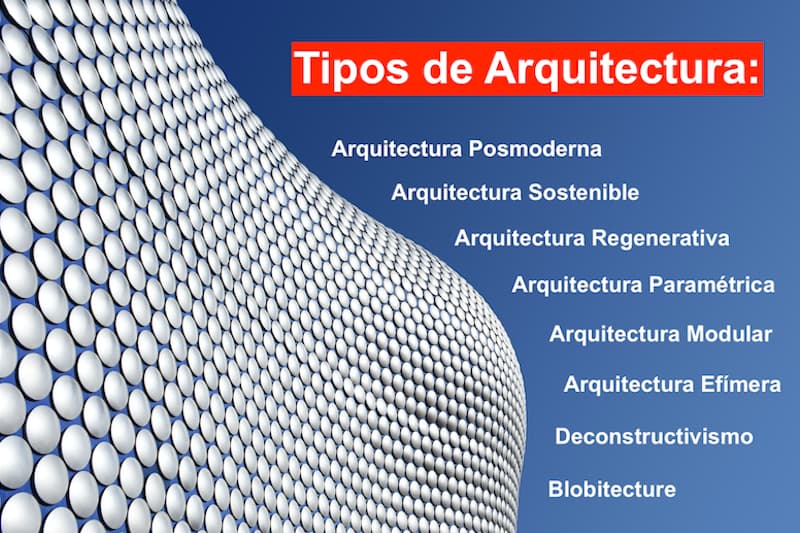
Tipos de Arquitectura: Explorando Más Allá de los Diseños Convencionales

FRASES DE ARQUITECTOS

Roles Arquitectura y Construcción (Profesiones Arquitectura)

Certificaciones para Arquitectos: Avanzando en la Excelencia Profesional

Roles BIM más Demandados en la Industria de la Construcción y el Sector AECO

Software BIM para Proyectos de Arquitectura y Construcción

Tecnología BIM: Beneficios y Ventajas en el sector AECO: Arquitectura, Ingeniería, Construcción y Operaciones

Modelo BIM

Modelo MEP

BIM 3D 4D 5D 6D 7D

AECO: Sector Arquitectura, Ingeniería, Construcción y Operaciones

Avances Tecnológicos en la Industria de la Construcción

Normas Técnicas de Edificación

!Explora el Mejor Directorio de Construcción! 🚧 🏗️ 👷♂️ (Sólo en ArquitecturaCarreras.com)


www.jmhdezhdez.com
jmhdezhdez.com — Arquitectura, Ingeniería y Documentación Técnica AECO
