- Inicio
- Arquitectura
- _RASCACIELOS
- __Burj Khalifa Dubai
- __Edificio Chrysler, NY
- _Estilos Arquitectónicos
- __Arquitectura Posmoderna
- __Deconstructivismo
- __Arquitectura High Tech
- _Serie Const. Vanguardistas
- __Glosario AECO Global
- Arte
- _Arte Universal
- _Arte Contemporáneo
- __Serge Marshennikov
- __Damian Lechoszest
- __John Kacere
- _Escultura
- __El Ángel del Norte
- __La Musa Dormida
- __Venus de Milo
- __Moisés de Miguel Ángel
- __Baldaquino de San Pedro
- __El rapto de Proserpina
- __La Verdad Velada
- __Perseo con cabeza de Medusa
- __Venus de Willendorf
- _Pintura
- __Capilla Sixtina
- __Cuadros Famosos
- __La Creación de Adán
- __Venus del Espejo Velázquez
- __Hipómenes y Atalanta
- __Venus Boticelli
- __Silla de van Gogh
- __Jugadores de Cartas Cézanne
- __Cabeza de Medusa Caravaggio
- __Impresionismo
- __Posimpresionismo
- _Historia
- __Edad Moderna
- Curiosidades
- _Arquitectura y Arte
- _Tumba de Miguel Ángel
- FRASES
- _Frases de la semana
- _Arquitectos
- __Frank Gehry
- _Escultores
- __Miguel Ángel Buonarroti
- __Bernini
- __Rodin
- _Pintores
- __Picasso
- __Vincent van Gogh
- __Cézanne
- __Claude Monet
- __Henri Matisse
- __René Magritte
- __Caravaggio
- __Miguel Ángel
- CULTURA
- _Museos
- __Museo del Louvre
- Formación
- _Formación BIM Online
- _Cursos Domestika
- Más
- _ENTREVISTAS
- __Johannes Wesskmark
- __Nathan Zawaya


![Glosario Técnico Global AECO [A-Z] | jmhdezhdez.com](https://blogger.googleusercontent.com/img/b/R29vZ2xl/AVvXsEi3jMibpNTW_iTMFn_-Kz497zXtynAm9h_iW7lCzm4s7_psmS4K5T9FAxz5r_FBqx6rocZx85mUcjbiTwizzO0NETH5lATU2WjASYiuwGvJfNld7nYXir_PPbdTSlD-GOn-dd7jIrsdaIr5a6GUgX4rX4tENwsbE7JHuqrATigeU6mM8nBhKjM6wNa4sQc/w72-h72-p-k-no-nu/glosario-aeco.webp)


Arquitectura, Escultura, Pintura, Ingeniería, Software-Programas de Diseño Arquitectónico: Metodología BIM, Revit, AutoCAD, 3ds max, Animación; Software de Adobe; Cursos online, Libros, Historia, Cultura, Timelapse y Dronelapse sobre Arquitectura y ciudades, Frases Célebres, Curiosidades, Rascacielos, Puentes, Edificios interesantes, Construcciones vanguardistas, Construcciones famosas, Diseño, Arte, Fotografía Arquitectónica / Architecture, Sculpture, Painting, Engineering, Software-Architectural Design Programs: BIM Methodology, Revit, AutoCAD, 3ds max, Animation; Adobe software; Online courses, Books, History, Culture, Timelapse and Dronelapse on Architecture and cities, Famous Phrases, Curiosities, Skyscrapers, Bridges, Interesting buildings, Avant-garde constructions, Famous constructions, Design, Art, Architectural Photography

Allianz Arena: Munich’s ETFE Lighthouse

Series: Avant-Garde Constructions
Masterpieces of Architecture and Engineering: #17 Allianz Arena, Munich
Can a 66,000-tonne colossus act as a digital lighthouse in an empty landscape?
The answer lies in a surface of 66,500 m² of pure innovation. In the landscape of sports architecture, there are stadiums that fulfill their function and others that redefine a nation's technological horizon. The Allianz Arena (2002-2005) belongs to the latter category. Designed by Pritzker Prize winners Herzog & de Meuron, this colossus was not conceived to hide within the dense fabric of Munich, but to stand as a solitary landmark on the Fröttmaning plain.

Being removed from the urban core, between the airport and the city center, the stadium uses its isolation to maximize its visual impact. The concept is articulated along three axes: the presence of the illuminated body in the open landscape, the ritual procession of fans, and an interior designed as a crater of maximum atmospheric pressure. Its construction marked the beginning of an era where buildings ceased to be static, becoming instead dynamic interfaces capable of communicating with civilization through light and distance.
We wanted the stadium to be a luminous body that could change its appearance, situated in an open landscape. The building is not just a structure; it is a presence. — Jacques Herzog

The Triumph of ETFE: The Diamond Skin
The most distinctive feature of this work is its technical envelope. Utilizing 2,784 ETFE panels (Ethylene Tetrafluoroethylene), the architects created a pneumatic membrane of diamond-shaped cushions arranged horizontally that glows in the solitude of the Bavarian landscape.
Digital Identity: Through a centralized control system, each panel can be illuminated independently. “The color of the cushions can be digitally controlled so that the home team playing can be identified from the outside,” the authors explain in their 2006 project notes. This allows the stadium to function as a visible lighthouse of identity from kilometers away.
Pneumatic Resilience: The ETFE cushions are kept under constant pressure —approx. 300 Pa (Pascals: internal inflation pressure)— via an automated pumping system, allowing the facade to withstand Bavaria's extreme snow loads during winter months without losing its transparency and visual lightness.

The Technological Jellyfish: Herzog’s Analog Imagery
What appears at first glance to be a "technological jellyfish" emerging from the landscape is, in reality, the result of a collage of analog references. For Herzog & de Meuron, the Allianz Arena is a conceptual hybrid: it draws on the acoustic and human density of classical theater, the tactile geometry of a ceramic vessel, and the organic intertwining of a ball of yarn. When merged, these images transform a 66,000-tonne stadium into a living organism; a pneumatic body that captures fans through its access "tentacles" to deposit them into a crater of maximum scenic pressure.
The Hidden Skeleton: Cantilevered Steel Engineering
To make the ETFE skin appear to float, Herzog & de Meuron designed a steel megastructure that stands as a feat of cantilever engineering. The roof extends inward, covering all seating areas without the need for columns that would obstruct the view. This structure is composed of radial lattice girders that transfer massive loads to an outer compression ring, allowing the internal "crater" to remain clean and tectonically pure.
Technical detail of the pneumatic roof of the Allianz Arena in Munich, composed of 2,784 diamond-shaped ETFE panels.
Thermal Challenges and Stadium Acoustics
Unlike traditional concrete stadiums, the Munich Allianz Arena behaves like a thermal organism. The ETFE cushions act as an insulating air layer that helps regulate the internal temperature. Furthermore, the concave geometry of the roof was optimized to act as an acoustic reflector, trapping the sound of the fans within the crater and amplifying the psychological pressure on the visiting team—a key factor in high-performance sports architecture.
The Procession and the Crater
Due to its peripheral location, the arrival is part of the spectacle. The landscaped "procession" connects the subway station to the stadium via an artificial park that snakes through the Fröttmaning heath. Once inside, the "crater" concept takes over:« Much like in Shakespeare’s Globe Theatre, spectators sit right next to where the action takes place. The slope, which increases from bottom to top, creates additional spatial density. » — Herzog & de Meuron

The Invisible Infrastructure: Parking Beneath the Tentacles
Beneath the sinuous surface of the esplanade lies a logistical feat: four parking levels that follow the elongated shape of the "jellyfish". This design choice allows the visual impact of the vehicle to completely disappear from the landscape, letting nature and architecture breathe. Emerging from the lower levels, fans join the pedestrian flows of the tentacles directly, transforming a functional necessity into a seamless and clear arrival experience at the stadium.Other Issues in the Series:
ISSUE #01 | Burj Khalifa: The Wind Code
Stepping Technique: how geometric variation tames vortices at 828 meters.
ISSUE #02 | CCTV Tower: The Cantilever Challenge
The gravity-defying colossus: precision engineering and a critical dawn connection.
ISSUE #04 | Hearst Tower: The NY Diamond
Structural efficiency: Norman Foster's Diagrid system and steel savings.
ISSUE #15 | Media-TIC: The Digital 'La Pedrera'
Enric Ruiz-Geli & Cloud 9: Hybrid infrastructure, transfer mega-structure and intelligent ETFE skin.

Urban Furniture or Nervous System?
If we analyze the original renders and the project's final execution, the lampposts reveal an intention that goes far beyond technical lighting: the ability to radiate life and order. They are not mere poles; they are biological filaments that seem to swim toward the stadium, acting as sensors and guides that connect the "crater" core with the horizon.This system does not just illuminate; it encodes the space. By integrating access numbering directly into the morphology of the luminaires, the need for external signage is eliminated, allowing the light itself to dictate the route toward the objective.
In this digital ecosystem, the Allianz Arena functions as the vital nucleus—a technical energy ovum—that draws in flows of information and people. It is the materialization of the stadium's energy expanding into the landscape, communicating that the building does not end at its ETFE facade. It is a metaphor for urban fertilization: the project colonizes the void of the Fröttmaning plain and grants it life (and direction) through these luminous filaments.
It is the ultimate transformation of a "non-place" into a vibrant digital ecosystem where, as noted by AV magazine, the "flood of fans" is irretrievably drawn by this technological magnet.
Industrial Solutions: Global Brands & Building Technology
AECO VERIFIED| Component | Solution / Brand | Technical Application & Engineering |
|---|---|---|
| Pneumatic Envelope | Covertex / Nowofol | ETFE cushion system with automated pressure control (300 Pa) to manage variable snow and wind loads. |
| Dynamic Lighting | OSRAM / Siteco | High-output digital LED system integrated into the facade for identity broadcasting and visual communication. |
| Steel Megastructure | Max Bögl / Arup | Engineering of radial lattice girders with 70 m cantilevers providing column-free grandstand coverage. |
| Hybrid Turf System | Desso GrassMaster | Pitch reinforcement via injected synthetic fibers to optimize traction, soil stability, and playing surface durability. |
| Vertical Mobility | Schindler | Management of massive pedestrian flows through high-capacity elevator cores and optimized logistics. |
Are you the manufacturer, installer, or technical specifier of any of these components?
Request the activation of your partner link for this technical series by writing to:
info@jmhdezhdez.com

The Stadium that Taught the World that Architecture is Communication
The Munich Allianz Arena represents the turning point where structural engineering merged with digital technology. “VIP sections or catering are similar in all stadiums; what grants distinctive character is the envelope and the arrival of the public,” Jacques Herzog notes.
Observing its silhouette glowing in the darkness of the periphery, we understand that the future of advanced construction lies not in rigidity, but in the ability of structures to adapt and dialogue from the horizon. The Allianz Arena does not just house the game; it personifies the technological vanguard of the 21st century.
It is very important that buildings continue to seduce people. — Jacques Herzog
Want to delve deeper into structural design?
If you are passionate about cutting-edge engineering and iconic stadium architecture like the Allianz Arena, discover the secrets of structural design in my works. Hundreds of technical illustrations dissect how the world's great skyline landmarks defy the limits of physics.
Obras Técnicas Bilingües / Bilingual Technical Works


Frequently Asked Questions about Allianz Arena Engineering:
Why was it installed so far from the city center?
Its location allows the building to act as a welcoming landmark from the airport. This open space facilitated the creation of Europe's largest underground parking (approx. 9,800 spaces) and a crowd flow management impossible in a dense urban environment.
Why was ETFE used instead of glass?
ETFE (Ethylene Tetrafluoroethylene) weighs only 1% of glass, allowing for a much lighter support structure. Additionally, it is self-cleaning and permits UV light transmission, an essential factor for natural grass growth even under the roof.
How does it withstand wind in such an open area?
Each of the 2,784 panels is a tensioned pneumatic membrane. An internal air system constantly compensates for wind pressure and suction through smart sensors that adjust inflation in real-time to maintain skin integrity against the gusts of the Bavarian plain.
How is the color change managed for each team?
The stadium uses high-efficiency LED lighting installed behind the panels. For road safety (to avoid distractions on the A9 motorway), only solid colors (red, blue, or white) are permitted. Changes are slow and regulated by local traffic laws to ensure drivers' visibility is not compromised.
Is this facade system sustainable?
Yes. By reducing structural weight, a massive amount of steel was saved. Furthermore, ETFE contributes to the venue's energy efficiency by acting as a natural thermal insulator that reduces the need for artificial climate control in interior spaces.
AECO Architecture & Engineering Glossary | Allianz Arena
Pneumatic Membrane (ETFE): A building envelope consisting of Ethylene Tetrafluoroethylene cushions inflated with low-pressure air. This material is noted for being extremely lightweight (1% of glass weight), having high UV transmittance, and possessing self-cleaning properties.
Cantilevered Lattice Truss: Radial steel structural elements that project inward to support the roof. At the Allianz Arena, these trusses allow for a column-free bowl, optimizing spectator sightlines (C-Value) from every seat.
Compression Ring: A perimeter structural element that receives and balances the horizontal forces generated by the cantilevered roof system, stabilizing the overall steel megastructure.
Pneumatic Control System: An automated network that monitors and adjusts the internal pressure of the 2,784 panels (approx. 300 Pa). Wind and snow sensors regulate inflation in real-time to maintain structural rigidity against environmental loads.
Media Facade (Dynamic Interface): The integration of digital LED lighting systems behind the ETFE skin. This allows the building to function as a visual communication device, changing its colorimetry based on the event's identity.
Atmospheric/Scenic Crater: An architectural concept where the increasing rake of the stands and the concave geometry of the roof concentrate acoustics and visual energy toward the pitch, intensifying the stadium atmosphere.
Extensive Parking Infrastructure: The design of a logistics hub beneath the access esplanade which, with nearly 10,000 spaces, constitutes Europe’s largest underground parking facility, managing massive mobility flows invisibly.
Series: Avant-Garde Constructions | jmhdezhdez.com

José Miguel Hernández Hernández
Global authority in the technical analysis of iconic and sculptural architecture. Specialist at the intersection of structural engineering, aesthetics, and avant-garde design. Author of the bilingual technical works Turning Torso – Santiago Calatrava and Famous Constructions.

Publicado por José Miguel


José Miguel Hernández Hernández
Consultor Smart Home y Movilidad Eléctrica AECO
Servicios Destacados
⚡ Consultoría Movilidad Eléctrica
Proyectos CICE e ITC-BT-52.
🎓 Formación BIM / AECO
Especialización técnica avanzada.
📩 Suscripción Nodo Maestro
Innovación y normativa Smart.


Arquitectura y Tecnología al servicio del diseño inteligente.
Esta guía esencial para Smart Homes te muestra cómo integrar dispositivos inteligentes en viviendas contemporáneas, mejorando el confort, la eficiencia energética y el diseño funcional. Ideal para arquitectos, interioristas y entusiastas del arte del habitar.
👉 Descubre la guía completa

Directorio de Fotógrafos de Arquitectura en España: Descubre a los Mejores Expertos en Fotografía Arquitectónica para Documentar tus Proyectos y Obras

Fotografía Arquitectónica: La Guía Definitiva para Capturar Diseño, Estética y Función de Edificios y Estructuras

Fotografía y Vídeo Timelapse

El Rol del Fotógrafo de Arquitectura

Cámaras Réflex y Objetivos Tilt-Shift para Fotografía de Arquitectura

Estilos Arquitectónicos Modernos: Un Viaje a Través de la Creatividad y la Innovación

ARQUITECTURA CARRERA: Descubre todas las Opciones de la Carrera en Arquitectura y Grados en España

Comparativa de las Mejores Universidades de Arquitectura del Mundo: Internacional, Europa, LATAM

Los Mejores Libros de Arquitectura para Arquitectos

Libros para Estudiar Arquitectura

Libros para Arquitectos Principiantes: Guías y Recursos Esenciales para Comenzar tu Carrera

Los Mejores Libros de Arquitectura para Estudiantes durante la Carrera

Era Digital de la Construcción: Innovaciones Tecnológicas en Arquitectura y Edificación

Comparativa de Los Mejores Ordenadores para Arquitectos en 2024

Las Mejores Laptops para Arquitectura en 2024

Los Mejores Ordenadores de Arquitectura para Estudiantes

Significado de: Términos Clave sobre Arquitectura, Ingeniería y Construcción

Arquitectos: Descubre el Mejor Directorio de Arquitectos que podrás encontrar en Internet (Sólo en AC)
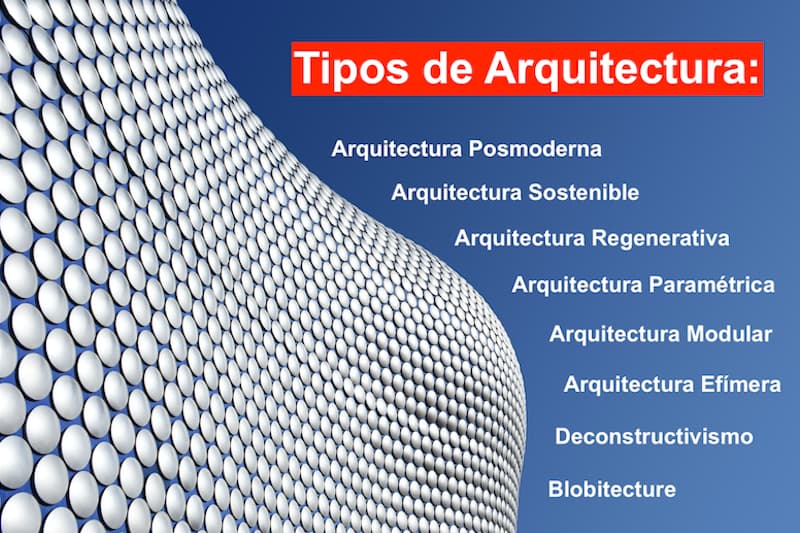
Tipos de Arquitectura: Explorando Más Allá de los Diseños Convencionales

FRASES DE ARQUITECTOS

Roles Arquitectura y Construcción (Profesiones Arquitectura)

Certificaciones para Arquitectos: Avanzando en la Excelencia Profesional

Roles BIM más Demandados en la Industria de la Construcción y el Sector AECO

Software BIM para Proyectos de Arquitectura y Construcción

Tecnología BIM: Beneficios y Ventajas en el sector AECO: Arquitectura, Ingeniería, Construcción y Operaciones

Modelo BIM

Modelo MEP

BIM 3D 4D 5D 6D 7D

AECO: Sector Arquitectura, Ingeniería, Construcción y Operaciones

Avances Tecnológicos en la Industria de la Construcción

Normas Técnicas de Edificación
!Explora el Mejor Directorio de Construcción! 🚧 🏗️ 👷♂️ (Sólo en ArquitecturaCarreras.com)


- CATEGORÍAS DE CURSOS ONLINE
▷ Formación online
▷ Cursos online
▷ Domestika Cursos
▷ Domestika cupón descuento
▷ Cursos de Arquitectura online
▷ Cursos online de Ilustración
▷ Cursos online de Diseño gráfico
▷ Cursos online de Fotografía y Vídeo
▷ Cursos online de 3D y Animación
▷ Cursos de Diseño online
▷ Cursos online de Dibujo
▷ Cursos online de Bellas Artes
▷ Cursos online de Dirección de Arte
- CURSOS ONLINE DOMESTIKA (POR SOFTWARE)
▷ AutoCAD
▷ SketchUp
▷ 3ds Max
▷ Adobe Photoshop
▷ Adobe Illustrator
▷ Adobe After Effects
▷ Adobe Lightroom
▷ Cinema 4D
▷ Adobe Indesign
LOS MEJORES CURSOS ONLINE PARA CREATIVOS | CURSOS DOMESTIKA
- ÚLTIMAS RESEÑAS CURSOS DOMESTIKA
 ▷ Curso Revit Online, por Majo Mora
 ▷ Curso de AutoCAD Online, por Isabel Martínez Abascal
 ▷ Curso SketchUp online, por Alejandro Soriano
 ▷ Curso Infoarquitectura 3D, por Amo Visual 3D
 ▷ Curso de Lumion, por Salva Moret


www.jmhdezhdez.com
(Blog sobre Arquitectura y Arte)
