- Inicio
- Ecosistema AECO
- _ATLAS AECO
- __Mapa Global Obras
- __Serie Const. Vanguardistas
- _Estudios de Arquitectura
- __en Madrid
- __en Barcelona
- _Estudios de Ingeniería
- __en Madrid
- _Estudios de Interiorismo
- __en Madrid
- _Empresas Constructoras
- __en Madrid
- __en Barcelona
- _Empresas de Reformas
- __en Madrid
- _Empresas AECO
- __Fabricantes en España
- _Empresas de Modelado BIM
- __En España
- _Biblioteca Técnica AECO
- __Glosario AECO Global
- __Glosario de Construcción
- __Glosario de Edificación
- __Glosario BIM GTB-300
- __Edificación Circular
- _Entrevistas AECO
- __Jaime Sánchez-Álvarez
- _Visibilidad B2B y Partners AECO
- Arquitectura
- _RASCACIELOS
- __Burj Khalifa Dubai
- __Edificio Chrysler, NY
- _Estilos Arquitectónicos
- __Arquitectura Posmoderna
- __Deconstructivismo
- __Arquitectura High Tech
- Arte
- _Arte Universal
- _Arte Contemporáneo
- __Serge Marshennikov
- __Damian Lechoszest
- __John Kacere
- _Escultura
- __El Ángel del Norte
- __La Musa Dormida
- __Venus de Milo
- __Moisés de Miguel Ángel
- __Baldaquino de San Pedro
- __El rapto de Proserpina
- __La Verdad Velada
- __Perseo con cabeza de Medusa
- __Venus de Willendorf
- _Pintura
- __Capilla Sixtina
- __Cuadros Famosos
- __La Creación de Adán
- __Venus del Espejo Velázquez
- __Hipómenes y Atalanta
- __Venus Boticelli
- __Silla de van Gogh
- __Jugadores de Cartas Cézanne
- __Cabeza de Medusa Caravaggio
- __Impresionismo
- __Posimpresionismo
- _Historia
- __Edad Moderna
- Curiosidades
- _Arquitectura y Arte
- _Tumba de Miguel Ángel
- FRASES
- _Frases de la semana
- _Arquitectos
- __Frank Gehry
- _Escultores
- __Miguel Ángel Buonarroti
- __Bernini
- __Rodin
- _Pintores
- __Picasso
- __Vincent van Gogh
- __Cézanne
- __Claude Monet
- __Henri Matisse
- __René Magritte
- __Caravaggio
- __Miguel Ángel
- Formación AECO
- _Másteres en España
- __Másteres BIM en España
- __Másteres de Arquitectura
- __Másteres de Ingeniería
- __Másteres de Construcción
- __Másteres en Interiorismo
- __Másteres Inmobiliarios
- __Máster Facility Management
- __Másteres de Smart Building
- __Máster Energía y Edificación
- __Máster en Infraestructuras
- __Másteres en Urbanismo
- __M. Project Management
- __M. Construcción Sostenible
- __M. Instalaciones MEP
- _Cursos BIM
- __Cursos BIM Online
- __Cursos Revit Online
- __Cursos Revit MEP online
- _Partner de Formación AECO
- _Formación AECO Empresas
- __en España
- __Capacitación en México
- __en Colombia


Arquitectura, Escultura, Pintura, Ingeniería, Software-Programas de Diseño Arquitectónico: Metodología BIM, Revit, AutoCAD, 3ds max, Animación; Software de Adobe; Cursos online, Libros, Historia, Cultura, Timelapse y Dronelapse sobre Arquitectura y ciudades, Frases Célebres, Curiosidades, Rascacielos, Puentes, Edificios interesantes, Construcciones vanguardistas, Construcciones famosas, Diseño, Arte, Fotografía Arquitectónica / Architecture, Sculpture, Painting, Engineering, Software-Architectural Design Programs: BIM Methodology, Revit, AutoCAD, 3ds max, Animation; Adobe software; Online courses, Books, History, Culture, Timelapse and Dronelapse on Architecture and cities, Famous Phrases, Curiosities, Skyscrapers, Bridges, Interesting buildings, Avant-garde constructions, Famous constructions, Design, Art, Architectural Photography

Media-TIC Building: The Digital "La Pedrera" of Barcelona’s 22@ District

Series: Avant-Garde Constructions
Masterpieces of Architecture and Engineering: #15 Media-TIC Building, Barcelona
Is it possible to construct a building that breathes and processes data like a living organism?
The Media-TIC (Barcelona Growth Centre) is not merely an office building; it is the physical embodiment of "information architecture." Inspired by the organic proportions of the world-renowned Casa Milá (Gaudí’s La Pedrera), Enric Ruiz-Geli (Cloud 9) designed this structure as a radical response to the digital era, where connectivity and data flows are as fundamental as steel.
This project is part of a major Urban Regeneration Plan for the city of Barcelona within the industrial district of Poble Nou. Under this innovative framework, more than 40 projects are revitalizing the "Innovation District" known as 22@—a large-scale infrastructure designed to provide the city with an ecosystem of world-leading companies and institutions in the field of Information and Communication Technologies (ICT), aiming for a significant international profile.
Our proposal for 22@ respects Poble Nou’s industrial past while projecting it into the future. If the Industrial Revolution was about steel and steam, the 22@ revolution is about information and molecular sustainability. — Enric Ruiz Geli


The Suspended Structure: Engineering without welds
What makes the Media-TIC Building a fascinating piece of engineering is its Megastructure. Instead of relying on conventional load-bearing walls, the building utilizes four large steel rigid frames (porticos) that support the floor plates, which are literally "suspended" from the upper skeleton.Construction Process: The building eschews traditional welding. A system of riveting and bolting was employed, directly referencing the industrial era of the Eiffel Tower, but applied to contemporary digital architecture. This decision follows an assembly logic where mechanical joints ensure absolute stability against variable loads, avoiding the thermal stresses inherent in welding processes.

The Media-TIC was not built; it was manufactured. Thanks to CAD-CAM, we moved from traditional masonry to the automotive industry: every part of the megastructure and every ETFE cushion was laser-cut with micron precision, eliminating human error and on-site waste. — Enric Ruiz Geli
This strategy was made possible by an extensive design and pre-calculation phase; the Media-TIC in Barcelona was a building "conceived" exhaustively in the digital realm before the first component was placed, allowing its complex structure to be completed in record time.
Open-plan results: This configuration, calculated by BOMA (Agustí Obiol), completely frees up the interior space. By eliminating intermediate columns, the "digital incubator" adapts to the evolving needs of tech companies, transforming into a flexible and connected platform.

Facade Innovation: ETFE as an Intelligent Membrane
ETFE (Ethylene Tetrafluoroethylene) is not a mere cladding; it is a thermodynamic component that reacts in real-time. Unlike glass, which is static and requires massive HVAC systems to compensate for its thermal inertia, the ETFE on the Media-TIC functions as a biological filter.
South-East Facade (Pneumatic Cushions): This skin is composed of ETFE cushions that inflate and deflate pneumatically. Its primary function is to manage solar gain. When solar radiation is intense, the system increases the air pressure within the cushions, altering their opacity and creating automated shading that reduces the internal thermal load. It acts as a dynamic "brise-soleil" without traditional mechanical moving parts.


Architecture is no longer just a matter of mass, weight, and gravity. Today, bits are as important as atoms. The Media-TIC is not just a building; it is a communication platform. — Enric Ruiz Geli

South-West Facade (Lenticular System): Here, the design reaches a superior level of sophistication. Two layers of ETFE are utilized which, upon interaction, generate an internal "nitrogen cloud." This gas acts as a light-scattering curtain. By modulating the pressure and density of this nitrogen, the building can adjust its transparency from total clarity to a translucent state that blocks radiant heat during hours of peak solar exposure.
Molecular Efficiency: This behavior results in actual energy savings of 20%. By "reading" the incident radiation, the building determines how much solar energy to admit for space heating or how much to block to prevent overheating. It is, essentially, low-energy architecture achieved through molecular design.

A Manifesto of Bits and Atoms: The Legacy of Immaterial Architecture
The Media-TIC Building (Barcelona Growth Centre) represents the success of a decade of technical challenges and urban vision. Enric Ruiz-Geli and Cloud 9 created more than an office container; they developed a technological platform where connections and bits are more relevant than the weight of the materials.Just as Gaudí challenged the rigidity of his time with organic forms, this "Digital Pedrera" breaks away from industrial series to embrace digital construction, utilizing its 23,104 m² and its ETFE skin to demonstrate that sustainability is a molecular and algorithmic process, not a mere decorative addition.


Gaudí practiced an organic architecture based on the observation of nature. We create a 'Digital Pedrera' because the building has a skin that breathes, that senses light, and reacts to it intelligently rather than mechanically. — Enric Ruiz Geli
As the master node of the 22@ District, this hybrid infrastructure stands as a testament to weld-free engineering. Beneath its reflective green paint and riveted joints—reminiscent of a contemporary Eiffel Tower—the building continues to prove that architecture can be as dynamic and fluid as the data flows it houses. It is the ultimate proof that the future is not built by fighting gravity, but through the intelligent design of the network, transforming Poble Nou into an ecosystem of innovation and connectivity.

Glass belongs to the 20th century; it is a static material that creates a greenhouse effect. ETFE is the material of the 21st century: it is lightweight, molecular, and allows us to create a facade that functions as a dynamic solar filter—a nitrogen cloud that protects the interior. — Enric Ruiz Geli
Other Issues in the Series:
ISSUE #01 | Burj Khalifa: The Wind Code
Stepping technique: how geometric variation tames vortices at 828 meters.
ISSUE #02 | CCTV Tower: Defying the Void
Exploring the structural steel diagrid-grid that supports this continuous loop.
ISSUE #04 | Hearst Tower: The NY Diamond
The efficiency of the Diagrid system: saving 20% of steel and redefining sustainability.
ISSUE #17 | Allianz Arena: The ETFE Lighthouse
Herzog & de Meuron: Analysis of pneumatic ETFE cushions and the world's first shifting facade.
Technical Comparison: Rigidity vs. Geometry
As I analyze in my book "TURNING TORSO - SANTIAGO CALATRAVA," every architectural landmark selects a specific strategy to counteract gravity and environmental forces. While the Turning Torso utilizes structural torsion for torsional rigidity, the Media-TIC bets on construction flexibility.Media-TIC (Barcelona): Suspended megastructure + dynamic ETFE skin. The building does not fight inertia; it distributes it through its steel rigid frames and regulates its temperature via pneumatic processes.
Traditional 22@ Construction: Rigid structures, based on reinforced concrete, which limit spatial partitioning and rely on constant centralized HVAC systems.
Industrial Solutions & Manufacturers | Media-TIC
PROJECT BRANDS| Component | Brand / Manufacturer | Detailed Technical Execution |
|---|---|---|
| ETFE Building Envelope | Vector Foiltec | Supply and installation of the Texlon® ETFE system featuring pneumatic cushion technology and controlled nitrogen chambers. |
| Structural Steelwork | E. M. Castellón (EMC) | Industrial manufacturing of the heavy steel megaframe using high-precision mechanical fastening and assembly systems. |
| Building Management | Schneider Electric | Implementation of hardware and software (BMS) for the dynamic automation of the active envelope and energy efficiency optimization. |
| Specialized Coating | Tersia | Application of high-reflectivity luminescent industrial coating for thermal shielding of the exposed structural elements. |
| Glazing & Facade Systems | Wicona | Supply of high-performance technical aluminum profiles and curtain wall engineering for rigid enclosures and structural cores. |
Are you the manufacturer, installer, or technical specifier for any of these components?
Request the activation of your partner link by reaching out to:
info@jmhdezhdez.com

Is the Media-TIC an example of hybrid architecture?
Beyond its structural composition, the building is hybrid due to its functional programming. It acts as a social and professional catalyst where diverse environments coexist: from incubation areas for tech startups and auditoriums to dining zones, open-plan exhibition spaces, and institutional offices (El Consorci).
This blend of public and private uses, combined with the integration of digital processes and artisanal assembly techniques, defines it as a multi-purpose infrastructure that breaks away from the rigid typology of the traditional office building.
We have moved from the era of construction to the era of manufacturing. The Media-TIC was digitally designed to be assembled, not built. It is a high-tech structure where parametric design allowed us to achieve a 20% reduction in steel usage. — Enric Ruiz Geli
Technical Inquiries: Deconstructing Enric Ruiz-Geli's Project
What exactly is ETFE and why does it replace glass?
It is a high-strength polymer, extremely lightweight and transparent. Its durability against UV radiation and self-cleaning properties make it the most efficient alternative to glass for avant-garde skyscrapers, allowing for structural lightness impossible to achieve with traditional materials.
Why is it technically referred to as the "Digital Pedrera"?
The term coined by Enric Ruiz-Geli refers to the fact that, just as Gaudí sought an architecture that "breathed" through organic forms, the Media-TIC utilizes digital processes (CAD-CAM) and sensors so that its building envelope reacts autonomously to the sun, changing its physical properties in real-time.
What is the technical advantage of dispensing with welds in the megastructure?
The use of high-precision rivets and bolts prevents residual thermal stresses that weaken metal over the long term. This system ensures millimeter-perfect assembly and greater construction efficiency, eliminating the need for heavy welding machinery at height and enhancing the flexibility of the metallic skeleton.
What technical function does nitrogen perform in the lenticular facade?
Nitrogen is injected into the panel chambers to create a controllable density barrier that scatters sunlight and absorbs radiant heat. As an inert and stable gas, it does not react with the ETFE, ensuring that the climate protection system operates for decades without chemical degradation.
How does parametric design optimize material usage?
Through advanced modeling, the building's skin and load points were streamlined. This strategy achieved a 20% reduction in steel weight, translating geometric complexity into an efficient network of rigid frames that maximizes open-plan space within the digital incubator.
How does this system contribute to the energy efficiency of the 22@ district?
The combination of the intelligent skin and data management enables a massive reduction in HVAC demand. By acting as a dynamic solar filter, the building "reads" its environment and adjusts its opacity, becoming a model of molecular sustainability that significantly reduces the urban carbon footprint.
AECO Architecture & Engineering Glossary | Media-TIC, Barcelona
Suspended Megastructure: An engineering system where floor plates are not supported by traditional structural columns but are instead suspended from massive overhead steel frames, creating expansive, column-free internal spans.
ETFE (Ethylene Tetrafluoroethylene): A high-strength, lightweight thermoplastic polymer utilized in the building's envelope. Possessing near-zero thermal mass, it enables dynamic heat management unachievable with conventional architectural glass.
CAD-CAM Fabrication: The direct integration between Computer-Aided Design and digital manufacturing. For the Media-TIC, each structural component and facade cushion was laser-cut with micron-level precision, drastically minimizing on-site construction waste.
Lenticular Facade System: A thermodynamic solution that injects a "nitrogen cloud" between ETFE layers to modulate the density and transparency of the cladding panels, functioning as a real-time adjustable solar filter.
Parametric Design: An algorithmic-based modeling technique used to optimize structural geometry and material efficiency. In this project, it enabled a 20% reduction in the total dead weight of the structural steel.
Molecular Sustainability: A concept that approaches energy efficiency through the physical-chemical behavior of materials at a molecular scale (such as nitrogen gas), rather than relying solely on external mechanical HVAC systems.
Mechanical Connections (Unwelded): A structural assembly method utilizing high-precision bolting and riveting. This technique avoids residual thermal stresses caused by welding, ensuring structural integrity and streamlining industrial erection.
Hybrid Architecture: A building typology integrating diverse functional uses (public/private, corporate offices/incubators) while fusing physical and digital data streams into a single architectural organism.
Series: Avant-Garde Constructions | jmhdezhdez.com
View Universal Technical Data Sheet (UTDS v1.1.1) ▾
| UNIVERSAL TECHNICAL DATA SHEET (UTDS) v1.1.1 | AECO-ATLAS-2026-04-015 | |
|---|---|
| Subject / Typology | Media-TIC (Barcelona Growth Centre) | Hybrid Architecture / Offices & Digital Incubator |
| Architect / Structure | Enric Ruiz-Geli, Cloud 9 | Structural Engineering: BOMA (Agustí Obiol) |
| Technical Systems | Structural: Suspended Megastructure (Seamless / Weld-free) | Facade: Lenticular ETFE Building Envelope | Digital: Parametric Design / CAD-CAM Fabrication | HVAC/Conditioning: Pneumatic Nitrogen Control |
| Validation / Custody | Level: Primary (100%) | Sources: Cloud 9, BOMA, AECO Technical Research Archives |
| Integrity / License | Hash: SHA256-AECO-015 | License: CC BY-NC-ND 4.0 |
AECO-ATLAS-2026-04-015 | Typology: Hybrid Architecture | Systems: Suspended Megastructure, ETFE Building Envelope, CAD-CAM. | Validation: Primary (100%).
CITATION AND DISTRIBUTION:
Hernández Hernández, José Miguel (2026). "Media-TIC Building: The Digital 'La Pedrera' of Barcelona's 22@ District". AECO Atlas. v1.1.1. Ref: AECO-ATLAS-2026-04-015. Source: https://www.jmhdezhdez.com/2026/04/media-tic-building-barcelona-facade-etfe.html
Technical knowledge grows when shared. If you find this analysis useful, you are free to distribute it as long as you include the full citation to maintain source traceability. Thank you for helping elevate the professional standard of the AECO sector!
Credits & Documentation
Photography, Content & Editing: © José Miguel Hernández Hernández: Author, Technical Editor & AECO Consultant
Blueprints, Renders & La Pedrera Comparative Study: © Enric Ruiz-Geli, Cloud 9

José Miguel Hernández Hernández
International authority in the technical analysis of iconic and sculptural architecture. Specialist in the intersection of engineering, aesthetics, and the avant-garde. Author of technical bilingual books Turning Torso – Santiago Calatrava and Famous Constructions / Construcciones Famosas.

Publicado por José Miguel


José Miguel Hernández Hernández
Consultor Smart Home y Movilidad Eléctrica AECO
Servicios Destacados
⚡ Consultoría Movilidad Eléctrica
Proyectos CICE e ITC-BT-52.
🎓 Formación BIM / AECO
Especialización técnica avanzada.
📩 Suscripción Nodo Maestro
Innovación y normativa Smart.


Ecosistemas Smart Home por Tipología Guías técnicas y selección de dispositivos para proyectos de arquitectura e interiorismo en Pisos, Lofts, Casas Grandes, Dúplex, Áticos y Villas de Lujo. Integra automatización adaptada a cada espacio.
Ver Guía por Tipologías →
Directorio de Fotógrafos de Arquitectura en España: Descubre a los Mejores Expertos en Fotografía Arquitectónica para Documentar tus Proyectos y Obras

Fotografía Arquitectónica: La Guía Definitiva para Capturar Diseño, Estética y Función de Edificios y Estructuras

Fotografía y Vídeo Timelapse

El Rol del Fotógrafo de Arquitectura

Cámaras Réflex y Objetivos Tilt-Shift para Fotografía de Arquitectura

Estilos Arquitectónicos Modernos: Un Viaje a Través de la Creatividad y la Innovación

ARQUITECTURA CARRERA: Descubre todas las Opciones de la Carrera en Arquitectura y Grados en España

Comparativa de las Mejores Universidades de Arquitectura del Mundo: Internacional, Europa, LATAM

Los Mejores Libros de Arquitectura para Arquitectos

Libros para Estudiar Arquitectura

Libros para Arquitectos Principiantes: Guías y Recursos Esenciales para Comenzar tu Carrera

Los Mejores Libros de Arquitectura para Estudiantes durante la Carrera

Era Digital de la Construcción: Innovaciones Tecnológicas en Arquitectura y Edificación

Comparativa de Los Mejores Ordenadores para Arquitectos en 2024

Las Mejores Laptops para Arquitectura en 2024

Los Mejores Ordenadores de Arquitectura para Estudiantes

Significado de: Términos Clave sobre Arquitectura, Ingeniería y Construcción

Arquitectos: Descubre el Mejor Directorio de Arquitectos que podrás encontrar en Internet (Sólo en AC)
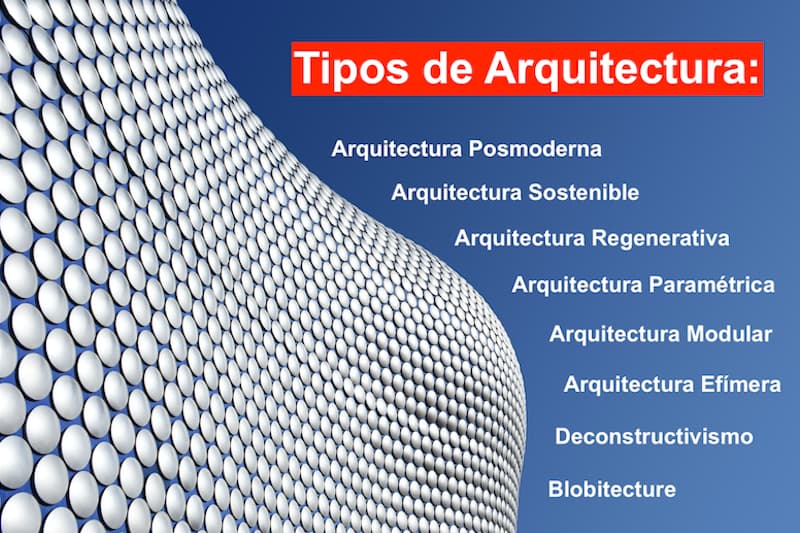
Tipos de Arquitectura: Explorando Más Allá de los Diseños Convencionales

FRASES DE ARQUITECTOS

Roles Arquitectura y Construcción (Profesiones Arquitectura)

Certificaciones para Arquitectos: Avanzando en la Excelencia Profesional

Roles BIM más Demandados en la Industria de la Construcción y el Sector AECO

Software BIM para Proyectos de Arquitectura y Construcción

Tecnología BIM: Beneficios y Ventajas en el sector AECO: Arquitectura, Ingeniería, Construcción y Operaciones

Modelo BIM

Modelo MEP

BIM 3D 4D 5D 6D 7D
AECO: Sector Arquitectura, Ingeniería, Construcción y Operaciones

Avances Tecnológicos en la Industria de la Construcción
Normas Técnicas de Edificación
!Explora el Mejor Directorio de Construcción! 🚧 🏗️ 👷♂️ (Sólo en ArquitecturaCarreras.com)


www.jmhdezhdez.com
jmhdezhdez.com — Arquitectura, Ingeniería y Documentación Técnica AECO
