- Inicio
- Ecosistema AECO
- _ATLAS AECO
- __Mapa Global Obras
- __Serie Const. Vanguardistas
- _Estudios de Arquitectura
- __en Madrid
- __en Barcelona
- _Estudios de Ingeniería
- __en Madrid
- _Estudios de Interiorismo
- __en Madrid
- __en Barcelona
- _Empresas Constructoras
- __en Madrid
- __en Barcelona
- _Empresas de Reformas
- __en Madrid
- _Empresas AECO en España
- __Fabricantes de Materiales
- __Modelado BIM
- __Software BIM
- __ Mediciones y Presupuesto
- __Consultoras BIM
- __Inmobiliarias y Real Estate
- __Investment & Transactions
- __Investment & Capital
- __Const. Industrializada
- __Neoconstrucción
- __Inversión y Des. de Suelo
- __CDE y Gestión Documental
- __Laboratorios AECO
- _Biblioteca Técnica AECO
- __Glosario AECO Global
- __Glosario de Construcción
- __Glosario de Edificación
- __Glosario BIM GTB-300
- __Edificación Circular
- _Entrevistas AECO
- __Jaime Sánchez-Álvarez
- _Visibilidad B2B
- __Premium Multicategoría
- __Ficha Corporativa B2B
- __Partners AECO
- Arquitectura
- _RASCACIELOS
- __Burj Khalifa Dubai
- __Edificio Chrysler, NY
- _Estilos Arquitectónicos
- __Arquitectura Posmoderna
- __Deconstructivismo
- __Arquitectura High Tech
- Arte
- _Arte Universal
- _Arte Contemporáneo
- __Serge Marshennikov
- __Damian Lechoszest
- __John Kacere
- _Escultura
- __El Ángel del Norte
- __La Musa Dormida
- __Venus de Milo
- __Moisés de Miguel Ángel
- __Baldaquino de San Pedro
- __El rapto de Proserpina
- __La Verdad Velada
- __Perseo con cabeza de Medusa
- __Venus de Willendorf
- _Pintura
- __Capilla Sixtina
- __Cuadros Famosos
- __La Creación de Adán
- __Venus del Espejo Velázquez
- __Hipómenes y Atalanta
- __Venus Boticelli
- __Silla de van Gogh
- __Jugadores de Cartas Cézanne
- __Cabeza de Medusa Caravaggio
- __Impresionismo
- __Posimpresionismo
- _Historia
- __Edad Moderna
- Curiosidades
- _Arquitectura y Arte
- _Tumba de Miguel Ángel
- FRASES
- _Frases de la semana
- _Arquitectos
- __Frank Gehry
- _Escultores
- __Miguel Ángel Buonarroti
- __Bernini
- __Rodin
- _Pintores
- __Picasso
- __Vincent van Gogh
- __Cézanne
- __Claude Monet
- __Henri Matisse
- __René Magritte
- __Caravaggio
- __Miguel Ángel
- Formación AECO
- _Másteres en España
- __Másteres BIM en España
- __Másteres de Arquitectura
- __Másteres de Ingeniería
- __Másteres de Construcción
- __Másteres en Interiorismo
- __Másteres Inmobiliarios
- __Máster Facility Management
- __Másteres de Smart Building
- __Máster Energía y Edificación
- __Máster en Infraestructuras
- __Másteres en Urbanismo
- __M. Project Management
- __M. Construcción Sostenible
- __M. Instalaciones MEP
- _Cursos BIM
- __Cursos BIM Online
- __Cursos Revit Online
- __Cursos Revit MEP online
- _Partner de Formación AECO
- _Formación AECO Empresas
- __en España
- __Capacitación en México
- __en Colombia


Arquitectura, Ingeniería, Construcción y Real Estate; tecnología AECO, metodología BIM, software AEC, modelado BIM, CDE, construcción industrializada, neoconstrucción, fabricantes de materiales y sistemas constructivos; empresas constructoras, promotoras inmobiliarias, fabricantes, proveedores y soluciones para el sector; investigación técnica, Atlas de Arquitectura e Innovación AECO, directorios profesionales y glosarios técnicos; Smart Home, Smart Building, diseño, arte, fotografía arquitectónica, ciudades, edificios, infraestructuras y cultura arquitectónica.
Architecture, Engineering, Construction and Real Estate; AECO technology, BIM methodology, AEC software, BIM modelling, CDE, industrialized construction, advanced construction, building materials manufacturers and construction systems; construction companies, real estate developers, manufacturers, suppliers and solutions for the industry; technical research, Atlas of Architecture and AECO Innovation, professional directories and technical glossaries; Smart Home, Smart Building, design, art, architectural photography, cities, buildings, infrastructure and architectural culture.

The Shard Code: Advanced Engineering and Luminous Kinematics

Series: Avant-Garde Constructions
Masterpieces of Architecture and Engineering: #58 The Shard London: Geometric Fracture and the Thermal Exchange Spire
How Does a 310-Meter Giant Dissipate Wind Loads and Solar Radiation Using Independent Glass Shards?
The Shard Code is the geometric logic governing the tower: eight independent, inclined, and non-converging shards that disrupt vortices, dissipate wind loads, and modulate ambient light. It is not a mere aesthetic choice or a whimsical form; it is a physical and structural algorithm engineered to redefine skyscraper behavior within the London skyline.
The redefinition of the London skyline was not executed through the brute force of mass, but rather through the lightness of physics and geometric optimization. Designed by architect Renzo Piano alongside his firm Renzo Piano Building Workshop (RPBW), The Shard (officially London Bridge Tower) rises on the south bank of the River Thames as a vertical city spanning 95 stories (68 of which are habitable and usable) and reaching an architectural height of 310 meters.

This architectural landmark emerged as a direct response to urban density policies at key transport hubs in the British capital, discouraging private vehicle use by connecting directly to the London Bridge transport interchange. Its pyramidal silhouette responds organically to its hybrid architecture and mixed-use program: wide, high-surface floor plates at the base for offices and retail; mid-level sectors for restaurants, public areas, and a hotel; and the narrower upper section reserved for private apartments before culminating in the public observation deck at a height of 240 meters.

A building of this scale in central London has to be slender, sharp, and light. We did not want an arrogant tower imposing itself on the city, but a fragment of glass, a transparent spire reflecting the ever-changing London sky. — Renzo Piano

Irregular Polygon Geometry and Vortex Control
The floor plan of The Shard is structured as an eight-sided irregular polygon, where each segment or "shard" adopts a completely different inclination angle and solar orientation. This parametric configuration resembles a monumental house of cards where successive layers fold inward.
Geometric Analysis: The Discontinuous Perimeter of Level 23 Mid-height office floor plan clearly exposing the actual operation of the Shard Code. Observing the technical drawing, the drastic contrast stands out between the rigid orthogonality of the central vertical circulation core and the angular freedom of the building's perimeter. Each facade behaves as an unbraced plane extending its directrix beyond the limits of the floor plate: a parametric design calibrated not only to fracture ambient light, but to effectively "fool" the wind and prevent the formation and synchronization of severe vortices due to the absence of sharp corners or continuous surfaces.
The core of the building's aerodynamic performance lies in the fact that the facade shards never touch each other. By maintaining independent glass sheet boundaries through physical discontinuities termed "fractures" or cracks, the accumulation of wind loads that typically penalize large, flat, converging surfaces is avoided. These fractures are not merely aesthetic devices: they function as mechanical diffusers open to prevailing winds, which in turn supply natural ventilation to a series of integrated enclosed glasshouses and winter gardens serving as common areas.
Other Issues in the Series:
ISSUE #01 | Burj Khalifa: The Wind Code
Stepping technique: how geometric variation tames vortices at 828 meters.
ISSUE #02 | CCTV Tower: Defying the Void
Beijing's most ambitious cantilever and the structural steel diagrid-grid that supports this continuous loop.
ISSUE #03 | Taipei 101: Dynamic Balance
Defying typhoons and earthquakes with the iconic 660-ton tuned mass damper.
ISSUE #08 | Fountain Place: Geometry in Motion
The polyhedral rigor of Henry N. Cobb: how a 10-faced prism achieves the dematerialization of architectural mass.

Functional Zoning and Structural Optimization of the Program
The tapered profile of the tower is not a formal whim, but a direct mathematical correlation between land value, spatial efficiency, and the luminous and structural requirements of each use. As the building gains height, the floor plate area is drastically reduced, decreasing from 3,200 m² at the base to barely 400 m² at the residential levels, optimizing the structural bay depth (the distance from the core to the facade) to guarantee that natural light reaches 100% of the habitable spaces.
The pyramidal shape is dictated by the very nature of mixed-use: offices require great structural depths to optimize technical workspaces, hotels and housing require medium-sized floor plates, and the peak naturally narrows to become a public observation deck open to the community. — Renzo Piano
Pinnacle Engineering: The Modular Spire as a Passive Heat Dissipator
While the main body of The Shard challenges the limits of high-rise construction through its structural hybridization, the upper terminating spire (The Spire, stories 73-95) constitutes a milestone in logistics engineering and applied thermodynamics. This steel superstructure, weighing an estimated 500 tons, rises from the 244-meter level to the absolute limit of its 310-meter architectural height. Due to the technical inviability of execution of welded joints and complex assemblies under the severe dynamic pressure and prevailing wind conditions of London at that altitude, the spire was designed under strict off-site modulation and industrialization, being completely pre-assembled in the shop before its sequential lifting with high-capacity tower cranes.Beyond its iconic function as an aesthetic crowning element mimicking the historic spires of London's churches, this section operates mechanically as a monumental passive radiator open to the elements. The structure deliberately abandons the airtight and thermally stabilized glazing of the lower levels to leave the high thermal conductivity of the structural steel exposed. Through the thermodynamic phenomenon of the stack effect, hot air masses accumulating in the reinforced concrete central core—caused by the thermal inertia of the electrical substation, services risers, and continuous mechanical friction from the network of 44 high-speed lifts—ascend naturally toward the upper levels. Wind currents whipping the pinnacle evacuate this surplus energy into the atmosphere 100% passively via natural convection, drastically alleviating thermal loads on the central HVAC units.

Load Transition and Programmatic Flexibility
This vertical distribution posed a complex structural engineering challenge: load transfer at multi-use change points. Offices require column-free floor plates with large spans and the fewest intermediate pillars possible, whereas the hotel and housing require dense compartmentalization.Connectivity Infrastructure (Stories 0-2): The triple-height podium acts as a large distributor that mitigates pedestrian flow bottlenecks, physically separating entryways and access paths for office users, hotel guests, residents, and the thousands of daily tourists heading to The View observation deck.
High-Efficiency Offices (Stories 4-28): Engineered with unobstructed spans thanks to cellular steel beams that allow integrated routing of HVAC and telecommunication systems without penalizing clear ceiling height.
The Transition Sector (Stories 29-30): Functions as the technical and services boundary. A key technical floor is located here to absorb plant transitions and act as an acoustic and vibratory buffer between office zones and restaurant areas.
Structural Hybridization (Hotel and Residential, Stories 34-65): From story 34 upward, the steel frame gives way to post-tensioned concrete floor slabs. This technical decision minimized slab thickness, gaining usable headroom, and provided the necessary mass to dampen building oscillation caused by wind—a critical factor for ensuring acoustic and vibration comfort in the ultra-luxury residential units.
The material hybridization of The Shard was the optimal response to a complex vertical program. We used steel on the lower office floors to achieve column-free spans of up to 15 meters, but transitioned to post-tensioned concrete at the hotel and residential levels. This allowed us to reduce slab depth, insert additional floors within the same overall height, and add the necessary mass to dissipate wind accelerations without requiring a tuned mass damper (TMD). — Kamran Moazami (WSP)

The Active Envelope: Passive Ventilated Double-Skin Facade
The asymmetry of the massing demanded complex envelope engineering, totaling more than 55,700 square meters of architectural components distributed across roughly 11,000 facade units. To ensure the highest light transmission index and a crystalline transparency that mirrors the shifting thermal mutations of the London sky, low-iron extra-clear glass was exclusively specified.
Given that conventional exterior blinds suffer mechanical fatigue failures under high-altitude dynamic wind pressures, the technical team engineered a passive ventilated double-skin facade. The system comprises a double-glazed inner pane and a single-glazed outer pane. The ventilated intermediate cavity houses automated solar shading blinds that react in real time via light sensors calibrated to the season and time of day. To mitigate the visual presence of supporting frame elements, the glazing panels overlap the perimeter structural steel framing.
The energy challenge consisted of achieving the maximum transparency demanded by Renzo Piano without transforming the tower into a giant greenhouse. We designed a double-skin facade with a passively ventilated 250 mm cavity; the motorized blinds are located within that wind-protected chamber, reducing solar heat gain by 55% and enabling the use of extra-clear glass with a light transmission index higher than that of any conventional skyscraper. — Facade Climate and Sustainability Analysis by Arup

Slip-Formed Core and Vertical Circulation
The structural framework combines a reinforced concrete central core erected using slip-forming construction with a perimeter framework of steel columns. The core absorbs shear and torsional loads, housing the services risers and emergency escape staircases within its perimeter.Vertical circulation and independent access sectorization for the mixed-use program are resolved via a network of 44 high-speed lifts operating under single and double-deck configurations, linking the tower's lobby directly with lower rail terminals and the completely redeveloped bus station beneath a large glazed canopy.

Luminous Kinematics: The Optical Performance of the Facade
The Shard does not behave as an opaque mass, but as a dynamic optical mechanism reacting with London's shifting atmosphere. Its architecture is not static; it is pure luminous kinematics executed through the architecture and engineering of its envelope.Refraction within the "Fractures": The eight glass shards that make up the tower never touch. These intermediate cracks or fissures allow the building to visually "breathe," fracturing solar light and generating internal and external luminous variations throughout the day.
The Intelligent Double Skin: The facade features a mechanically ventilated double skin. Within it, an automated blind system (controlled by the building management system or BMS) triggers according to the solar angle of incidence, regulating thermal radiation without compromising transparency.
Low-Iron Glass: The use of low-iron glass radically alters the perception of the massing. By eliminating the typical greenish tint of traditional glazing, the tower acquires a crystalline transparency that faithfully reflects the color of the sky, clouds, and changing seasons.
Seasonal and Hourly Mutation: Thanks to the precise inclination of the glass shards, the building absorbs and refracts light differently at dawn, midday, or dusk. The Shard ceases to be a mere object and becomes a mirror of the London weather itself.

Industrial Specifications and Partners
INDUSTRIAL COMPONENT| Technical-Construction Specialty | Official Partner / Provider | Execution and Site Supply |
|---|---|---|
| Ownership / Development | London Bridge Quarter Ltd | Investment partnership responsible for the financial capital and asset management for the urban reconfiguration of the district. |
| Real Estate Development | Sellar Property Group | Leading development firm in charge of conceptualization, site viability, and executive management of the master plan. |
| Architect of Record (AoR) | Adamson Associates | Technical coordination, production of construction drawings, and adaptation of the architectural design to British building codes. |
| Structural Engineering (Design) | WSP Group (WSP Cantor Seinuk) | Structural analysis of the tower, engineering design of the concrete core, and tectonic transition to post-tensioned floor slabs. |
| MEP Engineering (Services) | Arup | Integrated layout and design of HVAC, electrical power systems, and industrial plumbing tailored to the vertical mixed-use program. |
| Construction Management (Main Contractor) | Mace Limited | General contractor responsible for site construction management, high-rise logistics, and delivery scheduling. |
| Facade Consultancy | Connell Mott MacDonald | Specialist engineering focused on curtain wall pressure analysis and the technical feasibility of the self-contained glass shards. |
| Wind Tunnel and Aerodynamics | RWDI | Scaled aerodynamic wind tunnel testing and CFD simulation to calibrate dynamic wind loads on the glazing shards. |
| Vertical Transportation | Lerch Bates Europe | Design and circulation flow engineering of the 44 high-speed lifts network to properly handle independent zone accessibility. |
| Structural Steelwork | Severfield | Fabrication, supply, and erection of the complex perimeter steel frame and cellular beams across the office levels. |
| Facade Fabrication | Permasteelisa Group | Supply and production engineering of the 11,000 modular units of the double-skin curtain wall executed via its subsidiary Scheldebouw. |
| Concrete Systems | Byrne Group PLC | Concrete supply and placement for the slip-formed core and post-tensioned floor plates on the upper levels. |
| Elevator Systems | KONE | Technological installation of the high-speed elevators, including the double-deck cabin configurations. |
| Structural Adhesives | Dow Corning Corporation | Supply of high-strength structural silicones and weathering sealants for elastic bonding of the glazed envelope. |
| Maintenance Access Units | CoxGomyl | Engineering design and supply of the telescopic BMU systems integrated within the spire for exterior glass panel servicing. |
Are you the manufacturer, installer, or technical specifier for any of these components?
Request the activation of your partner link by writing to:
info@jmhdezhdez.com
The reinforced concrete central core advanced at a steady pace of up to 3 meters per day using slipforming, allowing the perimeter steel frame to be anchored simultaneously in an engineering choreography that minimized lifting and crane times in a hyper-dense urban environment.

The Triumph of Eco-Tech Architecture and the Vertical Mechanism
The Shard represents the triumph of high-tech architecture applied to high-density urban regeneration. Its success lies not only in breaking height records within the British context, but in the passive intelligence of its ever-changing skin. By fragmenting the envelope into eight shards that breathe, Renzo Piano and the facade engineers managed to reconcile the structural demands of wind resistance with a luminous transparency that transforms the building into a chameleonic structure perfectly integrated into London's atmosphere.Ultimately, the tower is not a conventional volume: it is an optical and aerodynamic instrument on an urban scale. It represents the perfect convergence between wind-defying aerodynamics, a hybrid concrete and steel structure that optimizes loads, an active envelope, and an optical behavior that dialogues with light. A vertical city where each shard operates, with mathematical precision, as a piece of a larger code, forming a whole.
Our intention with The Shard was to create an architecture with changing qualities, capable of responding to the nuances of London's weather and atmosphere. It was not about celebrating power or money, but about designing a building that gave something back to public life and the urban fabric of the city. — Renzo Piano


Frequently Asked Questions about The Shard design by Renzo Piano & WSP:
Why is this skyscraper called "The Shard"?
The term comes from the English word shard, meaning a sharp piece of broken glass. The name was adopted due to the aesthetic proposal by Renzo Piano, who designed the facade fragmented into eight independent glass bodies that taper toward the apex without touching, mimicking floating crystalline fragments.
Where was The Shard erected and what did the site preparation and subsoil restructuring entail?
The tower was built in the heart of Southwark, on the site previously occupied by the former 1975 Southwark Towers. Its preparation required the controlled and confined demolition of these 24-story offices, tightly situated next to the railway viaduct. This process was executed in parallel with a total remodeling of the London Bridge underground station, which forced the restructuring and reinforcement of the operational subsoil to divert structural loads without disrupting heavy passenger and train traffic.
How does the tower solve solar overheating without using dark or mirrored glass?
A passive twin-skin double-skin ventilated facade system using extra-clear low-iron glass was implemented. Inside the ventilated air cavity, automated blinds were installed, which deploy or retract via building management software that analyzes solar radiation and light levels in real time according to the orientation of each shard.
What did this project mean for the adjacent transport infrastructure?
The development brought about the comprehensive remodeling of the London Bridge train station and bus terminal. The old opaque roof was replaced with a glazed concourse canopy that optimizes natural light, commercial retail units were relocated to open direct visual lines between platforms, buses, and taxi ranks, and two new 30-by-30-meter public piazzas were created.
AECO Technical Glossary of the AECO Sector | Structural Concepts and Envelopes
Low-Iron Glass: Float glass of high clarity formulated with a reduced iron oxide content to eliminate the green tint characteristic of standard glass, maximizing visible light transmission and color neutrality.
Double-Skin Facade: Building envelope system consisting of two glass skins separated by a ventilated air cavity that acts as a thermal buffer, allowing solar shading devices to be housed and protected from wind action.
Slip-Form: A construction technique in which concrete is poured into a steel mold that continuously moves vertically via hydraulic jacks, enabling the erection of tall monolithic structures (such as skyscraper cores) without interruption joints.
Torsional Stress: Tangential force that tends to twist a body around its longitudinal axis, caused by asymmetrical loads or the dynamic action of wind on irregular architectural geometries.
Wind Load: Structural force exerted by the kinetic energy of moving air onto a building, which must be dissipated, diverted, or absorbed by the structural system and the aerodynamic design of the envelope.
Winter Garden: A semi-exterior glazed space integrated into the building's architecture that harnesses the greenhouse effect for passive thermal conditioning and natural ventilation, acting as an environmental buffer and communal zone.
Hybrid Architecture: The formal and typological expression of large-scale mixed-use, characterized by the integration and interdependence of diverse functional programs (offices, residential, hotel, viewing galleries) and their respective construction systems within a single continuous physical structure.
Vertical City: The evolution of the contemporary skyscraper conceived as an autonomous and self-sufficient urban ecosystem. It vertically stacks all essential functions of a conventional city (work, living, commerce, hospitality, and open public space), optimizing land use and ensuring an uninterrupted urban dynamic.
Core as a Heat Sink (Thermal Mass): The capacity of The Shard’s reinforced concrete central core to leverage its massive thermal inertia. Throughout the day, it continuously absorbs excess thermal energy dissipated by the mechanical friction of the 44 high-speed lifts, power lines, and telecommunications losses, avoiding overloading the air handling units and fan coils of the HVAC systems.
Stack Effect: A thermodynamic physical phenomenon where warm air inside the core tends to rise naturally toward higher elevations due to differences in density and pressure. In The Shard, the tower's conical geometry channels this high-temperature airflow across the vertical span of the core to drive it straight into the upper topping (levels 75 to 95).
The Spire as a Passive Radiator: A modular engineering solution where the structure transitions from concrete to pure structural steel, remaining completely exposed to the elements without weather-tight glazing. It exploits the high thermal conductivity of its 500 tons of steel and London's harsh wind currents at over 300 meters to vent and dissipate the rising heat via natural convection in a 100% passive manner.
Series: Avant-Garde Constructions | jmhdezhdez.com
Credits and Documentation
Text, Technical Analysis and Editing: © José Miguel Hernández Hernández
Structural Plans and Concept Drawings:
© Renzo Piano Building Workshop (RPBW)
/ Documentation Archive under copyright of © Politecnico di Milano
Images 2 and 4 (Low-Angle View and Facade Detail):
© Permasteelisa Group
Photo (The Shard at Dawn): © Michael Shellim
Photo of Connection with London Bridge Station:
© Nic Lehoux

José Miguel Hernández Hernández
International authority on the technical analysis of iconic and sculptural architecture. Specialist in the intersection of engineering, aesthetics, and avant-garde design. Author of the bilingual technical books Turning Torso – Santiago Calatrava and Construcciones Famosas / Famous Constructions.

Publicado por José Miguel


José Miguel Hernández Hernández
Consultor Smart Home y Movilidad Eléctrica AECO
Servicios Destacados
⚡ Consultoría Movilidad Eléctrica
Proyectos CICE e ITC-BT-52.
🎓 Formación BIM / AECO
Especialización técnica avanzada.
📩 Suscripción Nodo Maestro
Innovación y normativa Smart.


Ecosistemas Smart Home por Tipología Guías técnicas y selección de dispositivos para proyectos de arquitectura e interiorismo en Pisos, Lofts, Casas Grandes, Dúplex, Áticos y Villas de Lujo. Integra automatización adaptada a cada espacio.
Ver Guía por Tipologías →
Directorio de Fotógrafos de Arquitectura en España: Descubre a los Mejores Expertos en Fotografía Arquitectónica para Documentar tus Proyectos y Obras

Fotografía Arquitectónica: La Guía Definitiva para Capturar Diseño, Estética y Función de Edificios y Estructuras

Fotografía y Vídeo Timelapse

El Rol del Fotógrafo de Arquitectura

Cámaras Réflex y Objetivos Tilt-Shift para Fotografía de Arquitectura

Estilos Arquitectónicos Modernos: Un Viaje a Través de la Creatividad y la Innovación

ARQUITECTURA CARRERA: Descubre todas las Opciones de la Carrera en Arquitectura y Grados en España

Comparativa de las Mejores Universidades de Arquitectura del Mundo: Internacional, Europa, LATAM

Los Mejores Libros de Arquitectura para Arquitectos

Libros para Estudiar Arquitectura

Libros para Arquitectos Principiantes: Guías y Recursos Esenciales para Comenzar tu Carrera

Los Mejores Libros de Arquitectura para Estudiantes durante la Carrera

Era Digital de la Construcción: Innovaciones Tecnológicas en Arquitectura y Edificación

Comparativa de Los Mejores Ordenadores para Arquitectos en 2024

Las Mejores Laptops para Arquitectura en 2024

Los Mejores Ordenadores de Arquitectura para Estudiantes

Significado de: Términos Clave sobre Arquitectura, Ingeniería y Construcción

Arquitectos: Descubre el Mejor Directorio de Arquitectos que podrás encontrar en Internet (Sólo en AC)
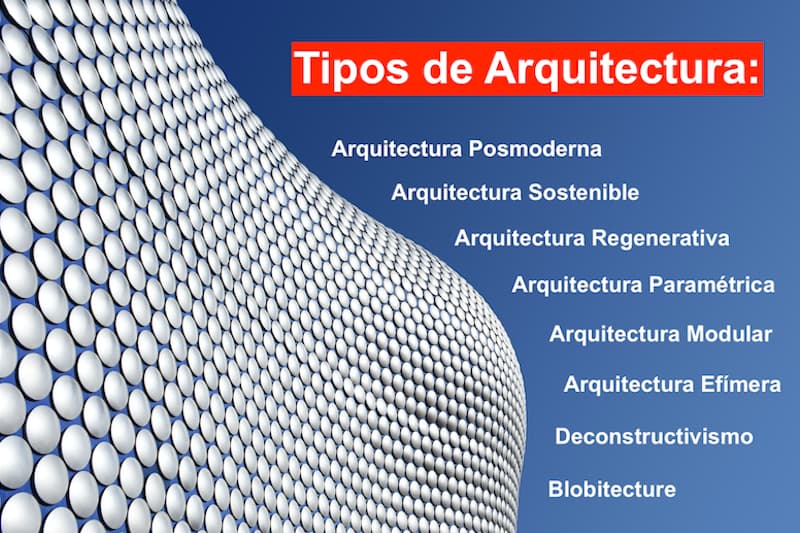
Tipos de Arquitectura: Explorando Más Allá de los Diseños Convencionales

FRASES DE ARQUITECTOS

Roles Arquitectura y Construcción (Profesiones Arquitectura)

Certificaciones para Arquitectos: Avanzando en la Excelencia Profesional

Roles BIM más Demandados en la Industria de la Construcción y el Sector AECO

Software BIM para Proyectos de Arquitectura y Construcción

Tecnología BIM: Beneficios y Ventajas en el sector AECO: Arquitectura, Ingeniería, Construcción y Operaciones

Modelo BIM

Modelo MEP

BIM 3D 4D 5D 6D 7D

AECO: Sector Arquitectura, Ingeniería, Construcción y Operaciones

Avances Tecnológicos en la Industria de la Construcción

Normas Técnicas de Edificación

!Explora el Mejor Directorio de Construcción! 🚧 🏗️ 👷♂️ (Sólo en ArquitecturaCarreras.com)


www.jmhdezhdez.com
Arquitectura, Ingeniería y Documentación Técnica AECO
