- Inicio
- Ecosistema AECO
- _ATLAS AECO
- __Mapa Global Obras
- __Serie Const. Vanguardistas
- _Estudios de Arquitectura
- __en Madrid
- __en Barcelona
- _Estudios de Ingeniería
- __en Madrid
- _Estudios de Interiorismo
- __en Madrid
- __en Barcelona
- _Empresas Constructoras
- __en Madrid
- __en Barcelona
- _Empresas de Reformas
- __en Madrid
- _Empresas AECO en España
- __Fabricantes de Materiales
- __Modelado BIM
- __Software BIM
- __ Mediciones y Presupuesto
- __Consultoras BIM
- __Inmobiliarias y Real Estate
- __Investment & Transactions
- __Investment & Capital
- __Const. Industrializada
- __Neoconstrucción
- __Inversión y Des. de Suelo
- __CDE y Gestión Documental
- __Laboratorios AECO
- _Biblioteca Técnica AECO
- __Glosario AECO Global
- __Glosario de Construcción
- __Glosario de Edificación
- __Glosario BIM GTB-300
- __Edificación Circular
- _Entrevistas AECO
- __Jaime Sánchez-Álvarez
- _Visibilidad B2B
- __Premium Multicategoría
- __Ficha Corporativa B2B
- __Partners AECO
- Arquitectura
- _RASCACIELOS
- __Burj Khalifa Dubai
- __Edificio Chrysler, NY
- _Estilos Arquitectónicos
- __Arquitectura Posmoderna
- __Deconstructivismo
- __Arquitectura High Tech
- Arte
- _Arte Universal
- _Arte Contemporáneo
- __Serge Marshennikov
- __Damian Lechoszest
- __John Kacere
- _Escultura
- __El Ángel del Norte
- __La Musa Dormida
- __Venus de Milo
- __Moisés de Miguel Ángel
- __Baldaquino de San Pedro
- __El rapto de Proserpina
- __La Verdad Velada
- __Perseo con cabeza de Medusa
- __Venus de Willendorf
- _Pintura
- __Capilla Sixtina
- __Cuadros Famosos
- __La Creación de Adán
- __Venus del Espejo Velázquez
- __Hipómenes y Atalanta
- __Venus Boticelli
- __Silla de van Gogh
- __Jugadores de Cartas Cézanne
- __Cabeza de Medusa Caravaggio
- __Impresionismo
- __Posimpresionismo
- _Historia
- __Edad Moderna
- Curiosidades
- _Arquitectura y Arte
- _Tumba de Miguel Ángel
- FRASES
- _Frases de la semana
- _Arquitectos
- __Frank Gehry
- _Escultores
- __Miguel Ángel Buonarroti
- __Bernini
- __Rodin
- _Pintores
- __Picasso
- __Vincent van Gogh
- __Cézanne
- __Claude Monet
- __Henri Matisse
- __René Magritte
- __Caravaggio
- __Miguel Ángel
- Formación AECO
- _Másteres en España
- __Másteres BIM en España
- __Másteres de Arquitectura
- __Másteres de Ingeniería
- __Másteres de Construcción
- __Másteres en Interiorismo
- __Másteres Inmobiliarios
- __Máster Facility Management
- __Másteres de Smart Building
- __Máster Energía y Edificación
- __Máster en Infraestructuras
- __Másteres en Urbanismo
- __M. Project Management
- __M. Construcción Sostenible
- __M. Instalaciones MEP
- _Cursos BIM
- __Cursos BIM Online
- __Cursos Revit Online
- __Cursos Revit MEP online
- _Partner de Formación AECO
- _Formación AECO Empresas
- __en España
- __Capacitación en México
- __en Colombia


Arquitectura, Ingeniería, Construcción y Real Estate; tecnología AECO, metodología BIM, software AEC, modelado BIM, CDE, construcción industrializada, neoconstrucción, fabricantes de materiales y sistemas constructivos; empresas constructoras, promotoras inmobiliarias, fabricantes, proveedores y soluciones para el sector; investigación técnica, Atlas de Arquitectura e Innovación AECO, directorios profesionales y glosarios técnicos; Smart Home, Smart Building, diseño, arte, fotografía arquitectónica, ciudades, edificios, infraestructuras y cultura arquitectónica.
Architecture, Engineering, Construction and Real Estate; AECO technology, BIM methodology, AEC software, BIM modelling, CDE, industrialized construction, advanced construction, building materials manufacturers and construction systems; construction companies, real estate developers, manufacturers, suppliers and solutions for the industry; technical research, Atlas of Architecture and AECO Innovation, professional directories and technical glossaries; Smart Home, Smart Building, design, art, architectural photography, cities, buildings, infrastructure and architectural culture.

Taipei 101: The Giant Pendulum that Defied 21st Century Engineering

Series: Avant-Garde Constructions
Masterpieces of Architecture and Engineering: #03 Taipei 101, Taiwan
Architecture as a Living Organism: Beyond Verticality
The Taipei 101 (2004) is not just a 508-meter skyscraper; it is Southeast Asia's definitive response to the tyranny of wind and seismic forces. Designed by C.Y. Lee & Partners, its silhouette is not only an icon but an applied physics laboratory. In a region prone to 250-300 km/h typhoons and extreme seismic activity, the tower eschews absolute rigidity in favor of dynamic resilience, achieving an oscillation period of just 7 seconds—well below the average for 101-story towers—thanks to engineering that balances extreme stiffness with controlled ductility.

Colossal Foundations and 'Megaframe' Superstructure
Stability begins in Taipei’s complex subsoil: 380 bored piles (1.5 m in diameter) penetrate 60 meters of clay to reach solid bedrock. The superstructure is articulated through a Mega-column system (steel pipes filled with 10,000 psi high-strength concrete) connected to the core via outriggers (lattice trusses) at mechanical levels.

The challenge was not only stiffness but avoiding brittleness: nodes were designed with 'dogbone' ductility details (Reduced Beam Sections), allowing the building to deform safely during a seismic event without collapsing—a drift control strategy that defines 21st-century safety standards.
Other Issues in the Series:
ISSUE #01 | Burj Khalifa: The Wind Code
Stepping technique: how geometric variation tames vortices at 828 meters.
ISSUE #02 | CCTV Tower: Defying the Void
Beijing's most ambitious cantilever and the structural steel diagrid-grid that supports this continuous loop.
ISSUE #04 | Hearst Tower: The NY Diamond
The efficiency of the Diagrid system: saving 20% of steel and redefining sustainability.
ISSUE #05 | Marqués de Riscal: Deconstructing Tradition
Frank Gehry’s parametric maturity: symbiosis between anodized titanium and 1860 heritage via aerospace software.

Geometry and Symbolism: The "Sawtooth" and the 8-Point Pagoda
The design of Taipei 101 is an exercise in syncretism between culture and engineering. The 8-point pagoda silhouette—a number representing luck and prosperity in Taiwan—is not merely a symbolic gesture; it is the tower's aerodynamic key. The 2.5-meter notched corners (the "Sawtooth") actively disrupt wind flow, preventing the formation of synchronized vortices that would cause the structure to oscillate. It is an architecture that "shatters" the wind through geometry, transforming a cultural requirement into a world-class structural protection strategy.
Design is not just a matter of height, but of how a structure can rise toward the sky like a bamboo shoot, symbolizing eternal growth supported by the strength of its nodes.

The "Damper Baby": Inertia and Resonance
The 660-tonne pendulum (manually tuned like a guitar) is the key to occupant comfort.
- Harmonic Synchronization: It moves in counter-phase to the tower's oscillation.
- "Lock-down" Effect: During severe seismic events, viscous dampers (dashpots) instantly increase resistance, limiting the mass's excessive travel and preventing destructive impacts between the damping system's components.
In a place where typhoons and earthquakes are the norm, we do not fight nature; we design a structure capable of absorbing and dissipating that massive energy through perfect dynamic balance.

Taipei 101 is not just Asia's iconic skyscraper. It is a demonstration that 21st-century architecture does not seek to resist nature but to engage in a dialogue with it through physics, mass, and inertia.
Comparison: Structural Stability Strategies
| Building | Technical Solution | Philosophy |
|---|---|---|
| Taipei 101 | Active Mass (TMD) + Ductility | Absorption |
| Burj Khalifa | Aerodynamics (Stepping) | Confusion |
| CCTV Tower | Stress Grid (Diagrid) | Distribution |
| Turning Torso | Concrete Core + Steel Diagrid | Controlled Torsional Rigidity |
Technical Comparison: Stability vs. Rigidity
As analyzed in my book "TURNING TORSO - SANTIAGO CALATRAVA", modern engineering has moved beyond the paradigm of excessive flexibility:
- HSB Turning Torso (190m): Rigidity through a reinforced concrete central core and a steel exoskeleton (diagrid) designed to absorb torsional forces.
- CCTV Tower (234m): Symbiotic stability through a closed-loop structure; the diagrid functions as an optimized "stress map."
- Burj Khalifa (828m): Aerodynamic stability via the buttressed core and the disruption of vortices through structural stepping.
- Taipei 101 (508m): Inertial stability through active mass (TMD) and a ductile mega-structure engineered for extreme seismic events.
Industrial Specifications & Partners | Taipei 101
CTBUH OFFICIAL DATA| Component / System | Partner / Brand | Technical Application & Site Execution |
|---|---|---|
| Main Contractors | Kumagai Gumi / RSEA / Samsung C&T / Ta-You-Wei | Joint venture in charge of structural construction management, mega-column erection, and high-strength concrete pouring under extreme tensile loads. |
| Seismic & Wind Damping (TMD) | Motioneering / ITT Enidine / RWDI | Engineering and commissioning of the 660-metric-ton Tuned Mass Damper (TMD) and hydraulic viscous dampers for wind-induced fatigue mitigation. |
| Structural Steel | China Steel Corp / Nippon Steel | Supply of heavy steel plates processed via Thermo-Mechanical Control Process (TMCP) with a low yield ratio to ensure elastoplastic ductility during high-magnitude seismic events. |
| Façade & Curtain Wall | ALT Limited / Permasteelisa Group | Enclosure engineering consultancy and supply of modular unitized panels for the sloped structural double-glazed curtain wall system. |
| Vertical Transportation | Toshiba Elevator (TELC) / Lerch Bates | Manufacturing and design consultancy for ultra-high-speed Double-Deck elevators featuring atmospheric pressure regulation and aerodynamic shrouds. |
| HVAC & Building Integration | Carrier / York / Siemens Building Tech | MEP installation of high-efficiency water chillers and building automation systems (BAS) for centralized environmental control and **LEED** certification. |
| Structural & Seismic Monitoring | Kinemetrics Inc. | Instrumentation network comprising high-resolution digital accelerographs for real-time evaluation of the skyscraper's dynamic behavior. |
| Sealants & Coatings | Dow Corning / Jotun / Grace Construction | Supply of high-performance silicone structural sealants, advanced anti-corrosion protective coatings, and mortars for passive fire protection (PFP). |
| Façade Maintenance (BMU) | CoxGomyl / Alimak Hek | Engineering of telescopic Building Maintenance Units (BMUs) and rack-and-pinion mechanical hoists for the construction and maintenance phases. |
Are you the manufacturer, installer, or technical specifier for any of these components?
Request the activation of your partner backlink for this technical series by writing to:
info@jmhdezhdez.com
Do you want to delve deeper into structural design?
If you are passionate about cutting-edge engineering, discover the secrets of structural design in my works. Hundreds of technical illustrations dissect how the great landmarks of the global skyline defy the limits of physics and architecture.
Bilingual Technical Works / Obras Técnicas Bilingües


Taipei 101 Structural Engineering FAQ:
Why is the combination of concrete and steel superior in this case?
Taipei 101’s structural superiority lies in its Megaframe system: a reinforced concrete core working in tandem with 8 perimeter mega-columns, connected via outriggers. This integration allows the system to act as a unified whole, combining the inertial mass of concrete with the ductility of steel to maximize global stiffness against extreme lateral loads.
What is the TMD "Lock-down" effect?
It is a mechanical safety response where viscous dampers (dashpots) instantly increase their resistance under extreme forces. This limits the pendulum's travel to prevent impacts against the internal structure during high-magnitude seismic events.
How do the "Sawtooth" notches contribute to stability?
They function as aerodynamic dissipators. By breaking the continuity of the facade at the corners, they disrupt the formation of synchronized vortices (vortex shedding) that could otherwise induce dangerous resonant oscillations caused by wind.
What is the technical function of the "Outriggers"?
They act as high-stiffness trusses connecting the central core to the perimeter mega-columns. This allows the columns to work in tension and compression, transforming the wind's bending moment into axial force pairs that drastically increase overall rigidity.
Why use high-strength concrete (10,000 psi)?
It allows for a significant reduction in the cross-section of the mega-columns—especially at lower levels—optimizing leasable space without compromising the axial load capacity required to support the 508-meter height.
What are the perimeter mega-columns?
They are massive structural pillars that support the vertical gravity load. In Taipei 101, their oversized design and connection to the core through outriggers are vital for lateral stability against earthquakes and typhoons.
Why does Taipei 101 have a giant pendulum inside?
The Tuned Mass Damper (TMD) is a 660-tonne mass damper that absorbs the building's kinetic energy. By oscillating in counter-phase to the tower, it reduces wind-induced acceleration, significantly improving occupant comfort.
AECO Architecture & Engineering Glossary | Taipei 101, Taiwan
Tuned Mass Damper (TMD): A 660-metric-ton harmonic absorber. This massive steel pendulum counteracts the building's sway through out-of-phase oscillation, significantly reducing lateral acceleration caused by typhoons and high-altitude winds.
Sawtooth Effect: A corner design featuring 2.5-meter notches that function as aerodynamic spoilers. This geometry actively disrupts airflow to prevent the formation of synchronized vortices, which would otherwise induce hazardous structural resonance.
Dogbone Ductility: A seismic engineering technique utilizing Reduced Beam Sections (RBS). It allows the structure to absorb energy by deforming plastically at controlled points, preventing brittle failure of primary joints during major seismic events.
10,000 psi Mega-columns: Colossal steel pillars filled with high-strength concrete. This hybrid system supports extreme axial loads with optimized cross-sections, connected to the core via heavy-duty truss beams known as outriggers.
Lock-down Mechanism: A safety response in viscous dampers that instantaneously increases resistance during extreme events. It limits the mass's travel distance to prevent destructive impacts against the internal structural housing.
Dynamic Resilience: A design philosophy where the tower prioritizes energy dissipation over absolute rigidity. By balancing mass and inertia, the building maintains a controlled oscillation period (approx. 7 seconds) tailored to Taiwan's extreme climate.
Series: Avant-Garde Constructions | jmhdezhdez.com





José Miguel Hernández Hernández
International reference in the technical analysis of iconic and sculptural architecture. Specialist in the intersection between engineering, aesthetics, and vanguard design. Author of the bilingual technical books Turning Torso – Santiago Calatrava and Famous Constructions.

Publicado por José Miguel


José Miguel Hernández Hernández
Consultor Smart Home y Movilidad Eléctrica AECO
Servicios Destacados
⚡ Consultoría Movilidad Eléctrica
Proyectos CICE e ITC-BT-52.
🎓 Formación BIM / AECO
Especialización técnica avanzada.
📩 Suscripción Nodo Maestro
Innovación y normativa Smart.


Ecosistemas Smart Home por Tipología Guías técnicas y selección de dispositivos para proyectos de arquitectura e interiorismo en Pisos, Lofts, Casas Grandes, Dúplex, Áticos y Villas de Lujo. Integra automatización adaptada a cada espacio.
Ver Guía por Tipologías →
Directorio de Fotógrafos de Arquitectura en España: Descubre a los Mejores Expertos en Fotografía Arquitectónica para Documentar tus Proyectos y Obras

Fotografía Arquitectónica: La Guía Definitiva para Capturar Diseño, Estética y Función de Edificios y Estructuras

Fotografía y Vídeo Timelapse

El Rol del Fotógrafo de Arquitectura

Cámaras Réflex y Objetivos Tilt-Shift para Fotografía de Arquitectura

Estilos Arquitectónicos Modernos: Un Viaje a Través de la Creatividad y la Innovación

ARQUITECTURA CARRERA: Descubre todas las Opciones de la Carrera en Arquitectura y Grados en España

Comparativa de las Mejores Universidades de Arquitectura del Mundo: Internacional, Europa, LATAM

Los Mejores Libros de Arquitectura para Arquitectos

Libros para Estudiar Arquitectura

Libros para Arquitectos Principiantes: Guías y Recursos Esenciales para Comenzar tu Carrera

Los Mejores Libros de Arquitectura para Estudiantes durante la Carrera

Era Digital de la Construcción: Innovaciones Tecnológicas en Arquitectura y Edificación

Comparativa de Los Mejores Ordenadores para Arquitectos en 2024

Las Mejores Laptops para Arquitectura en 2024

Los Mejores Ordenadores de Arquitectura para Estudiantes

Significado de: Términos Clave sobre Arquitectura, Ingeniería y Construcción

Arquitectos: Descubre el Mejor Directorio de Arquitectos que podrás encontrar en Internet (Sólo en AC)
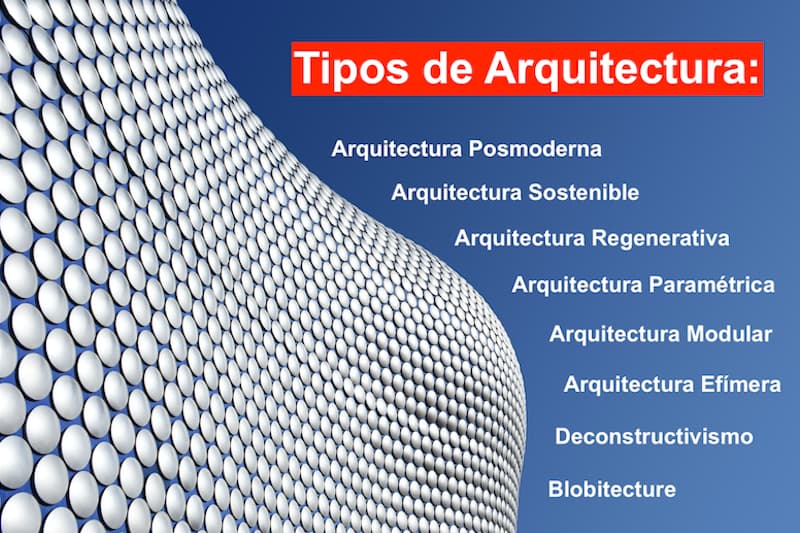
Tipos de Arquitectura: Explorando Más Allá de los Diseños Convencionales

FRASES DE ARQUITECTOS

Roles Arquitectura y Construcción (Profesiones Arquitectura)

Certificaciones para Arquitectos: Avanzando en la Excelencia Profesional

Roles BIM más Demandados en la Industria de la Construcción y el Sector AECO

Software BIM para Proyectos de Arquitectura y Construcción

Tecnología BIM: Beneficios y Ventajas en el sector AECO: Arquitectura, Ingeniería, Construcción y Operaciones

Modelo BIM

Modelo MEP

BIM 3D 4D 5D 6D 7D
AECO: Sector Arquitectura, Ingeniería, Construcción y Operaciones

Avances Tecnológicos en la Industria de la Construcción
Normas Técnicas de Edificación
!Explora el Mejor Directorio de Construcción! 🚧 🏗️ 👷♂️ (Sólo en ArquitecturaCarreras.com)


www.jmhdezhdez.com
Arquitectura, Ingeniería y Documentación Técnica AECO
