- Inicio
- Arquitectura
- _RASCACIELOS
- __Burj Khalifa Dubai
- __Edificio Chrysler, NY
- _Estilos Arquitectónicos
- __Arquitectura Posmoderna
- __Deconstructivismo
- __Arquitectura High Tech
- _Serie Const. Vanguardistas
- Arte
- _Arte Universal
- _Arte Contemporáneo
- __Serge Marshennikov
- __Damian Lechoszest
- __John Kacere
- _Escultura
- __El Ángel del Norte
- __La Musa Dormida
- __Venus de Milo
- __Moisés de Miguel Ángel
- __Baldaquino de San Pedro
- __El rapto de Proserpina
- __La Verdad Velada
- __Perseo con cabeza de Medusa
- __Venus de Willendorf
- _Pintura
- __Capilla Sixtina
- __Cuadros Famosos
- __La Creación de Adán
- __Venus del Espejo Velázquez
- __Hipómenes y Atalanta
- __Venus Boticelli
- __Silla de van Gogh
- __Jugadores de Cartas Cézanne
- __Cabeza de Medusa Caravaggio
- __Impresionismo
- __Posimpresionismo
- _Historia
- __Edad Moderna
- Curiosidades
- _Arquitectura y Arte
- _Tumba de Miguel Ángel
- FRASES
- _Frases de la semana
- _Arquitectos
- __Frank Gehry
- _Escultores
- __Miguel Ángel Buonarroti
- __Bernini
- __Rodin
- _Pintores
- __Picasso
- __Vincent van Gogh
- __Cézanne
- __Claude Monet
- __Henri Matisse
- __René Magritte
- __Caravaggio
- __Miguel Ángel
- CULTURA
- _Museos
- __Museo del Louvre
- Formación
- _Formación BIM Online
- _Cursos Domestika
- Más
- _ENTREVISTAS
- __Johannes Wesskmark
- __Nathan Zawaya


Arquitectura, Escultura, Pintura, Ingeniería, Software-Programas de Diseño Arquitectónico: Metodología BIM, Revit, AutoCAD, 3ds max, Animación; Software de Adobe; Cursos online, Libros, Historia, Cultura, Timelapse y Dronelapse sobre Arquitectura y ciudades, Frases Célebres, Curiosidades, Rascacielos, Puentes, Edificios interesantes, Construcciones vanguardistas, Construcciones famosas, Diseño, Arte, Fotografía Arquitectónica / Architecture, Sculpture, Painting, Engineering, Software-Architectural Design Programs: BIM Methodology, Revit, AutoCAD, 3ds max, Animation; Adobe software; Online courses, Books, History, Culture, Timelapse and Dronelapse on Architecture and cities, Famous Phrases, Curiosities, Skyscrapers, Bridges, Interesting buildings, Avant-garde constructions, Famous constructions, Design, Art, Architectural Photography

Alamillo Bridge: The Triumph of Gravity and Counterweight

Series: Avant-Garde Constructions
Masterpieces of Architecture and Engineering: #19 Alamillo Bridge, Seville
How can a cable-stayed bridge stand without rear back-stays?
Built for Seville's Expo '92 and inspired by Calatrava’s own sculpture "Running Torso", the Alamillo Bridge is not a conventional cable-stayed structure: it is a self-balanced, self-anchored system that shattered the established logic of civil engineering. Its stability relies on the predominance of mass over traditional mechanical retention systems. While standard designs depend on stabilizing rear stays (back-stays) anchored to the ground behind the pylon, the Alamillo Bridge utilizes the dead weight of its inclined mast to counter-balance the forces exerted by the deck. It is a structural system where mass, geometry, and torsional rigidity work in perfect synergy.
One does things with great curiosity. The same applies to bridges as it does to skyscrapers, but the sculptor side is what surfaces. When I design, I use the materials that I have previously investigated through sculpture. — Santiago Calatrava

Pylon Analysis: Anatomy of Controlled Mass
The cross-section of the mast reveals a structural feat that redefines systemic equilibrium:Counterweight Geometry: The 4-meter hollow core optimizes structural inertia, forcing the concrete to work perimetrically while being confined by a structural steel envelope.
The Lightened Core: The pylon features a central circular void of 4 meters in diameter that ascends through its main concrete section up to the +76-meter elevation mark. This design optimizes the weight-to-stability ratio in the zone under the highest load, while housing the maintenance staircase that ascends to the iconic "Ojo" (Eye) viewpoint.
Confined Composite Section: It utilizes a steel outer shell (ranging from 20 to 30 mm in thickness) that acted as permanent stay-in-place formwork, blending the ductility of structural steel with the massive weight of the concrete infill.

There is no great difference between architecture and engineering, for everything obeys the art of building. — Santiago Calatrava
High-Strength Concrete (400 kg/cm²): The slenderness of the pylon was achieved thanks to a high-strength concrete mix specifically engineered to work compositely with the steel shell. This chemical and mechanical symbiosis concentrated the necessary mass for self-equilibrium without sacrificing the elegance of the bridge's silhouette.
Geometry as a Balancing Force: Its 58° forward inclination shifts the center of gravity backwards, generating the exact stabilizing moment required and completely eliminating the need for traditional rear anchor stays (back-stays).

Deck Engineering: The Torsional Rigidity Arm
The complete absence of back-stays forced the deck to take on an active structural role. In the Alamillo Bridge, the deck is not a passive load receptor, but a key component in global stability:Torsional Resistance: Lacking rear support constraints, the structure is extremely sensitive to torsion. Calatrava resolved this vulnerability by significantly increasing the total width of the deck, providing the required torsional rigidity to stabilize the system against asymmetric twist. Without this torque-resistant box girder, the pylon could not function as a counterweight.

The Hexagonal Box Girder: The structural backbone consists of a massive central steel box girder, which absorbs and transfers bending and torsional moments directly to the pylon's foundation. The dynamic performance of the assembly is highly sensitive to wind-induced torsional loads.
Vibration Mitigation: To complement the rigidity of the steel box girder, each of the 13 pairs of stay cables is fitted with dynamic dampers at their deck connections. These devices are critical to counteract dynamic oscillations (vibrations caused by wind or heavy traffic) and guarantee the long-term fatigue limit of the anchorages.
Functional Segregation: The elevated central pedestrian walkway transforms the infrastructure into a vibrant urban public space, offering privileged views over the San Jerónimo meander and the nearby Barqueta Bridge.
Technical Note: The foundation acts as the invisible anchor of the system, absorbing the massive overturning moment generated by the 142-meter-high inclined pylon through a heavy pile cap resting on 54 deep drilled shafts.
To believe that communities can be improved solely through architecture is a romantic thought because it is idealistic. For this reason, the destiny of my work has been fundamentally public infrastructure. — Santiago Calatrava

The Brooklyn Bridge Analogy: Elevating the Pedestrian Experience
Despite being aesthetic opposites, Santiago Calatrava found a fundamental reference for the Alamillo in the legendary Brooklyn Bridge: the segregation and elevation of the pedestrian promenade.This historical connection is key to understanding the philosophy behind the project. Just like the New York landmark, the Alamillo segregates vehicular and pedestrian traffic into clearly distinct vertical levels, guaranteeing absolute safety for pedestrians and cyclists while enhancing the scenic experience over the river. This configuration prioritizes the citizen, converting a transportation corridor into a linear viewpoint that seamlessly connects the city of Seville with the Isla de la Cartuja.
Other Issues in the Series:
ISSUE #01 | Burj Khalifa: The Wind Code
Stepping Technique: how geometric variation tames vortices at 828 meters.
ISSUE #02 | CCTV Tower: The Cantilever Challenge
The gravity-defying colossus: precision engineering and a critical dawn connection.
ISSUE #04 | Hearst Tower: The NY Diamond
Structural efficiency: Norman Foster's Diagrid system and steel savings.
ISSUE #16 | Infinity Bridge: The Geometry of Technical Resilience
Expedition Engineering & Chris Wise: A prodigy of structural lightness merging biomimicry with reactive precision engineering.

Structural Resilience: Weathering Seville’s Extreme Climate
It is vital to understand that the design of the Alamillo Bridge does not merely respond to aesthetics, but rather to highly demanding environmental constraints, such as the extreme heat during summer months in the Andalusian hinterland:High-Intensity Live Loads: The structure was engineered to withstand a combined vehicular live load of approximately 600 Kilonewtons (kN), guaranteeing the absolute stability of its 200-meter main span despite its severe structural asymmetry.
Extreme Thermal Impact: Given Seville's wide seasonal temperature fluctuations, the bridge's engineering is designed to absorb a thermal gradient of up to 46°C between winter and summer. This required specialized expansion joints and material configurations capable of managing critical expansion and contraction cycles in both structural steel and concrete without compromising stay cable tension.
Wind Load Resistance: Being a bridge completely devoid of rear back-stays, wind-induced turbulence is a critical risk factor. A 200-year return period wind velocity profile was utilized for structural stability calculations, certifying resistance against gusts of up to 50 meters per second (180 km/h). This aerodynamic stability relies entirely on the torsional rigidity of its central steel box girder, the key structural component that prevents the deck from flexing like a cable, maintaining its aerodynamic profile against erratic wind loads from the Guadalquivir River basin.

Industrial Specifications & Solutions
PROJECT PARTNERS| Component | Partner / Brand | Detailed Technical Execution |
|---|---|---|
| General Contractor (JV) | Dragados / Fomento (FCC) | Execution of heavy civil works, including the erection of the structural steel framework, concrete pouring of the pylon core, and structural cable tensioning control. |
| Steelmaking & Raw Materials | Ensidesa (ArcelorMittal) | Supply of high-strength structural steel plates with specialized thicknesses engineered for the fabrication of primary load-bearing structural elements. |
| Prefabrication & Boilerwork | Megusa (Metalúrgica del Guadalquivir) | Industrial fabrication in local workshops and trial pre-assembly of the deck's torsional steel box girder modules and sections of the inclined steel mast. |
| Cable-Stayed System | Freyssinet International | Supply and installation of 13 pairs of galvanized steel wire stay cables equipped with adjustable active anchorages to transfer dead and live loads to the pylon. |
| Climbing Formwork | PERI España | High-capacity self-climbing formwork systems utilized for the incremental casting of the pylon's highly complex variable cross-section. |
| Wind Tunnel Testing | ONERA / Aerospatiale | Aeroelastic stability studies and drag coefficient analysis using reduced-scale models to validate the pylon's structural behavior under critical wind gusts. |
| Control & Quality Engineering | SENER Ingeniería | Specialized technical assistance for checking structural calculations during evolutionary assembly phases, as well as geometric and tension monitoring. |
| High-Strength Concrete | Cemex / Asland | Mix design formulation and supply of structural concrete for the pylon’s inner core (composite infill) and the massive pile caps of the deep foundation. |
| Architectural Lighting | Philips Lighting (Signify) | Illumination project utilizing high-power floodlights installed at the base and deck to emphasize the slenderness of the 142-meter mast without causing glare for traffic. |
Are you the manufacturer, installer, or technical prescriber of any of these components?
Request the activation of your partner link by writing to:
info@jmhdezhdez.com
Credits & Documentation
Photography, Research & Editing: © José Miguel Hernández Hernández
Dynamic Blueprints & Concept Drawings: © Archweb CAD Design
Graphic Documentation & Mast Cross-Section: © University of A Coruña (UDC) – Civil Engineering Repository (School of Civil Engineering)

The Art of Building Absolute Equilibrium
The Alamillo Bridge in Seville is a masterclass in structural honesty. By eliminating the back-stays, Calatrava forced engineering to rely entirely on its own essence: mass pitted against gravity. The Alamillo does not merely stand; it asserts itself. It is a bridge that does not require anchoring constraints because its very geometry has already dictated its balance.
This obsession with dynamic equilibrium visible in the Alamillo stems from his formative years at ETH Zurich. It was there that Calatrava began conducting structural studies using geometric shapes and cables, seeking to intertwine core principles such as forces, gravity, and load distribution. What is manifested at the Es Baluard Museum as a 15-meter bronze sculpture analyzing the human torso (Bou), transforms in Seville into a behemoth of steel and concrete that applies that exact same logic of vectors and counterweights to span a 200-meter deck.
The structure perfectly captures a frozen physical tension over the Guadalquivir River. It stands as a testament to a Seville that chose to look toward the future with great strength and optimism, gifting the city one of the most spectacular and beautiful architectural icons in the world.
The engineer's art is the art of the possible. — Santiago Calatrava
Are you passionate about architecture that pushes the limits of what is possible?
If the structural challenge of the Alamillo Bridge has captivated you, discover how other global skyline landmarks transform engineering into pure art. Through detailed technical illustrations, my works dissect the mastery behind the most iconic and complex structures on the planet.
Bilingual Technical Works / Obras Técnicas Bilingües


Frequently Asked Questions: Alamillo Bridge in Seville
Why was eliminating the back-stays so revolutionary?
Because it proved that active mass and geometric angles could mechanically substitute posterior stay-restraints. It represents the ultimate expression of self-balanced architecture, where the inclination of the pylon utilizes gravity to counterbalance the deck's structural load.
How did budget constraints and discarding the twin bridge affect the project?
Originally, two symmetrical bridges were designed. Due to budget cuts, the second pylon was discarded, which actually enhanced its uniqueness: it transformed from a technical pair forming an imaginary pyramid into a solitary, radical asymmetrical icon that redefined the aesthetics of civil engineering.
What is the technical function of the "Horse's Head Eye"?
It is the critical inspection node. It provides technical access to monitor the internal stability of the concrete core and upper anchorages—a vital point given the extreme 58° inclination of the inner shaft.
How are the 54 foundation piles distributed?
The load distribution is highly asymmetrical: the 48-meter-deep piles are heavily concentrated directly beneath the inclined mast. They act as a total anchorage system to counteract the massive overturning moment generated by the 200-meter span.
What purpose do the devices at the base of the stay cables serve?
They are dynamic dampers engineered to absorb vibrations and resonance phenomena induced by wind. Since the structure lacks back-stays, these systems safeguard the deck anchorages and ensure system stability against variable loads.
How is structural stability guaranteed under traffic loads?
The structure easily supports the simultaneous circulation of heavy vehicles across its six vehicular traffic lanes, absorbing live loads through the rigidity of its central steel box girder and the controlled tension of its stay cables.
Did you know that Seville's climate dictated part of its engineering?
The design absorbs thermal expansions caused by temperature differentials of up to 46°C and resists wind gusts of up to 180 km/h. Its slender 142-meter pylon remains stable even under extreme conditions, thanks to a wind turbulence analysis projected over a 200-year return period.
Are there other similar bridges in the world?
It was the pioneering design that broke traditional paradigms. Although Calatrava later applied similar structural concepts to the Puente de la Mujer (Buenos Aires) or the Sundial Bridge (California), the one in Seville remains the most audacious: it was the very first to rely exclusively on the mass of an inclined pylon for large-scale vehicular traffic.
Useful Links
Architect's Official Website: Santiago Calatrava - Alamillo Bridge
General Blueprints & Drawings: © Archweb.com (CAD DWG)
University Technical Documentation: University of A Coruña (UDC)
Construction Process Images: megusa.com
Photos from the Horse's Head Eye: by Ángela Ochoa Cordero
AECO Architecture & Engineering Glossary | Alamillo Bridge, Seville
Self-Balanced Structure: A structural system that achieves internal stability through the native counterbalancing of its own forces and masses, without relying on additional back-stays or external anchoring systems beyond its geometric footprint.
Back-stays: Tension cables or elements anchored to the ground behind the pylon in conventional cable-stayed bridges. Their complete omission to rely equilibrium solely on the weight of the mast is the greatest mechanical disruption of the Alamillo Bridge.
Torsional Rigidity: The structural capacity to withstand twisting forces along its longitudinal axis. Lacking rear structural supports, Calatrava solved this by widening the deck using a central steel box girder to stabilize the system against asymmetrical live loads or wind forces.
Confined Composite Cross-Section: A construction typology used in the pylon that combines an outer steel shell (20-30 mm) with a reinforced concrete core infill. The steel cladding functioned as permanent stay formwork and adds ductility, while the concrete provides the critical counterweight mass.
Kinematic Inclination: The intentional angular layout of the pylon at 58° relative to the horizontal plane. This geometric shift vectorially shifts the center of gravity backwards, passively generating the required bending moment to offset the 200-meter main span.
Dynamic Dampers: Mechanical systems installed at the connections of the 13 cable pairs to the bridge deck. Their technical purpose is to absorb, dissipate, and neutralize aeroelastic resonance oscillations and dynamic vibrations induced by heavy vehicular traffic loads.
Series: Avant-Garde Constructions | jmhdezhdez.com

José Miguel Hernández Hernández
Global authority in the technical analysis of iconic and sculptural architecture. Specialist at the intersection of structural engineering, aesthetics, and avant-garde design. Author of the bilingual technical works Turning Torso – Santiago Calatrava and Famous Constructions.

Publicado por José Miguel


José Miguel Hernández Hernández
Consultor Smart Home y Movilidad Eléctrica AECO
Servicios Destacados
⚡ Consultoría Movilidad Eléctrica
Proyectos CICE e ITC-BT-52.
🎓 Formación BIM / AECO
Especialización técnica avanzada.
📩 Suscripción Nodo Maestro
Innovación y normativa Smart.


Arquitectura y Tecnología al servicio del diseño inteligente.
Esta guía esencial para Smart Homes te muestra cómo integrar dispositivos inteligentes en viviendas contemporáneas, mejorando el confort, la eficiencia energética y el diseño funcional. Ideal para arquitectos, interioristas y entusiastas del arte del habitar.
👉 Descubre la guía completa

Directorio de Fotógrafos de Arquitectura en España: Descubre a los Mejores Expertos en Fotografía Arquitectónica para Documentar tus Proyectos y Obras

Fotografía Arquitectónica: La Guía Definitiva para Capturar Diseño, Estética y Función de Edificios y Estructuras

Fotografía y Vídeo Timelapse

El Rol del Fotógrafo de Arquitectura

Cámaras Réflex y Objetivos Tilt-Shift para Fotografía de Arquitectura

Estilos Arquitectónicos Modernos: Un Viaje a Través de la Creatividad y la Innovación

ARQUITECTURA CARRERA: Descubre todas las Opciones de la Carrera en Arquitectura y Grados en España

Comparativa de las Mejores Universidades de Arquitectura del Mundo: Internacional, Europa, LATAM

Los Mejores Libros de Arquitectura para Arquitectos

Libros para Estudiar Arquitectura

Libros para Arquitectos Principiantes: Guías y Recursos Esenciales para Comenzar tu Carrera

Los Mejores Libros de Arquitectura para Estudiantes durante la Carrera

Era Digital de la Construcción: Innovaciones Tecnológicas en Arquitectura y Edificación

Comparativa de Los Mejores Ordenadores para Arquitectos en 2024

Las Mejores Laptops para Arquitectura en 2024

Los Mejores Ordenadores de Arquitectura para Estudiantes

Significado de: Términos Clave sobre Arquitectura, Ingeniería y Construcción

Arquitectos: Descubre el Mejor Directorio de Arquitectos que podrás encontrar en Internet (Sólo en AC)
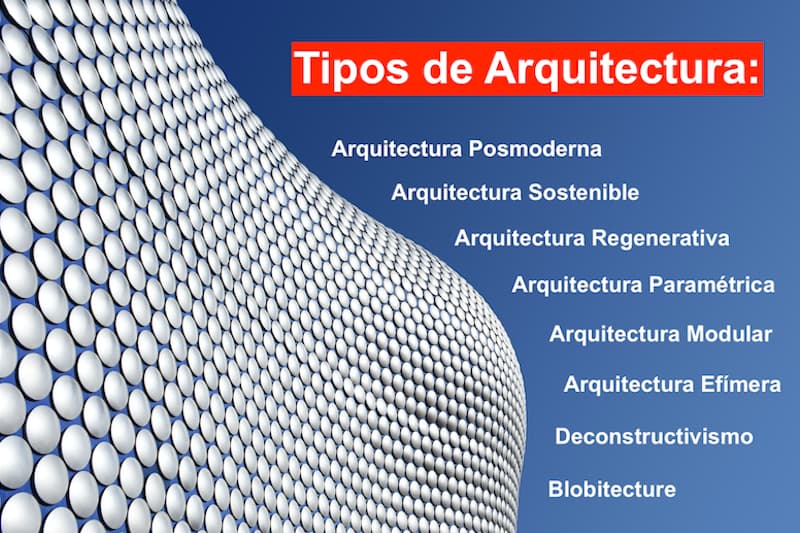
Tipos de Arquitectura: Explorando Más Allá de los Diseños Convencionales

FRASES DE ARQUITECTOS

Roles Arquitectura y Construcción (Profesiones Arquitectura)

Certificaciones para Arquitectos: Avanzando en la Excelencia Profesional

Roles BIM más Demandados en la Industria de la Construcción y el Sector AECO

Software BIM para Proyectos de Arquitectura y Construcción

Tecnología BIM: Beneficios y Ventajas en el sector AECO: Arquitectura, Ingeniería, Construcción y Operaciones

Modelo BIM

Modelo MEP

BIM 3D 4D 5D 6D 7D

AECO: Sector Arquitectura, Ingeniería, Construcción y Operaciones

Avances Tecnológicos en la Industria de la Construcción

Normas Técnicas de Edificación
!Explora el Mejor Directorio de Construcción! 🚧 🏗️ 👷♂️ (Sólo en ArquitecturaCarreras.com)


- CATEGORÍAS DE CURSOS ONLINE
▷ Formación online
▷ Cursos online
▷ Domestika Cursos
▷ Domestika cupón descuento
▷ Cursos de Arquitectura online
▷ Cursos online de Ilustración
▷ Cursos online de Diseño gráfico
▷ Cursos online de Fotografía y Vídeo
▷ Cursos online de 3D y Animación
▷ Cursos de Diseño online
▷ Cursos online de Dibujo
▷ Cursos online de Bellas Artes
▷ Cursos online de Dirección de Arte
- CURSOS ONLINE DOMESTIKA (POR SOFTWARE)
▷ AutoCAD
▷ SketchUp
▷ 3ds Max
▷ Adobe Photoshop
▷ Adobe Illustrator
▷ Adobe After Effects
▷ Adobe Lightroom
▷ Cinema 4D
▷ Adobe Indesign
LOS MEJORES CURSOS ONLINE PARA CREATIVOS | CURSOS DOMESTIKA
- ÚLTIMAS RESEÑAS CURSOS DOMESTIKA
 ▷ Curso Revit Online, por Majo Mora
 ▷ Curso de AutoCAD Online, por Isabel Martínez Abascal
 ▷ Curso SketchUp online, por Alejandro Soriano
 ▷ Curso Infoarquitectura 3D, por Amo Visual 3D
 ▷ Curso de Lumion, por Salva Moret


www.jmhdezhdez.com
(Blog sobre Arquitectura y Arte)
