- Inicio
- Ecosistema AECO
- _ATLAS AECO
- __Mapa Global Obras
- __Serie Const. Vanguardistas
- _Estudios de Arquitectura
- __en Madrid
- _Biblioteca Técnica AECO
- __Glosario AECO Global
- __Glosario de Construcción
- __Glosario de Edificación
- __Glosario BIM GTB-300
- _Entrevistas AECO
- __Jaime Sánchez-Álvarez
- _Visibilidad B2B y Partners AECO
- Arquitectura
- _RASCACIELOS
- __Burj Khalifa Dubai
- __Edificio Chrysler, NY
- _Estilos Arquitectónicos
- __Arquitectura Posmoderna
- __Deconstructivismo
- __Arquitectura High Tech
- Arte
- _Arte Universal
- _Arte Contemporáneo
- __Serge Marshennikov
- __Damian Lechoszest
- __John Kacere
- _Escultura
- __El Ángel del Norte
- __La Musa Dormida
- __Venus de Milo
- __Moisés de Miguel Ángel
- __Baldaquino de San Pedro
- __El rapto de Proserpina
- __La Verdad Velada
- __Perseo con cabeza de Medusa
- __Venus de Willendorf
- _Pintura
- __Capilla Sixtina
- __Cuadros Famosos
- __La Creación de Adán
- __Venus del Espejo Velázquez
- __Hipómenes y Atalanta
- __Venus Boticelli
- __Silla de van Gogh
- __Jugadores de Cartas Cézanne
- __Cabeza de Medusa Caravaggio
- __Impresionismo
- __Posimpresionismo
- _Historia
- __Edad Moderna
- Curiosidades
- _Arquitectura y Arte
- _Tumba de Miguel Ángel
- FRASES
- _Frases de la semana
- _Arquitectos
- __Frank Gehry
- _Escultores
- __Miguel Ángel Buonarroti
- __Bernini
- __Rodin
- _Pintores
- __Picasso
- __Vincent van Gogh
- __Cézanne
- __Claude Monet
- __Henri Matisse
- __René Magritte
- __Caravaggio
- __Miguel Ángel
- Formación AECO
- _Másteres en España
- __Másteres BIM en España
- __Másteres de Arquitectura
- __Másteres de Ingeniería
- __Másteres de Construcción
- __Másteres Inmobiliarios
- __Máster Facility Management
- __Másteres de Smart Building
- __Máster Energía y Edificación
- __Máster en Infraestructuras
- __M. Project Management
- __M. Construcción Sostenible
- _Partner de Formación AECO


Arquitectura, Escultura, Pintura, Ingeniería, Software-Programas de Diseño Arquitectónico: Metodología BIM, Revit, AutoCAD, 3ds max, Animación; Software de Adobe; Cursos online, Libros, Historia, Cultura, Timelapse y Dronelapse sobre Arquitectura y ciudades, Frases Célebres, Curiosidades, Rascacielos, Puentes, Edificios interesantes, Construcciones vanguardistas, Construcciones famosas, Diseño, Arte, Fotografía Arquitectónica / Architecture, Sculpture, Painting, Engineering, Software-Architectural Design Programs: BIM Methodology, Revit, AutoCAD, 3ds max, Animation; Adobe software; Online courses, Books, History, Culture, Timelapse and Dronelapse on Architecture and cities, Famous Phrases, Curiosities, Skyscrapers, Bridges, Interesting buildings, Avant-garde constructions, Famous constructions, Design, Art, Architectural Photography

Selfridges Birmingham: The Skin of Biomodernism

Series: Avant-Garde Constructions
Architectural and Engineering Masterpieces: #12 Selfridges Birmingham
Is it possible to transform a commercial building into a living organism through facade engineering?
To answer this question, we must travel to the heart of Birmingham, England. The Selfridges Building, designed by the firm Future Systems (Jan Kaplický and Amanda Levete), was not conceived as a conventional shopping center, but as the cornerstone of the ambitious Bullring redevelopment. This sector, historically the city's commercial engine since the Middle Ages, required an intervention that would break with the monotony of the right angle and the surrounding brutalism.
The world is not a box. People are not boxes. Why should our buildings be boxes? We wanted to create a form that was a direct response to human scale and movement, something people would want to touch.
— Jan Kaplický, Future Systems

The Master Plan: A Dialogue Between Eras
The building's location is an exercise in deliberate contrasts. Situated on steeply sloping terrain, the Selfridges "organism" unfolds alongside St Martin in the Bull Ring Church, a 19th-century Neo-Gothic gem.Far from attempting to blend in, Future Systems' design utilizes its double-curvature morphology to frame the historic temple. The master plan envisioned total pedestrian fluidity, connecting the city's different levels via a 37-meter curved footbridge that resembles a technological tentacle extending toward the annex parking structure, integrating the building into Birmingham's vital flow.
We were not looking for a box, but a response to human movement. The building curves to respect the view of the church and to invite the city to flow around it.
— Future Systems
This 25,000 m² blue "amoeba" not only redefined the West Midlands skyline but also demonstrated that vanguard engineering can act as a bridge between historical heritage and the biomodernist future.

Our intention was not to ignore the past, but to recontextualize it. By placing this fluid, blue volume next to the Gothic texture of St. Martin's Church, both buildings gain strength. The contrast is what generates urban energy.
— Amanda Levete

Structural Innovation: The Shotcrete Monocoque
The anthropomorphic silhouette of Selfridges is not merely an aesthetic caprice; it is a self-supporting structure that redefines material use. To eliminate boundaries between wall and roof, Arup implemented a highly complex technical solution:Shotcrete (Sprayed Concrete): A 175 mm thick layer was applied over a dense reinforcement mesh. This technique allowed for the generation of the double curvature without resorting to conventional formwork, achieving a continuous, rigid shell that envelops the 25,000 m².
Mixed System and EMI: While the exterior flows, the interior is supported by steel columns and floor slabs using an EMI construction system (interconnected perpendicular beams). This combination allows for open-plan layouts with 4.5-meter floor-to-ceiling heights, optimizing load transfer within a non-linear volume.

Interior Spatiality: The Void as Operative Sculpture
If Selfridges' exterior is a lesson in aerodynamics, its interior is a manifesto on spatial fluidity. Arup's engineering allowed the heart of the building to be a vast central atrium, where top lighting descends through a large overhead skylight to naturally bathe all retail levels.Escalators: The ADN of Movement
The organism's true engine is its system of crisscrossing escalators. These sculptural white pieces not only manage the massive flow of visitors but also act as a backbone visually connecting the void beneath the skylight, turning vertical circulation into a technical spectacle under natural light.Open Plans and Retail Flexibility
Thanks to the cellular beam system, the interior is freed from rigid partitions, achieving floor plans with 4.5 meters of clear height. All HVAC and fire protection engineering is compressed into a technical zone of just 1.5 meters, allowing the architecture to take center stage and the building to function as a living, flexible organism.
"Ribbon" Engineering: The Hanging Facade
A critical detail revealed by Arup engineers is that the concrete shell is not a 30-meter monolithic mass. It was designed using a system of floor-by-floor "ribbons": each facade strip "hangs" from the upper floor slab and is laterally stabilized at the lower one. This technical fragmentation allowed the structure to be much lighter and more resistant to buckling, facilitating the building's completion in record time for its complexity.
The DNA of Design: Between Biology and High Couture
Future Systems' genius lies in an apparent contradiction: using an organic morphology for the structure and a fashion logic for the skin.The Body: The Amoeba (Blobitecture)
The building's form is pure biomorphism. It is based on the idea of a single-celled organism that lacks a fixed shape and adapts to obstacles in its environment.Non-Euclidean Geometry: Much like an amoeba, Selfridges has no corners or sharp edges. It expands and contracts to respect the view of St. Martin's Church and to "embrace" the pedestrian flow of the Bullring.
The Monocoque: Technically, the use of shotcrete (sprayed concrete) mimics a cell membrane. It is a continuous shell that functions, simultaneously, as structure and enclosure.

The Skin: Paco Rabanne's "Dress"
If the structure is the biological body, the facade is its clothing. Jan Kaplický turned to technology transfer to resolve a critical dilemma: How to cover a double-curvature surface without the material wrinkling or fracturing?The "Pixel" Solution: If you try to wrap a sphere with paper, it wrinkles. If you cover it with thousands of small independent pieces (like fish scales or the discs of a dress), these can glide and rotate to adapt to the curve. Inspired by Paco Rabanne's metallic plate dresses from the 1960s, the 15,000 discs allow rigid aluminum to behave with the flexibility of fabric.
The facade was not conceived as a wall, but as a dress. We looked in the Paco Rabanne archives from the 1960s for that sensation of metallic mesh that adapts to the body. The 15,000 aluminum discs function as sequins on an architectural scale.
— Future Systems


Technological Symbiosis: The 15,000 Aluminum "Pixels"
Inspired by Paco Rabanne's high couture and the diamond texture of the Gesù Nuovo in Naples, the facade is a landmark of algorithmic optimization:Parametric Geometry and Computational Mapping: The position of the 15,000 discs (60 cm in diameter) is not the result of manual drafting, but of NURBS surface modeling processed through optimization scripts. The technical challenge lay in the variable curvature radius of the "amoeba": the software had to recalculate in real-time the orientation and spacing of each disc to guarantee a visually harmonic grid that eliminated any geometric distortion at points of maximum torsion.
Intelligent Facade (Eco-tech): Beyond its sculptural value, this cellular skin functions as an advanced passive environmental control system. The 15,000 discs act as a highly efficient fragmented brise-soleil; their geometric arrangement interrupts direct thermal radiation before it reaches the building's core, drastically reducing the required cooling load.
Furthermore, the envelope takes advantage of the "amoeba's" own morphology to integrate a hidden rainwater collection system at the low points of its curvature, channeling the resource toward treatment tanks that sustainably supply the complex's sanitary services.

Facade Section Detail and Floor Slab Connection
Anatomy of the Envelope: The Cellular Skin in Detail
The construction detail reveals a highly complex suspended facade where the leading role belongs to a 175 mm shotcrete (sprayed concrete) monocoque. This self-supporting "skin" does not rest on the ground but "hangs" from the floor slabs via steel supports and anchor bolts, allowing the structure to absorb thermal movements through expansion joints.
Upon this base, a 75 mm insulation system is deployed along with the iconic grid of 15,000 aluminum discs, integrated with internal drainage gutters and ventilation meshes that transform the concrete mass into a technological organism capable of passively managing water and temperature.
Selfridges Birmingham represents the turning point where digital modeling ceases to be a utopia and becomes a tectonic reality. The use of shotcrete over three-dimensional reinforcement allows the structure, for the first time, to be the building's own skin.
— El Croquis Magazine, Nº 115/116: "Future Systems 1995-2003"
Other Issues in the Series:
ISSUE #01 | Burj Khalifa: The Wind Code
Stepping technique: how geometric variation tames vortices at 828 meters.
ISSUE #02 | CCTV Tower: Defying the Void
Exploring the structural steel diagrid-grid that supports this continuous loop.
ISSUE #03 | Taipei 101: Dynamic Balance
Defying typhoons and earthquakes with the iconic 660-ton tuned mass damper.
ISSUE #04 | Hearst Tower: The NY Diamond
The efficiency of the Diagrid system: saving 20% of steel and redefining sustainability.
Invisible Optimization: The 1.5-meter Void
To maximize interior spatiality, Arup managed to compress the entire structure and services (HVAC, electrical) into a zone only 1.5 meters deep. By using cellular beams with 650 mm openings, complex installations were allowed to pass through without sacrificing the clear floor height. This "invisible engineering" provides the building with total operational flexibility, allowing changes in store layout without affecting the system's integrity.
Identity and Impact: A Dialogue Between Eras
Located in the Bullring, the building does not ignore its surroundings but revalues them through contrast:Narrative Landmark: The 37-meter suspended curved footbridge is a piece of engineering in itself, connecting the third level to the annex parking and symbolizing the fluidity of the modern movement.
The "Birmingham Effect": Much like the Guggenheim in Bilbao, this work acted as an economic catalyst, turning a degraded commercial area into a focus of international tourist attraction and local pride.

Industrial Specifications & Solutions (Project Icon)
| Component / Role | Official Partner / Brand | Detailed Technical Execution |
|---|---|---|
| Main Contractor & Construction Management | BAM Construction (Midlands Division) |
Technical management and comprehensive execution of the complex biomorphic envelope remediation. Coordination of massive curved scaffolding systems, alongside supervision of disc dismantling and reinstatement. |
| Metallurgical Engineering & Disc Restoration | Structural Stairways Ltd | Steelwork specialists responsible for technical dismantling, re-machining, and subsequent individualized QR-code mapping to ensure millimeter-accurate tracking and reinstallation of the anodized units. |
| External Wall Insulation (EWI) System | Sika Parex | Provision of the advanced ParexTherm external wall insulation system and specialized protective coatings from the SikaGard 675 range, custom-engineered to accommodate the extreme double-curvature geometry. |
| Technical Application & Facade Installation | Rendserve Ltd | Certified specialist contractor in external wall insulation systems. Responsible for the complex physical application of technical mortar, mesh reinforcement anchoring, and liquid waterproofing over the curved cementitious substrate. |
Are you the manufacturer, installer, or technical specifier for any of these components?
Request the activation of your partner link by writing to:
info@jmhdezhdez.com
Technical note: Although 15,000 units were planned in the original design, the comprehensive restoration carried out by BAM in 2022 using laser scanning increased the actual inventory to 16,000 discs, allowing for individual traceability and millimeter-level optimization of the envelope.

The Future is Curved: The Victory of Sensual Function
The Selfridges Department Store in Birmingham teaches us that the avant-garde does not reside in complexity for complexity's sake, but in technology's ability to humanize the urban scale. By breaking the traditional "box," Jan Kaplický and Amanda Levete did not just design a building; they codified a new language where engineering becomes invisible to make way for emotion. It is the definitive proof that, when aerospace optimization algorithms and monocoque structural logic are put at the service of architecture, the limits of what can be designed shift toward the organic infinite.
This building has done more for Birmingham's image than any marketing campaign in the last hundred years. It is proof that avant-garde architecture is the economic engine of the modern city.The Selfridges Birmingham is not just a construction; it is a technical organism that proves the future of our cities does not have to be right-angled, but fluid, efficient, and, above all, deeply human.
— RIBA Awards Jury (2004)
Frequently Asked Questions about Selfridges Birmingham:
Why was shotcrete used instead of precast panels?
The use of shotcrete (sprayed concrete) allowed for total formal freedom. Given the double-curvature geometry, precast panels would have required thousands of unique molds, skyrocketing costs and creating visible joints. Shotcrete guarantees a continuous monolithic shell, essential for the "living organism" aesthetic.
How is the maintenance of the 15,000 aluminum discs guaranteed?
The Future Systems design provided for individual maintainability. Each disc is anchored via independent steel stand-offs to the blue envelope. This allows any unit to be replaced in isolation in case of damage or impact without compromising the facade's integrity or weatherproofing.
What role does the blue color play in the technical and visual concept?
The "International Klein Blue" tone is an environmental chromatic contrast decision. It was chosen to break the monotony of the gray West Midlands sky. Combined with anodized aluminum discs, it creates a play of reflections that alters the perception of volume and depth depending on solar incidence.
Is it truly a sustainable building by current standards?
Yes, it is an exponent of Eco-tech. The concrete shell provides high thermal mass that stabilizes interior temperatures. Additionally, the facade system integrates conduits for rainwater harvesting intended for internal services, while the central atrium maximizes natural light through overhead skylights.
How does the structure support the weight of the metallic envelope?
The structure functions as a monocoque system. Shotcrete over a structural steel mesh creates a self-supporting skin that distributes loads uniformly. The 15,000 discs act as an aesthetic and protective sacrificial layer, minimizing the direct exposure of the structural core to atmospheric agents.
AECO Architecture & Engineering Glossary | Selfridges, Birmingham
Double-Curvature Geometry: A three-dimensional surface where every point curves simultaneously along two distinct, orthogonal directions. Since it cannot be unrolled into a flat plane without distortion, standard prefabricated panels had to be ruled out in favor of a monolithic, cast-in-place solution.
Structural Monocoque: A tectonic system in which the curved outer skin itself absorbs and distributes most of the direct stresses (tension, compression, and shear). It functions as a lightweight, rigid, self-supporting shell that completely eliminates the need for perimeter columns.
Sprayed Concrete (Shotcrete): A placement technique where concrete is pneumatically projected at high velocity onto a dense, three-dimensional reinforcement cage. This achieves instantaneous material compaction at a controlled thickness of 175 mm without requiring conventional formwork.
Blobitecture / Biomorphism: A movement in contemporary architecture that leverages digital tools to generate organic, fluid, and rounded volumes resembling amoebas, explicitly breaking away from traditional Cartesian symmetries.
NURBS Parametric Modeling: A computational mathematical formulation (Non-Uniform Rational B-Splines) used to define fluid surfaces. It was essential for mapping the variable curvature radius of the facade and optimizing the mathematical orientation of each individual aluminum disc.
EWI System (External Wall Insulation): An exterior thermal insulation solution. During Project Icon (2022), Sika Parex's ParexTherm elastomeric system was installed over the monocoque shell, capable of tolerating severe physical torsion while completely eliminating thermal bridges.
Passive Solar Control (Brise-soleil): A bioclimatic strategy where the dense, floating grid of 15,849 discs acts on a macroscopic scale as a fragmented filter. It intercepts thermal radiation before it reaches the building's core, significantly reducing HVAC energy demands.
3D Laser Scanning: A LiDAR reality-capture technology that digitizes complex geometries through point clouds. It was key to BAM's restoration in 2022 to generate a digital twin of the biomorphic structure, allowing each disc to be individually QR-coded and re-machined.
Series: Avant-Garde Constructions | jmhdezhdez.com
Links of Interest:
Selfridges Birmingham: Arup Paper (2005)
Restoration data of the iconic facade carried out in 2022 by BAM
Architecture Types: Blobitecture

José Miguel Hernández Hernández
International authority in the technical analysis of iconic and sculptural architecture. Specialist in the intersection of engineering, aesthetics, and the avant-garde. Author of technical bilingual books Turning Torso – Santiago Calatrava and Famous Constructions / Construcciones Famosas.

Publicado por José Miguel


José Miguel Hernández Hernández
Consultor Smart Home y Movilidad Eléctrica AECO
Servicios Destacados
⚡ Consultoría Movilidad Eléctrica
Proyectos CICE e ITC-BT-52.
🎓 Formación BIM / AECO
Especialización técnica avanzada.
📩 Suscripción Nodo Maestro
Innovación y normativa Smart.


Ecosistemas Smart Home por Tipología Guías técnicas y selección de dispositivos para proyectos de arquitectura e interiorismo en Pisos, Lofts, Casas Grandes, Dúplex, Áticos y Villas de Lujo. Integra automatización adaptada a cada espacio.
Ver Guía por Tipologías →
Directorio de Fotógrafos de Arquitectura en España: Descubre a los Mejores Expertos en Fotografía Arquitectónica para Documentar tus Proyectos y Obras

Fotografía Arquitectónica: La Guía Definitiva para Capturar Diseño, Estética y Función de Edificios y Estructuras

Fotografía y Vídeo Timelapse

El Rol del Fotógrafo de Arquitectura

Cámaras Réflex y Objetivos Tilt-Shift para Fotografía de Arquitectura

Estilos Arquitectónicos Modernos: Un Viaje a Través de la Creatividad y la Innovación

ARQUITECTURA CARRERA: Descubre todas las Opciones de la Carrera en Arquitectura y Grados en España

Comparativa de las Mejores Universidades de Arquitectura del Mundo: Internacional, Europa, LATAM

Los Mejores Libros de Arquitectura para Arquitectos

Libros para Estudiar Arquitectura

Libros para Arquitectos Principiantes: Guías y Recursos Esenciales para Comenzar tu Carrera

Los Mejores Libros de Arquitectura para Estudiantes durante la Carrera

Era Digital de la Construcción: Innovaciones Tecnológicas en Arquitectura y Edificación

Comparativa de Los Mejores Ordenadores para Arquitectos en 2024

Las Mejores Laptops para Arquitectura en 2024

Los Mejores Ordenadores de Arquitectura para Estudiantes

Significado de: Términos Clave sobre Arquitectura, Ingeniería y Construcción

Arquitectos: Descubre el Mejor Directorio de Arquitectos que podrás encontrar en Internet (Sólo en AC)
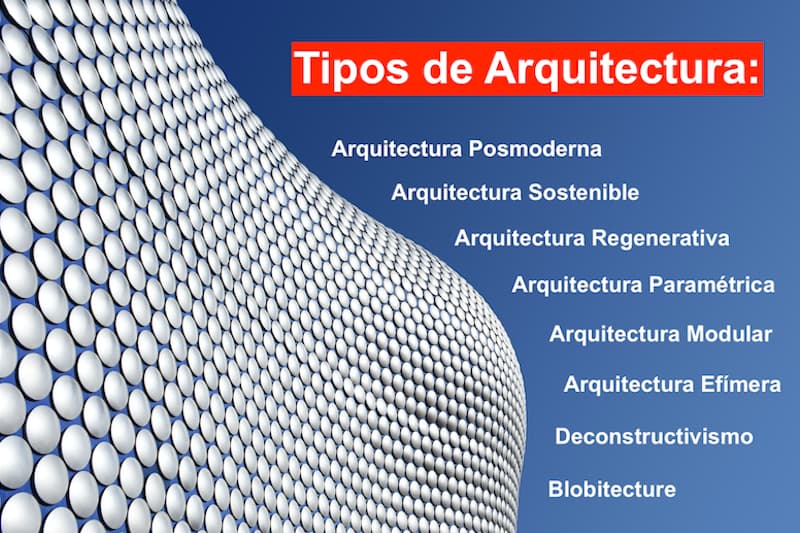
Tipos de Arquitectura: Explorando Más Allá de los Diseños Convencionales

FRASES DE ARQUITECTOS

Roles Arquitectura y Construcción (Profesiones Arquitectura)

Certificaciones para Arquitectos: Avanzando en la Excelencia Profesional

Roles BIM más Demandados en la Industria de la Construcción y el Sector AECO

Software BIM para Proyectos de Arquitectura y Construcción

Tecnología BIM: Beneficios y Ventajas en el sector AECO: Arquitectura, Ingeniería, Construcción y Operaciones

Modelo BIM

Modelo MEP

BIM 3D 4D 5D 6D 7D

AECO: Sector Arquitectura, Ingeniería, Construcción y Operaciones

Avances Tecnológicos en la Industria de la Construcción

Normas Técnicas de Edificación

!Explora el Mejor Directorio de Construcción! 🚧 🏗️ 👷♂️ (Sólo en ArquitecturaCarreras.com)


www.jmhdezhdez.com
jmhdezhdez.com — Arquitectura, Ingeniería y Documentación Técnica AECO
