- Inicio
- Ecosistema AECO
- _ATLAS AECO
- __Mapa Global Obras
- __Serie Const. Vanguardistas
- _Estudios de Arquitectura
- __en Madrid
- __en Barcelona
- _Estudios de Ingeniería
- __en Madrid
- _Estudios de Interiorismo
- __en Madrid
- __en Barcelona
- _Empresas Constructoras
- __en Madrid
- __en Barcelona
- _Empresas de Reformas
- __en Madrid
- _Empresas AECO en España
- __Fabricantes de Materiales
- __Modelado BIM
- __Software BIM
- __ Mediciones y Presupuesto
- __Consultoras BIM
- __Inmobiliarias y Real Estate
- __Investment & Transactions
- __Investment & Capital
- __Const. Industrializada
- __Neoconstrucción
- __Inversión y Des. de Suelo
- __CDE y Gestión Documental
- __Laboratorios AECO
- _Biblioteca Técnica AECO
- __Glosario AECO Global
- __Glosario de Construcción
- __Glosario de Edificación
- __Glosario BIM GTB-300
- __Edificación Circular
- _Entrevistas AECO
- __Jaime Sánchez-Álvarez
- _Visibilidad B2B
- __Premium Multicategoría
- __Ficha Corporativa B2B
- __Partners AECO
- __Patrocinio Directorios AECO
- Arquitectura
- _RASCACIELOS
- __Burj Khalifa Dubai
- __Edificio Chrysler, NY
- _Estilos Arquitectónicos
- __Arquitectura Posmoderna
- __Deconstructivismo
- __Arquitectura High Tech
- Arte
- _Arte Universal
- _Arte Contemporáneo
- __Serge Marshennikov
- __Damian Lechoszest
- __John Kacere
- _Escultura
- __El Ángel del Norte
- __La Musa Dormida
- __Venus de Milo
- __Moisés de Miguel Ángel
- __Baldaquino de San Pedro
- __El rapto de Proserpina
- __La Verdad Velada
- __Perseo con cabeza de Medusa
- __Venus de Willendorf
- _Pintura
- __Capilla Sixtina
- __Cuadros Famosos
- __La Creación de Adán
- __Venus del Espejo Velázquez
- __Hipómenes y Atalanta
- __Venus Boticelli
- __Silla de van Gogh
- __Jugadores de Cartas Cézanne
- __Cabeza de Medusa Caravaggio
- __Impresionismo
- __Posimpresionismo
- _Historia
- __Edad Moderna
- Curiosidades
- _Arquitectura y Arte
- _Tumba de Miguel Ángel
- FRASES
- _Frases de la semana
- _Arquitectos
- __Frank Gehry
- _Escultores
- __Miguel Ángel Buonarroti
- __Bernini
- __Rodin
- _Pintores
- __Picasso
- __Vincent van Gogh
- __Cézanne
- __Claude Monet
- __Henri Matisse
- __René Magritte
- __Caravaggio
- __Miguel Ángel
- Formación AECO
- _Másteres en España
- __Másteres BIM en España
- __Másteres de Arquitectura
- __Másteres de Ingeniería
- __Másteres de Construcción
- __Másteres en Interiorismo
- __Másteres Inmobiliarios
- __Máster Facility Management
- __Másteres de Smart Building
- __Máster Energía y Edificación
- __Máster en Infraestructuras
- __Másteres en Urbanismo
- __M. Project Management
- __M. Construcción Sostenible
- __M. Instalaciones MEP
- _Cursos BIM
- __Cursos BIM Online
- __Cursos Revit Online
- __Cursos Revit MEP online
- _Partner de Formación AECO
- _Formación AECO Empresas
- __en España
- __Capacitación en México
- __en Colombia


Arquitectura, Ingeniería, Construcción y Real Estate; tecnología AECO, metodología BIM, software AEC, modelado BIM, CDE, construcción industrializada, neoconstrucción, fabricantes de materiales y sistemas constructivos; empresas constructoras, promotoras inmobiliarias, fabricantes, proveedores y soluciones para el sector; investigación técnica, Atlas de Arquitectura e Innovación AECO, directorios profesionales y glosarios técnicos; Smart Home, Smart Building, diseño, arte, fotografía arquitectónica, ciudades, edificios, infraestructuras y cultura arquitectónica.
Architecture, Engineering, Construction and Real Estate; AECO technology, BIM methodology, AEC software, BIM modelling, CDE, industrialized construction, advanced construction, building materials manufacturers and construction systems; construction companies, real estate developers, manufacturers, suppliers and solutions for the industry; technical research, Atlas of Architecture and AECO Innovation, professional directories and technical glossaries; Smart Home, Smart Building, design, art, architectural photography, cities, buildings, infrastructure and architectural culture.

SWFC Shanghai: Robertson's Structural Triumph Over Crisis and Wind

Series: Avant-Garde Constructions
Masterpieces of Architecture and Engineering: #10 Shanghai World Financial Center, Shanghai
How to gain 32 meters in height while reducing steel weight by 10%?
The Shanghai World Financial Center (SWFC) stands as the definitive case study in Structural Innovation. Following the project's paralysis in the late 90s, the LERA team, led by Leslie Robertson, performed an unprecedented algorithmic optimization.The secret to its slenderness lies in a dual system: a Mega-Braced exoskeleton—massive diagonal steel trusses forming giant diamonds behind the curtain wall facade to stiffen the outer "box"—working in tandem with Outrigger trusses concealed within the technical floors.


These outriggers act as lever arms connecting the concrete core to the perimeter mega-columns, enabling the entire structure to behave monolithically under wind loads. This technical feat allowed for a 10% reduction in total steel consumption, proving that the avant-garde is, above all, resource efficiency; "Often, the most elegant structural solution is also the most economical and safe.", Leslie Robertson. This structural lightness enabled the colossus to gain an additional 32 meters in height without compromising the original foundation, becoming a benchmark for extreme engineering.

Building renders where the image is never the same.
Sculptural Geometry: Symbolism and Form in the SWFC
The mixed-use tower rises from a robust 58-meter square base. As it ascends, the structure is carved by two opposing arcs that progressively reduce its section until they converge into a diagonal edge at the summit. This design culminates in its most distinctive element: a top defined by the iconic trapezoidal aperture, where the architecture dematerializes to interact with the wind.This geometric transition is not merely a formal gesture; it is a strategy for optimizing torsional rigidity. By reducing the area of the upper floors, the mass the base must support is decreased and the airflow is altered, preventing the formation of rhythmic eddies. Under this premise, while structures like the Burj Khalifa use stepping to disrupt currents and "confuse" the wind, at the SWFC the aerodynamic shape itself becomes the primary mechanism to mitigate vortex shedding induced vibration.
"Design is a series of responses to complex questions. In the SWFC, the opening at the top is not a void; it is the point where the architecture allows the city to breathe."
— Paul Katz, Architect (KPF)

Shaping the void: Sculpting the Shanghai World Financial Center Roof.
Although originally conceived as a circular opening, the design evolved into a 50-meter trapezoid for aerodynamic efficiency. Beyond its value as a "window to the sky", according to the design team, this aperture functions as a high-pressure escape valve: by allowing wind to pass through, the SWFC nullifies vortex shedding, eliminating the buffeting and lateral loads that would otherwise sway the 492-meter tall skyscraper.

Evolutionary Section: The Metamorphosis from Square to Line
The intelligence of the SWFC lies in its evolutionary cross-section. As seen in the floor plan sequence, the building originates from a square base (ideal for stability and separating urban access), which transforms through the intersection of two large arcs. This geometric metamorphosis gradually reduces the area of the upper floors beyond a certain height, optimizing load distribution and smoothing the building's response to wind gusts. At the highest levels, the floor plan narrows into a functional line, where the space is dedicated exclusively to observation decks and the iconic aperture, demonstrating that in super-tall structures, form is the direct result of force management.
Why is a 50-meter "hole" the most advanced piece of aerodynamic engineering?
The iconic trapezoidal aperture at the summit of the SWFC is the technical response to the challenge of structural dynamics. It is not an aesthetic decision; it is a vortex shedding mitigation solution designed to tame the forces of nature at nearly 500 meters in height. « Designing for the wind is designing for movement; nothing in this world is truly static. », Leslie Robertson
Paul Katz (KPF)
Leslie E. Robertson (LERA)
This "eye" acts as an aerodynamic escape valve that:
Neutralizes Lateral Loading: It allows the wind to pass through the structure, drastically reducing sway and the transverse pressures that would batter a solid prism.
A Triumph of Technique: What began in early sketches as a circular arch was transformed—following rigorous wind tunnel testing—into a high-precision trapezoid. This geometry not only optimized torsional stiffness but also improved constructability by allowing for more efficient crane operation at the summit.
A skyscraper should not be an isolated monument; its success lies in how it connects with the fabric of the city and how it improves the lives of those who inhabit it.
— Paul Katz, Architect (KPF)
Other Parts in the Series:
PART #01 | Burj Khalifa: The Wind Code
Stepping Technique: How geometric variation tames vortex shedding at 828 meters.
PART #02 | CCTV Tower: Defying the Void
Exploring Beijing's most ambitious cantilever and its steel diagrid structural system.
PART #03 | Taipei 101: Dynamic Equilibrium
The skyscraper that defies typhoons using its 660-metric-ton tuned mass damper.
PART #04 | Hearst Tower: The NY Diamond
Norman Foster's diagrid system and its structural efficiency.

Is it possible to design a high-tech bunker with the lightness of a sculpture?
The SWFC represents a perfect Technological Symbiosis. Its sculptural geometry, which transitions from a square base to a straight line at the summit, is an exercise in parametric design that intelligently and safely organizes 381,600 m²:Avant-Garde Functionality: The angle of the curtain wall facades creates an aesthetic of "volumetric dematerialization'" while simultaneously segregating the entry flows for offices and the luxury hotel.
Postmodern Safety: The building integrates 8 strategic refuge floors. These levels act as high-security zones against fire or seismic events, setting a standard where human protection is intrinsic to the structure.

Recognized by the CTBUH and other elite institutions, the SWFC has been validated as one of the most innovative and influential skyscrapers in history:
Technical Specifications & Industrial Solutions (CTBUH Data)
PROJECT PARTNERS & CONSORTIUM| Specialty / Component | Partner / Brand | Detailed Technical Execution (AECO Standard) |
|---|---|---|
| Owner & Capital Investment | Shanghai World Financial Center Co., Ltd. | Asset management and investment vehicle incorporated specifically for property holding, operating under the management of a joint international banking and corporate consortium. |
| Developer | Mori Building Co., Ltd. | Lead investor and master developer. Responsible for the comprehensive strategic development of the Lujiazui district and technical corporate oversight throughout all construction phases. |
| Main Contractor | CSCEC & SCG | Joint Venture formed by China State Construction Engineering Corp. and Shanghai Construction Group for integrated logistics management, high-pressure concrete pumping, and structural core execution. |
| Structural Steel (Supply) | ArcelorMittal & CSSSC | Certified supply of high-yield structural steel under technical specifications HISTAR® (Grades A913 and 355) in partnership with China Construction Steel Structure Corporation for the heavy-load perimeter megacolumns. |
| Structural Steelwork (Fabrication) | China Construction Steel Structure Corporation | Shop fabrication, high-precision assembly, and rigorous quality control of the intricate structural steel framework, including the critical Mega-Bracing transfer nodes and outrigger truss connections. |
| Formwork Systems | Doka GmbH | Provision of advanced Self-Climbing Core Formwork (SKS) systems, enabling crane-independent, highly efficient reinforced concrete core execution via cyclical casting schedules. |
| Concrete Technology | GCP Applied Technologies | Formulation of specialized High-Performance Concrete (HPC) chemical admixtures, ensuring high flowability and preventing segregation during continuous vertical pumping exceeding 400 meters. |
| Curtain Wall (Façade Enclosure) | Permasteelisa Group & ALT Limited | Façade engineering, modular fabrication, and site installation of over 120,000 m² of unified unitized curtain wall, engineered to withstand extreme dynamic wind loads (typhoons) and seismic drifts. |
| Façade Anchoring & Fixings | HALFEN | Supply of certified high-capacity anchor channels, engineered for secure, adjustable, and direct structural load transfer from the unitized façade modules into the concrete floor slabs. |
| Corrosion Protection | AkzoNobel | High-performance protective industrial coatings specified for the structural steelwork, ensuring heavy-duty mitigation against moisture, oxidation, and severe atmospheric conditions at high altitudes. |
| Structural Glazing Sealants | Dow Corning & Momentive | Application of high-modulus structural silicone sealants for outer glazing, ensuring airtight, watertight, elastomeric, and UV-resistant joints under high-altitude wind pressure differentials. |
| Vertical Transportation (Elevators) | OTIS, Hitachi Elevator (China) & Toshiba (TELC) | Vertical transit consortium. OTIS deployed high-capacity, heavy-duty Super Double-Deck express shuttle elevators, paired with high-speed regional units to streamline traffic inside the logistical core. |
| Façade Maintenance Systems | CoxGomyl | Design, manufacturing, and deployment of automated, custom-built Building Maintenance Units (BMUs) engineered to service the complex tapering geometries and the upper aperture section. |
| Fire Life Safety Consulting | Rolf Jensen & Associates (RJA) | Fire protection engineering and layout design, encompassing advanced smoke control, automated suppression setups, and structural pressurization criteria for the 8 airtight refuge floors. |
| Quantity Surveying / Cost Consulting | Langdon & Seah | Comprehensive construction financial management, high-performance material cost controls, and value engineering, instrumental during the project's financial intermission and subsequent structural redesign. |
| Hospitality & Hotel Operations | Hyatt Hotels Corporation | Leasing and management of the exclusive Park Hyatt Shanghai (occupying floors 79 through 93), operating as one of the highest premium luxury hotel properties in the world. |
Are you the manufacturer, installer, or technical specifier for any of these systems?
Request the activation of your verified partner link by contacting us at:
info@jmhdezhdez.com
"The beauty of a skyscraper is not in its skin, but in the system that allows it to stand firm against the invisible."
— Leslie Robertson

Authority Metrics: Where Earth and Sky Merge
KPF’s design is a metaphor for Sculptural Architecture. The prism (representing Earth) and the arcs (representing Heaven) converge at the Sky Walk on the 100th floor. Walking across its glass floor at 474 meters is to understand that the avant-garde is not just form; it is the triumph of technique over the impossible.Technical Reflection: The Shanghai World Financial Center is proof that true innovation arises when Robertson's engineering adapts to overcome economic crises and extreme climatic challenges. It is the DNA of what defines an Avant-Garde Construction.
Our ambition was not just to build the tallest building, but to create a symbol of Shanghai's global aspiration for the future.
— Paul Katz, Architect (KPF)
Frequently Asked Questions about the Shanghai SWFC:
Why was the original circular opening changed to a trapezoidal one?
While the circle represented the Chinese symbolism of "Earth and Heaven," the change was driven by structural and aerodynamic efficiency. The trapezoidal design simplified the beam connection nodes and improved airflow, mitigating oscillations more effectively than the circular alternative.

What is the function of the "Outrigger" beams and "Mega-Bracing"?
The SWFC utilizes a dual system: Outrigger Trusses act as lever arms connecting the concrete core to the perimeter columns to increase lateral stiffness, while the Mega-Braced Frame serves as an exoskeleton that allows the facade to actively resist wind loads.
Is the SWFC the tallest building in Shanghai?
In 2008, it was the tallest in China. Today, it forms part of the Lujiazui "Super-tall Trio" alongside the Jin Mao Tower and the Shanghai Tower (632m), the latter currently holding the city's record.
How is fire safety guaranteed in such a tall structure?
It is a safety landmark: it features 8 reinforced and pressurized refuge floors. These levels act as evacuation bunkers where occupants can safely shelter without needing to perform a full mass descent via stairs.
AECO Architecture & Engineering Glossary | SWFC, Shanghai
Mega-Bracing (Exoskeleton): A perimeter structural system composed of massive diagonal steel trusses. In the SWFC, these diagonals form giant rhombs behind the facade to stiffen the outer tube, efficiently absorbing lateral wind loads.
Outrigger Trusses (Stabilizers): Rigid horizontal structures concealed within mechanical floors that act as lever arms. They connect the reinforced concrete central core to the perimeter mega-columns, forcing the entire skyscraper to work as a unified system against overturning moments.
Vortex Shedding: An aerodynamic phenomenon where wind hitting a solid bluff body creates alternating low-pressure eddies, inducing dangerous cross-wind oscillations. The SWFC mitigates this critical effect through its evolutionary tapered cross-section and its apex aperture.
Trapezoidal Aperture: A geometric and aerodynamic solution at the tower's upper crown (floors 97 to 100). It acts as a high-pressure relief valve that allows wind to pass through, fundamentally neutralizing the dynamic cross-wind loads that would cause the building to sway.
Unitized Curtain Wall: A non-structural, floating building envelope system suspended from the floor slabs. Over 120,000 m² of factory-prefabricated modular glazed facade was installed with expansion joints engineered to continuously absorb seismic displacements and hurricane-force wind loads.
Airtight Refuge Floors: The 8 reinforced levels strategically distributed along the tower that operate as vital life-safety bunkers. They feature high fire-resistance solid concrete walls, autonomous air-pressurization systems, and absolute isolation to safeguard occupants during emergency evacuations.
Parametric Design: An algorithmic optimization methodology applied by LERA's engineering team. By mathematically correlating structural variables against wind behavior, the computational model allowed the tower to gain 32 meters in vertical height while simultaneously reducing overall structural steel consumption by 10%.
Super Double-Deck Elevators: Heavy-duty vertical transportation systems configured with two coupled cabs. This engineering technology allows servicing two consecutive floors simultaneously, doubling logistics capacity, vertical traffic flow, and evacuation throughput within the central core.
Series: Avant-Garde Constructions | jmhdezhdez.com
Credits & Documentation
Text & Editing: © José Miguel Hernández Hernández
Plans, Renders & Photographs (1, 2, 3, 6 & 7): © Kohn Pedersen Fox Associates (KPF)
Photograph 4: via Architizer
Photograph 5: © Mori Building Co., Ltd.
Structure under Construction: © Leslie E. Robertson Associates (LERA)
Technical data verified and benchmarked through the CTBUH (Council on Tall Buildings and Urban Habitat) and The Skyscraper Center databases.

José Miguel Hernández Hernández
International reference in the technical analysis of iconic and sculptural architecture. Specialist in the intersection between engineering, aesthetics, and vanguard design. Author of the bilingual technical books Turning Torso – Santiago Calatrava and Famous Constructions.

Publicado por José Miguel


José Miguel Hernández Hernández
Consultor Smart Home y Movilidad Eléctrica AECO
Servicios Destacados
⚡ Consultoría Movilidad Eléctrica
Proyectos CICE e ITC-BT-52.
🎓 Formación BIM / AECO
Especialización técnica avanzada.
📩 Suscripción Nodo Maestro
Innovación y normativa Smart.


Ecosistemas Smart Home por Tipología Guías técnicas y selección de dispositivos para proyectos de arquitectura e interiorismo en Pisos, Lofts, Casas Grandes, Dúplex, Áticos y Villas de Lujo. Integra automatización adaptada a cada espacio.
Ver Guía por Tipologías →
Directorio de Fotógrafos de Arquitectura en España: Descubre a los Mejores Expertos en Fotografía Arquitectónica para Documentar tus Proyectos y Obras

Fotografía Arquitectónica: La Guía Definitiva para Capturar Diseño, Estética y Función de Edificios y Estructuras

Fotografía y Vídeo Timelapse

El Rol del Fotógrafo de Arquitectura

Cámaras Réflex y Objetivos Tilt-Shift para Fotografía de Arquitectura

Estilos Arquitectónicos Modernos: Un Viaje a Través de la Creatividad y la Innovación

ARQUITECTURA CARRERA: Descubre todas las Opciones de la Carrera en Arquitectura y Grados en España

Comparativa de las Mejores Universidades de Arquitectura del Mundo: Internacional, Europa, LATAM

Los Mejores Libros de Arquitectura para Arquitectos

Libros para Estudiar Arquitectura

Libros para Arquitectos Principiantes: Guías y Recursos Esenciales para Comenzar tu Carrera

Los Mejores Libros de Arquitectura para Estudiantes durante la Carrera

Era Digital de la Construcción: Innovaciones Tecnológicas en Arquitectura y Edificación

Comparativa de Los Mejores Ordenadores para Arquitectos en 2024

Las Mejores Laptops para Arquitectura en 2024

Los Mejores Ordenadores de Arquitectura para Estudiantes

Significado de: Términos Clave sobre Arquitectura, Ingeniería y Construcción

Arquitectos: Descubre el Mejor Directorio de Arquitectos que podrás encontrar en Internet (Sólo en AC)
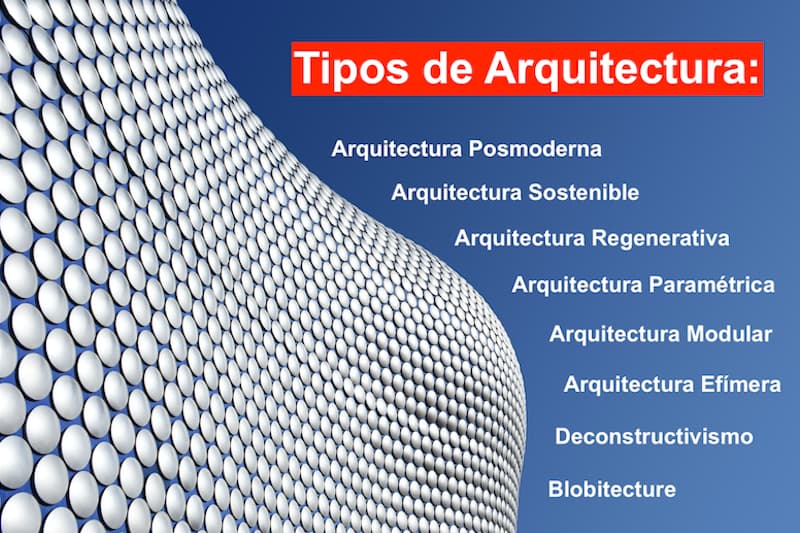
Tipos de Arquitectura: Explorando Más Allá de los Diseños Convencionales

FRASES DE ARQUITECTOS

Roles Arquitectura y Construcción (Profesiones Arquitectura)

Certificaciones para Arquitectos: Avanzando en la Excelencia Profesional

Roles BIM más Demandados en la Industria de la Construcción y el Sector AECO

Software BIM para Proyectos de Arquitectura y Construcción

Tecnología BIM: Beneficios y Ventajas en el sector AECO: Arquitectura, Ingeniería, Construcción y Operaciones

Modelo BIM

Modelo MEP

BIM 3D 4D 5D 6D 7D
AECO: Sector Arquitectura, Ingeniería, Construcción y Operaciones

Avances Tecnológicos en la Industria de la Construcción

Normas Técnicas de Edificación

!Explora el Mejor Directorio de Construcción! 🚧 🏗️ 👷♂️ (Sólo en ArquitecturaCarreras.com)


www.jmhdezhdez.com
Arquitectura, Ingeniería y Documentación Técnica AECO
