- Inicio
- Ecosistema AECO
- _ATLAS AECO
- __Mapa Global Obras
- __Serie Const. Vanguardistas
- _Biblioteca Técnica AECO
- __Glosario AECO Global
- __Glosario de Construcción
- __Glosario de Edificación
- __Glosario BIM GTB-300
- _Entrevistas AECO
- __Jaime Sánchez-Álvarez
- _Visibilidad B2B y Partners AECO
- Arquitectura
- _RASCACIELOS
- __Burj Khalifa Dubai
- __Edificio Chrysler, NY
- _Estilos Arquitectónicos
- __Arquitectura Posmoderna
- __Deconstructivismo
- __Arquitectura High Tech
- Arte
- _Arte Universal
- _Arte Contemporáneo
- __Serge Marshennikov
- __Damian Lechoszest
- __John Kacere
- _Escultura
- __El Ángel del Norte
- __La Musa Dormida
- __Venus de Milo
- __Moisés de Miguel Ángel
- __Baldaquino de San Pedro
- __El rapto de Proserpina
- __La Verdad Velada
- __Perseo con cabeza de Medusa
- __Venus de Willendorf
- _Pintura
- __Capilla Sixtina
- __Cuadros Famosos
- __La Creación de Adán
- __Venus del Espejo Velázquez
- __Hipómenes y Atalanta
- __Venus Boticelli
- __Silla de van Gogh
- __Jugadores de Cartas Cézanne
- __Cabeza de Medusa Caravaggio
- __Impresionismo
- __Posimpresionismo
- _Historia
- __Edad Moderna
- Curiosidades
- _Arquitectura y Arte
- _Tumba de Miguel Ángel
- FRASES
- _Frases de la semana
- _Arquitectos
- __Frank Gehry
- _Escultores
- __Miguel Ángel Buonarroti
- __Bernini
- __Rodin
- _Pintores
- __Picasso
- __Vincent van Gogh
- __Cézanne
- __Claude Monet
- __Henri Matisse
- __René Magritte
- __Caravaggio
- __Miguel Ángel
- Formación AECO
- _Másteres en España
- __Másteres BIM en España
- __Másteres de Arquitectura
- __Másteres de Ingeniería
- __Másteres de Construcción
- __Másteres Inmobiliarios
- __Máster Facility Management
- __Másteres de Smart Building
- __Máster Energía y Edificación
- __Máster en Infraestructuras
- __M. Project Management
- _Partner de Formación AECO


Arquitectura, Escultura, Pintura, Ingeniería, Software-Programas de Diseño Arquitectónico: Metodología BIM, Revit, AutoCAD, 3ds max, Animación; Software de Adobe; Cursos online, Libros, Historia, Cultura, Timelapse y Dronelapse sobre Arquitectura y ciudades, Frases Célebres, Curiosidades, Rascacielos, Puentes, Edificios interesantes, Construcciones vanguardistas, Construcciones famosas, Diseño, Arte, Fotografía Arquitectónica / Architecture, Sculpture, Painting, Engineering, Software-Architectural Design Programs: BIM Methodology, Revit, AutoCAD, 3ds max, Animation; Adobe software; Online courses, Books, History, Culture, Timelapse and Dronelapse on Architecture and cities, Famous Phrases, Curiosities, Skyscrapers, Bridges, Interesting buildings, Avant-garde constructions, Famous constructions, Design, Art, Architectural Photography

JK Bridge — Disruption of Symmetry at Lake Paranoá

SERIES: AVANT-GARDE CONSTRUCTIONS
Masterpieces of Architecture and Engineering: #09 JK Bridge, Brazil
What happens when a bridge decides to break the symmetry that keeps it stable?
In the monumental scale of Brasilia, where Oscar Niemeyer's concrete dictates the rules, the Juscelino Kubitschek Bridge (JK Bridge) emerges not merely as a functional connector, but as a manifesto of 21st-century steel engineering. Designed by architect and urban planner Alexandre Chan and Structural Engineer Mário Vila Verde, this 1,200-meter landmark defies the conventional logic of cable-stayed bridges through a rhythmic sequence. It emulates the trajectory of a "skipping stone" across the water or, in a more contemporary vision, the choreography of a monumental fountain where steel arches appear as frozen jets of water jumping rhythmically from one side of the deck to the other.
The Anatomy of the Oblique Arch: A Challenge to Torsion
The true technical innovation of the JK Bridge lies not only in its three 60-meter-high arches, but in their disruptive geometric orientation. Unlike traditional arch bridges, where supports run parallel to the deck's longitudinal axis, Chan designed arches that cross the platform diagonally.
Each arch originates at one side of the 24-meter-wide deck and describes a parabolic path with a 240-meter span, landing on the opposite side. This "off-axis" arrangement generates highly complex structural behavior:
- Critical Torsional Moment: The arch footings must manage massive twisting forces, as the deck's weight does not hang symmetrically relative to the arch plane.
- Support Stabilization: To counteract this asymmetry, Chan strategically placed parallel steel supports at the arch junctions, ensuring that the curved platform's weight is balanced across the four main piers.
Other Issues in the Series:
ISSUE #01 | Burj Khalifa: The Wind Code
Stepping technique: how geometric variation tames vortices at 828 meters.
ISSUE #16 | Infinity Bridge: The Geometry of Technical Resilience
Expedition Engineering & Chris Wise: A prodigy of structural lightness merging biomimicry with reactive precision engineering.
ISSUE #18 | MAC Niterói: The Paradox of the Central Support
How can 5,500 tons be supported by a single 2.74-meter pier? A technical analysis of the symbiosis between Niemeyer and Contarini: from bedrock anchoring to the structural behavior of the prestressed radial system.
ISSUE #19 | Alamillo Bridge: The Triumph of Gravity and Counterweight
How does a giant stand without backstays? A technical journey through Santiago Calatrava's pylon cross-section and box girder. The absolute equilibrium between sculpture and civil engineering.

The design of the JK Bridge creates an optical effect unrivaled by any other bridge in the world. Depending on the observer's vantage point, it evokes the sensation of a stone skipped across the lake, still bouncing over the water's surface.
The environment of Lake Paranoá imposed additional challenges that pushed soil engineering to the limit. Due to the terrain's porosity, the structure is supported by a deep foundation system with large-diameter piles, specifically designed to absorb the force couple generated by the arches' diagonal crossing.
Opposing Diagonal Cable Anchoring:
The 720-meter suspended span remains in a state of dynamic equilibrium thanks to a system of 7 pairs of stay-cables per arch. The sophistication of this system lies in its anchoring geometry: the cables are fixed to the deck at an inclined and diagonal angle, operating in opposing directions on each side of the arch structure.This arrangement generates a network of counter-tensions that stabilizes the 28,800 m² platform against torsional moments and transverse wind loads. The aerodynamic response of this complex lattice was validated in wind tunnel testing to neutralize any resonance phenomena within the tubular steel sections.

Beyond the Icon
The design achieves a vertical clearance (headroom) of 18 meters, allowing small and medium-sized vessels to pass underneath—a critical navigation height that does not compromise the structure's visual slenderness. The choice of steel allowed for a reduced, aerodynamic arch cross-section, a fundamental factor in winning the Gustav Lindenthal Medal in 2003. The international jury recognized the design not only for its beauty but for its "technical excellence in a non-conventional solution."The JK Bridge is a masterclass in how postmodern architecture can push the boundaries of civil engineering. Alexandre Chan did not seek the simplest solution, but the most expressive one, forcing the structure to become the very language of the infrastructure. It is a work where form does not merely follow function; instead, aesthetics define a structural complexity taken to the extreme, where asymmetric arches dictate the behavior of the entire viaduct.

Industrial Specifications & Solutions
PROJECT PARTNERS| Component | Partner / Brand | Detailed Technical Execution |
|---|---|---|
| Steel Supply | Usiminas | Provision of high-strength steel plates for primary structural elements and tubular arch segments (dovetails). |
| Metal Structure | Protende | Consortium responsible for the fabrication and assembly of the arches and the post-tensioning system of the deck platform. |
| Stay-Cable Systems | DYWIDAG Systems (DSI) | Supply of high-tension bar and cable stays designed to withstand asymmetrical torsional stresses. |
| Bearings and Joints | Mageba / Freyssinet | Implementation of pot bearings and elastic expansion joints to accommodate thermal and dynamic movements of the 1.2km deck. |
| Architectural Lighting | Philips Lighting (Signify) | Dynamic control and discharge projector system to highlight the visual rhythm of the oblique arches over the lake. |
Are you the manufacturer, installer, or technical specifier of the systems used in this project?
Request your partner link activation by writing to:
info@jmhdezhdez.com
Are you passionate about ground-breaking engineering?
If the structural disruption of the JK Bridge has fascinated you, discover how other global skyline landmarks defy physics. In my works, I dissect through technical illustrations the mastery behind the most avant-garde structures on the planet.
Bilingual Technical Works (ES/EN)


Frequently Asked Questions about the JK Bridge (Brasilia):
Why do the arches cross the deck diagonally?
This was not merely an aesthetic choice by Alexandre Chan; it was designed to emulate the trajectory of a skipping stone. Technically, this "jump" creates a rhythmic sequence that breaks the monotony of Brasilia's landscape, though it requires engineers to manage far more complex torsional forces than those found in a linear bridge.
How is such an asymmetrical structure kept stable?
The key lies in the opposing diagonal cable anchoring. The stay-cables do not descend vertically; instead, they are fixed to the deck at opposing angles on each side of the structure. This generates a network of counter-tensions that balances the 28,800 m² platform's weight, preventing the bridge from "toppling" to one side.
What is critical torsion at the arch footings?
Because each arch originates on one side and lands on the opposite, the structure inherently tends to "twist." To absorb this force couple, deep foundations with large-diameter piles and strategic steel supports at the junctions were designed, ensuring the thrust is distributed evenly into the porous soil of Lake Paranoá.
Why did it receive the Gustav Lindenthal Medal?
This international award recognized its technical excellence in a non-conventional solution. The jury valued that, despite its structural complexity and the 18-meter vertical clearance for navigation, the bridge maintains a visual slenderness and environmental harmony unique in modern civil engineering.
Is steel superior to concrete for this specific design?
Yes. The use of tubular steel sections allowed for a reduction in the arches' dead weight and improved their aerodynamic performance. This facilitated the creation of 240-meter spans without the need for massive intermediate piers—a feat that would have been far more costly and heavy to execute in reinforced concrete.
AECO Architecture & Engineering Glossary | JK Bridge, Brasilia
Oblique Arch (Off-Axis): A structural configuration where the arches are not parallel to the deck axis but cross it diagonally. This disruptive geometry breaks conventional symmetry and requires non-linear load management.
Critical Torsional Moment: Rotational force resulting from the eccentricity of the supports. Since the deck is suspended from inclined arches, the footings must absorb massive force pairs to prevent system rotation.
Opposing Diagonal Anchorage: A stay-cable system where cables are fixed to the deck at opposing angles. This network of cross-tensions compensates for design asymmetry, stabilizing the platform against transverse thrusts.
Navigation Clearance: The free height (18 meters at JK Bridge) between the water level and the underside of the deck. It is a critical technical elevation that ensures vessel passage without excessively raising the viaduct's grade.
Hollow Structural Steel (HSS) Section: Use of hollow steel elements for the arches, which reduces dead load and improves the aerodynamic drag coefficient compared to solid concrete solutions.
Aerodynamic Resonance: Vibration phenomenon induced by wind. At JK Bridge, stability was validated in a wind tunnel to ensure that the cable network's tension neutralized any hazardous oscillations.
Series: Vanguard Constructions | jmhdezhdez.com
Credits & Documentation
Research, Text, and Editing: © José Miguel Hernández Hernández: Author, Technical Editor, and AECO Consultant
Photos 1, 2, 3, and 4: © Christoph Diewald (via Flickr)
Photo 5 (Night): © Mugnatto (CC BY 3.0)

José Miguel Hernández Hernández
International reference in the technical analysis of iconic and sculptural architecture. Specialist in the intersection between engineering, aesthetics, and avant-garde design. Author of the bilingual technical books Turning Torso – Santiago Calatrava and Famous Constructions.

Publicado por José Miguel


José Miguel Hernández Hernández
Consultor Smart Home y Movilidad Eléctrica AECO
Servicios Destacados
⚡ Consultoría Movilidad Eléctrica
Proyectos CICE e ITC-BT-52.
🎓 Formación BIM / AECO
Especialización técnica avanzada.
📩 Suscripción Nodo Maestro
Innovación y normativa Smart.


Ecosistemas Smart Home por Tipología Guías técnicas y selección de dispositivos para proyectos de arquitectura e interiorismo en Pisos, Lofts, Casas Grandes, Dúplex, Áticos y Villas de Lujo. Integra automatización adaptada a cada espacio.
Ver Guía por Tipologías →
Directorio de Fotógrafos de Arquitectura en España: Descubre a los Mejores Expertos en Fotografía Arquitectónica para Documentar tus Proyectos y Obras

Fotografía Arquitectónica: La Guía Definitiva para Capturar Diseño, Estética y Función de Edificios y Estructuras

Fotografía y Vídeo Timelapse

El Rol del Fotógrafo de Arquitectura

Cámaras Réflex y Objetivos Tilt-Shift para Fotografía de Arquitectura

Estilos Arquitectónicos Modernos: Un Viaje a Través de la Creatividad y la Innovación

ARQUITECTURA CARRERA: Descubre todas las Opciones de la Carrera en Arquitectura y Grados en España

Comparativa de las Mejores Universidades de Arquitectura del Mundo: Internacional, Europa, LATAM

Los Mejores Libros de Arquitectura para Arquitectos

Libros para Estudiar Arquitectura

Libros para Arquitectos Principiantes: Guías y Recursos Esenciales para Comenzar tu Carrera

Los Mejores Libros de Arquitectura para Estudiantes durante la Carrera

Era Digital de la Construcción: Innovaciones Tecnológicas en Arquitectura y Edificación

Comparativa de Los Mejores Ordenadores para Arquitectos en 2024

Las Mejores Laptops para Arquitectura en 2024

Los Mejores Ordenadores de Arquitectura para Estudiantes

Significado de: Términos Clave sobre Arquitectura, Ingeniería y Construcción

Arquitectos: Descubre el Mejor Directorio de Arquitectos que podrás encontrar en Internet (Sólo en AC)
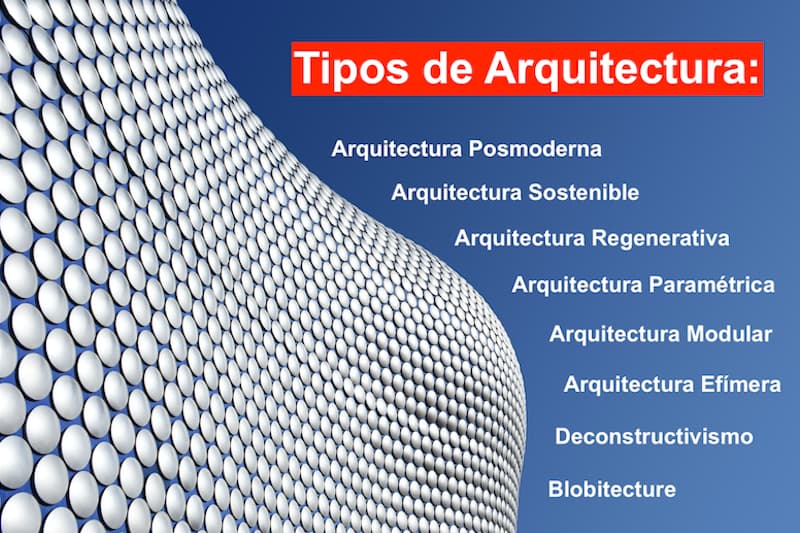
Tipos de Arquitectura: Explorando Más Allá de los Diseños Convencionales

FRASES DE ARQUITECTOS

Roles Arquitectura y Construcción (Profesiones Arquitectura)

Certificaciones para Arquitectos: Avanzando en la Excelencia Profesional

Roles BIM más Demandados en la Industria de la Construcción y el Sector AECO

Software BIM para Proyectos de Arquitectura y Construcción

Tecnología BIM: Beneficios y Ventajas en el sector AECO: Arquitectura, Ingeniería, Construcción y Operaciones

Modelo BIM

Modelo MEP

BIM 3D 4D 5D 6D 7D
AECO: Sector Arquitectura, Ingeniería, Construcción y Operaciones

Avances Tecnológicos en la Industria de la Construcción
Normas Técnicas de Edificación
!Explora el Mejor Directorio de Construcción! 🚧 🏗️ 👷♂️ (Sólo en ArquitecturaCarreras.com)


www.jmhdezhdez.com
jmhdezhdez.com — Arquitectura, Ingeniería y Documentación Técnica AECO
