- Inicio
- Ecosistema AECO
- _ATLAS AECO
- __Mapa Global Obras
- __Serie Const. Vanguardistas
- _Estudios de Arquitectura
- __en Madrid
- __en Barcelona
- _Estudios de Ingeniería
- __en Madrid
- _Estudios de Interiorismo
- __en Madrid
- __en Barcelona
- _Empresas Constructoras
- __en Madrid
- __en Barcelona
- _Empresas de Reformas
- __en Madrid
- _Empresas AECO en España
- __Fabricantes de Materiales
- __Modelado BIM
- __Software BIM
- __ Mediciones y Presupuesto
- __Consultoras BIM
- __Inmobiliarias y Real Estate
- __Investment & Transactions
- __Investment & Capital
- __Const. Industrializada
- __Neoconstrucción
- __Inversión y Des. de Suelo
- __CDE y Gestión Documental
- __Laboratorios AECO
- _Biblioteca Técnica AECO
- __Glosario AECO Global
- __Glosario de Construcción
- __Glosario de Edificación
- __Glosario BIM GTB-300
- __Edificación Circular
- _Entrevistas AECO
- __Jaime Sánchez-Álvarez
- _Visibilidad B2B
- __Premium Multicategoría
- __Ficha Corporativa B2B
- __Partners AECO
- Arquitectura
- _RASCACIELOS
- __Burj Khalifa Dubai
- __Edificio Chrysler, NY
- _Estilos Arquitectónicos
- __Arquitectura Posmoderna
- __Deconstructivismo
- __Arquitectura High Tech
- Arte
- _Arte Universal
- _Arte Contemporáneo
- __Serge Marshennikov
- __Damian Lechoszest
- __John Kacere
- _Escultura
- __El Ángel del Norte
- __La Musa Dormida
- __Venus de Milo
- __Moisés de Miguel Ángel
- __Baldaquino de San Pedro
- __El rapto de Proserpina
- __La Verdad Velada
- __Perseo con cabeza de Medusa
- __Venus de Willendorf
- _Pintura
- __Capilla Sixtina
- __Cuadros Famosos
- __La Creación de Adán
- __Venus del Espejo Velázquez
- __Hipómenes y Atalanta
- __Venus Boticelli
- __Silla de van Gogh
- __Jugadores de Cartas Cézanne
- __Cabeza de Medusa Caravaggio
- __Impresionismo
- __Posimpresionismo
- _Historia
- __Edad Moderna
- Curiosidades
- _Arquitectura y Arte
- _Tumba de Miguel Ángel
- FRASES
- _Frases de la semana
- _Arquitectos
- __Frank Gehry
- _Escultores
- __Miguel Ángel Buonarroti
- __Bernini
- __Rodin
- _Pintores
- __Picasso
- __Vincent van Gogh
- __Cézanne
- __Claude Monet
- __Henri Matisse
- __René Magritte
- __Caravaggio
- __Miguel Ángel
- Formación AECO
- _Másteres en España
- __Másteres BIM en España
- __Másteres de Arquitectura
- __Másteres de Ingeniería
- __Másteres de Construcción
- __Másteres en Interiorismo
- __Másteres Inmobiliarios
- __Máster Facility Management
- __Másteres de Smart Building
- __Máster Energía y Edificación
- __Máster en Infraestructuras
- __Másteres en Urbanismo
- __M. Project Management
- __M. Construcción Sostenible
- __M. Instalaciones MEP
- _Cursos BIM
- __Cursos BIM Online
- __Cursos Revit Online
- __Cursos Revit MEP online
- _Partner de Formación AECO
- _Formación AECO Empresas
- __en España
- __Capacitación en México
- __en Colombia


Arquitectura, Ingeniería, Construcción y Real Estate; tecnología AECO, metodología BIM, software AEC, modelado BIM, CDE, construcción industrializada, neoconstrucción, fabricantes de materiales y sistemas constructivos; empresas constructoras, promotoras inmobiliarias, fabricantes, proveedores y soluciones para el sector; investigación técnica, Atlas de Arquitectura e Innovación AECO, directorios profesionales y glosarios técnicos; Smart Home, Smart Building, diseño, arte, fotografía arquitectónica, ciudades, edificios, infraestructuras y cultura arquitectónica.
Architecture, Engineering, Construction and Real Estate; AECO technology, BIM methodology, AEC software, BIM modelling, CDE, industrialized construction, advanced construction, building materials manufacturers and construction systems; construction companies, real estate developers, manufacturers, suppliers and solutions for the industry; technical research, Atlas of Architecture and AECO Innovation, professional directories and technical glossaries; Smart Home, Smart Building, design, art, architectural photography, cities, buildings, infrastructure and architectural culture.

The Concrete Wave: The Sculptural Challenge that Redefined the Atlantic Skyline

Series: Avant-Garde Constructions
Masterpieces of Architecture and Engineering: #06 Tenerife Concert Hall, Santa Cruz
How can concrete, a material of a stony and heavy nature, convey the lightness of a wave crashing against the sea?
In the new expansion area of Santa Cruz de Tenerife, alongside the Atlantic coastline, stands one of the most singular and debated works of contemporary architecture: the Tenerife Concert Hall. Conceived in the early 1990s and built between 1997 and 2003, this colossus designed by Santiago Calatrava is more than just a concert hall. It is a piece of hybrid architecture where sculpture, engineering, and urban space merge to create one of the most recognizable cultural symbols in the world.

The Anatomy of a Giant: Concrete, Geometry, and Motion
The work reflects Calatrava's deep interest in sculpture as the genesis of architecture. Before materializing into plans and structural calculations, his projects are born as sculptural models exploring tension, movement, and balance. The concert hall is composed of a succession of curved volumes that generate continuous fluidity, as if the building had been sculpted by the Atlantic wind itself.
However, behind this formal lyricism lies a highly complex technical challenge. The structure combines a reinforced concrete matrix with double-curvature geometries that defy conventional construction systems. To bring this massive roof to life, it was necessary to develop custom formwork capable of absorbing the tolerances of a non-linear geometry.
This "full-scale sculpture" process transforms concrete—an intrinsically rigid material—into a highly dynamic skin. Each segment of the roof is not just a structural element, but a fundamental piece that resolves the balance of forces through geometry, proving that technical efficiency—in the hands of the right vision—does not limit form, but makes it possible.

The Great Cantilevered Roof
The most iconic element of the complex is its spectacular reinforced concrete curved roof. This massive structural arch, which rises approximately 50 meters above the square, projects in a great cantilever of over 60 meters, creating the sensation of a wave frozen in mid-motion.
Its construction complexity required the development of advanced formwork solutions and structural calculations, as the roof had to support its own weight and resist wind loads without losing its extraordinary visual slenderness. Inside this structural mass, a technical staircase was integrated to provide access to the lighting systems, embedding technical functionality within the architecture itself.
Other Issues in the Series:
ISSUE #01 | Burj Khalifa: The Wind Code
Stepping technique: how geometric variation tames vortices at 828 meters.
ISSUE #04 | Hearst Tower: The NY Diamond
The efficiency of the Diagrid system: saving 20% of steel and redefining sustainability.
ISSUE #05 | Marqués de Riscal: Deconstructing Tradition
The maturity of Frank Gehry's parametric method: a symbiosis between anodized titanium and the 1860 cellars through aerospace software.
ISSUE #19 | Alamillo Bridge: The Triumph of Gravity and Counterweight
How does a giant stand without backstays? A technical journey through Santiago Calatrava's pylon cross-section and box girder. The absolute equilibrium between sculpture and civil engineering.
ISSUE #26 | Turning Torso: Structural Synthesis of Anatomy in Motion
The feat of translating a human torso into a 190m helical skyscraper. An analysis of the master core and exterior steel spine engineered to manage extreme torsion and the Baltic water table.
Dialogue Between Icons: From Sydney to the Atlantic
The monumental roof of the Tenerife Concert Hall inevitably invites a parallel with Jørn Utzon's Sydney Opera House. Both buildings transform the maritime landscape into architecture through massive sculptural shells that evoke the movement of the sea. While Sydney’s famous “sails” reinterpret the Australian harbor, the great concrete wave conceived by Santiago Calatrava engages directly with the Atlantic, turning structural engineering into a poetic gesture that defines the Santa Cruz de Tenerife skyline.
The White Skin: Trencadís and Double-Curvature Geometry
At the Tenerife Concert Hall, trencadís transcends its merely decorative function to become a high-precision engineering solution. Unlike conventional facades, the building requires solving double-curvature surfaces where flat materials would fail. Here, trencadís acts as an adaptive skin that allows complex geometries to be covered through fragmentation.Technical Evolution: From Gaudí to Industrialization
The trencadís technique applied by Calatrava evolves toward an efficient industrialization process. Instead of fragment-by-fragment manual application, fiberglass mesh panels (1x1 m) pre-loaded with ceramics are used, fixed with a tack coat. This system not only optimizes time and costs but also ensures a perfect fit for double-curvature geometries. The result is an envelope where the ceramic fragmentation, imperceptible from a distance, merges into a continuous white skin that prioritizes formal abstraction over traditional broken patterns.The Identity Code: Abstraction vs. Expression
Unlike the vivid colors of Antoni Gaudí, Calatrava chooses pristine white for his trencadís. A skin that appears almost imperceptible from afar, simulating an ethereal mass of concrete, but upon closer inspection reveals the artisanal detail of the broken mosaic vibrating under the Atlantic light.The white finish intensifies solar reflection, protecting the structure and causing the building to change its hue according to the time of day.

Symmetry is the most elementary rule for producing beauty, yet it is highly contradictory. — Santiago Calatrava.
Hybrid Architecture: A Building that Opens to the City
The concert hall is not conceived as a closed volume, but as a permeable space. Wide staircases and public platforms allow visitors to experience the building even without attending a performance:Atlantic Terrace: Spanning approximately 400 m², it faces the sea, offering a direct visual connection with the ocean.
City Terrace: At around 350 m², it is sheltered beneath the monumental roof, creating a shaded urban meeting space.
The access to the main hall is marked by two large structural arches atop a stepped platform, creating a gradual transition between public space and the cultural interior.

The Thought Behind the Form
For Santiago Calatrava, architecture, engineering, and art are all parts of the same creative process:"I was doing sculpture before architecture. The first thing I ever built, a dome for a bathhouse in Zurich, was actually a sculpture. That architecture can be understood as sculpture, which today seems like a trend, is something very ancient. One only needs to read 'The Cathedrals' by the sculptor Auguste Rodin to understand that his approach to architecture was one of veneration."
Regarding the dynamism of the work, he adds:
"Movement gives another dimension to form and makes it come alive. Instead of conceiving the building as a mineral or a rock, I compare it to the sea and its moving waves, or to a flower whose petals open at dawn." — Santiago Calatrava
The Permanence of the Ephemeral
The Tenerife Concert Hall is not just a concrete structure; it is a lesson in signature architecture where technique is submitted to poetic will. Observing how the great roof engages with the Atlantic, we understand that the true success of this project lies in its ability to transform industrial rigidity into a sensory experience. In a world where efficiency is often confused with mere functionality, this work reminds us that beauty, when bold, is the highest form of technical efficiency.
Industrial Specifications & Solutions | Auditorio de Tenerife
AECO VERIFIED| Component | Solution / Brand | Technical Application & Engineering |
|---|---|---|
| Base Structure | Cemex | Supply of BL II/A-L 42.5 R white cement; high-strength formula providing solar reflectance and durability in marine environments. |
| Exterior Cladding | Trencadís Innovación | Design and application of ceramic mosaic using technical mesh systems for the building's double-curved "skin". |
| Stage Machinery | Waagner-Biro | Engineering and installation of lifting systems and theatrical mechanics for the main symphony hall. |
| Formwork Systems | PERI / Doka | Customized climbing formwork and heavy-duty shoring solutions for the execution of the 3,500-ton cantilevered wing. |
| Acoustic Conditioning | RG Sanles / Wenger | Development of the new acoustic shell and sound diffusion systems (760 m²) optimized via 3D CATT modeling. |
| Acoustic Consultancy | Adnitt Acoustics | Noise control engineering and integral architectural acoustic design for the symphonic halls. |
Are you the manufacturer or installer of any of these components?
Request your partner link activation for this technical series by writing to:
info@jmhdezhdez.com
Are you passionate about architecture that defies the limits of materials?
If the sculptural challenge of this "Concrete Wave" has captivated you, discover how other world skyline landmarks transform engineering into art. In my works, I dissect—through technical illustrations—the mastery behind the most iconic and complex structures on the planet.
Bilingual Technical Works / Obras Técnicas Bilingües


Frequently Asked Questions | Auditorio de Tenerife
Why is it considered an example of "hybrid architecture"?
Because it seamlessly integrates its core function as a concert hall with open, accessible public spaces. The building functions as a civic gathering hub even when no performances are scheduled, dissolving the boundary between the cultural institution and the urban fabric.
How does its geometry influence the nighttime architectural lighting?
The monumental roof structure functions as a massive reflective surface. Integrated floodlights illuminate the white concrete from below, accentuating the tridimensionality of the double-curvature geometry and transforming the complex into an urban beacon visible from the ocean.
Why was white concrete selected for this specific coastal environment?
The BL II/A-L 42.5 R white cement provides an exceptionally high Solar Reflectance Index (SRI). This drastically minimizes thermal mass absorption and subsequent expansion-contraction cycles, protecting the structure from the aggressive, high-salinity environment of the Atlantic coastline.
How was the engineering challenge of the massive cantilevered roof resolved?
It was a feat of non-linear formwork engineering executed by PERI and Doka. Custom heavy-duty shoring and falsework systems were designed to handle the geometric tolerances of a self-supporting shell. Because it lacks straight lines, structural equilibrium is achieved through the geometry itself, minimizing the need for massive internal steel reinforcement within the wing's core.
What technical innovation does the "trencadís" tile application bring to this project?
The traditional trencadís evolved from an artisan mosaic into an industrialized system. Trencadís Innovación utilized 1x1 meter fiberglass mesh sheets pre-loaded with ceramic fragments. This enabled the cladding of the wave's complex, warped surfaces where any rigid or flat material would have failed due to high shear stress.
How was the interior acoustics of the Symphony Hall optimized?
Designed by Adnitt Acoustics and RG Sanles, the main auditorium breaks away from the traditional "shoebox" layout. It features a 760 m² acoustic shell optimized using CATT 3D simulation software. The curved wooden panels function as geometric diffusers, completely enveloping the audience to ensure a homogeneous tonal response.
What role does stage machinery play in such a curvilinear volume?
Waagner-Biro's engineering team had to integrate heavy-duty rigging systems and fly lines within an interior envelope strictly dictated by Calatrava's exterior volumetric design. The core challenge lay in mechanizing the bridge lights and stagecraft machinery without piercing or compromising the acoustic insulation of the outer concrete shell.
AECO Architecture & Engineering Glossary | Auditorio de Tenerife Adán Martín
Double-Curvature Geometry: Surfaces that exhibit curvature in two distinct directions (such as a saddle shape). At the Auditorio, these forms necessitate non-linear formwork systems and Finite Element Analysis (FEA) to predict complex structural behavior.
Industrialized Trencadís: An evolution of the fragmented ceramic mosaic technique. Pre-assembled mesh panels are applied to clad complex surfaces with millimeter precision, ensuring the visual continuity of the building's "white skin."
Self-Supporting Reinforced Concrete: A "shell-type" structure where the thickness and geometric form handle load distribution. The massive cantilevered wing acts as a curved beam of variable cross-section, resisting bending and torsional stresses without intermediate supports.
Climbing / Bespoke Formwork: A system of temporary molds custom-designed for variable sections. Due to the total absence of straight spans, a masterfully engineered centering (falsework) was required to materialize the 60-meter projected wing.
Solar Reflectance (SRI): The property of the white finish to reflect solar radiation. This technical solution mitigates thermal expansion within the concrete, which is vital for a large-scale structure exposed to the high insolation of the Canary Islands.
Permeable Architecture: A design concept that eliminates physical barriers between the building and the city. Stepped platforms allow pedestrian flow to traverse the complex, seamlessly integrating the structure into the urban fabric.
Stage Machinery: A suite of mechanical systems (lifts, battens, bridges) providing technical versatility for the auditorium. At the Auditorio, this equipment must integrate with complex interior volumes and strict acoustic requirements.
Series: Avant-Garde Constructions | jmhdezhdez.com
Credits & Documentation
Photography, Text & Editing: © José Miguel Hernández Hernández | Author, Technical Editor & AECO Consultant
Section Detail: © Santiago Calatrava

José Miguel Hernández Hernández
International reference in the technical analysis of iconic and sculptural architecture. Specialist at the intersection of engineering, aesthetics, and avant-garde design. Author of the bilingual technical books Turning Torso – Santiago Calatrava and Famous Constructions / Construcciones Famosas.

Publicado por José Miguel


José Miguel Hernández Hernández
Consultor Smart Home y Movilidad Eléctrica AECO
Servicios Destacados
⚡ Consultoría Movilidad Eléctrica
Proyectos CICE e ITC-BT-52.
🎓 Formación BIM / AECO
Especialización técnica avanzada.
📩 Suscripción Nodo Maestro
Innovación y normativa Smart.


Ecosistemas Smart Home por Tipología Guías técnicas y selección de dispositivos para proyectos de arquitectura e interiorismo en Pisos, Lofts, Casas Grandes, Dúplex, Áticos y Villas de Lujo. Integra automatización adaptada a cada espacio.
Ver Guía por Tipologías →
Directorio de Fotógrafos de Arquitectura en España: Descubre a los Mejores Expertos en Fotografía Arquitectónica para Documentar tus Proyectos y Obras

Fotografía Arquitectónica: La Guía Definitiva para Capturar Diseño, Estética y Función de Edificios y Estructuras

Fotografía y Vídeo Timelapse

El Rol del Fotógrafo de Arquitectura

Cámaras Réflex y Objetivos Tilt-Shift para Fotografía de Arquitectura

Estilos Arquitectónicos Modernos: Un Viaje a Través de la Creatividad y la Innovación

ARQUITECTURA CARRERA: Descubre todas las Opciones de la Carrera en Arquitectura y Grados en España

Comparativa de las Mejores Universidades de Arquitectura del Mundo: Internacional, Europa, LATAM

Los Mejores Libros de Arquitectura para Arquitectos

Libros para Estudiar Arquitectura

Libros para Arquitectos Principiantes: Guías y Recursos Esenciales para Comenzar tu Carrera

Los Mejores Libros de Arquitectura para Estudiantes durante la Carrera

Era Digital de la Construcción: Innovaciones Tecnológicas en Arquitectura y Edificación

Comparativa de Los Mejores Ordenadores para Arquitectos en 2024

Las Mejores Laptops para Arquitectura en 2024

Los Mejores Ordenadores de Arquitectura para Estudiantes

Significado de: Términos Clave sobre Arquitectura, Ingeniería y Construcción

Arquitectos: Descubre el Mejor Directorio de Arquitectos que podrás encontrar en Internet (Sólo en AC)
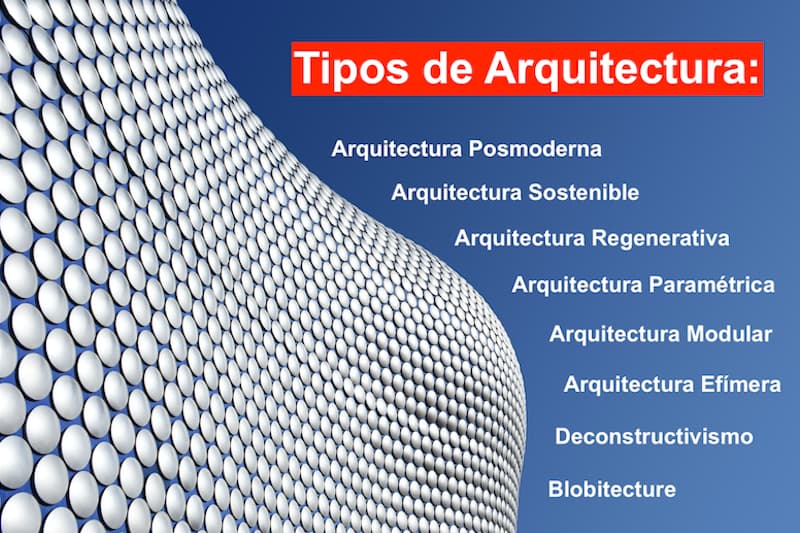
Tipos de Arquitectura: Explorando Más Allá de los Diseños Convencionales

FRASES DE ARQUITECTOS

Roles Arquitectura y Construcción (Profesiones Arquitectura)

Certificaciones para Arquitectos: Avanzando en la Excelencia Profesional

Roles BIM más Demandados en la Industria de la Construcción y el Sector AECO

Software BIM para Proyectos de Arquitectura y Construcción

Tecnología BIM: Beneficios y Ventajas en el sector AECO: Arquitectura, Ingeniería, Construcción y Operaciones

Modelo BIM

Modelo MEP

BIM 3D 4D 5D 6D 7D

AECO: Sector Arquitectura, Ingeniería, Construcción y Operaciones

Avances Tecnológicos en la Industria de la Construcción

Normas Técnicas de Edificación
!Explora el Mejor Directorio de Construcción! 🚧 🏗️ 👷♂️ (Sólo en ArquitecturaCarreras.com)


www.jmhdezhdez.com
Arquitectura, Ingeniería y Documentación Técnica AECO
