- Inicio
- Ecosistema AECO
- _ATLAS AECO
- __Mapa Global Obras
- __Serie Const. Vanguardistas
- _Estudios de Arquitectura
- __en Madrid
- __en Barcelona
- _Estudios de Ingeniería
- __en Madrid
- _Estudios de Interiorismo
- __en Madrid
- __en Barcelona
- _Empresas Constructoras
- __en Madrid
- __en Barcelona
- _Empresas de Reformas
- __en Madrid
- _Empresas AECO en España
- __Fabricantes de Materiales
- __Modelado BIM
- __Software BIM
- __ Mediciones y Presupuesto
- __Consultoras BIM
- __Inmobiliarias y Real Estate
- __Investment & Transactions
- __Investment & Capital
- __Const. Industrializada
- __Neoconstrucción
- __Inversión y Des. de Suelo
- __CDE y Gestión Documental
- __Laboratorios AECO
- _Biblioteca Técnica AECO
- __Glosario AECO Global
- __Glosario de Construcción
- __Glosario de Edificación
- __Glosario BIM GTB-300
- __Edificación Circular
- _Entrevistas AECO
- __Jaime Sánchez-Álvarez
- _Visibilidad B2B
- __Premium Multicategoría
- __Ficha Corporativa B2B
- __Partners AECO
- Arquitectura
- _RASCACIELOS
- __Burj Khalifa Dubai
- __Edificio Chrysler, NY
- _Estilos Arquitectónicos
- __Arquitectura Posmoderna
- __Deconstructivismo
- __Arquitectura High Tech
- Arte
- _Arte Universal
- _Arte Contemporáneo
- __Serge Marshennikov
- __Damian Lechoszest
- __John Kacere
- _Escultura
- __El Ángel del Norte
- __La Musa Dormida
- __Venus de Milo
- __Moisés de Miguel Ángel
- __Baldaquino de San Pedro
- __El rapto de Proserpina
- __La Verdad Velada
- __Perseo con cabeza de Medusa
- __Venus de Willendorf
- _Pintura
- __Capilla Sixtina
- __Cuadros Famosos
- __La Creación de Adán
- __Venus del Espejo Velázquez
- __Hipómenes y Atalanta
- __Venus Boticelli
- __Silla de van Gogh
- __Jugadores de Cartas Cézanne
- __Cabeza de Medusa Caravaggio
- __Impresionismo
- __Posimpresionismo
- _Historia
- __Edad Moderna
- Curiosidades
- _Arquitectura y Arte
- _Tumba de Miguel Ángel
- FRASES
- _Frases de la semana
- _Arquitectos
- __Frank Gehry
- _Escultores
- __Miguel Ángel Buonarroti
- __Bernini
- __Rodin
- _Pintores
- __Picasso
- __Vincent van Gogh
- __Cézanne
- __Claude Monet
- __Henri Matisse
- __René Magritte
- __Caravaggio
- __Miguel Ángel
- Formación AECO
- _Másteres en España
- __Másteres BIM en España
- __Másteres de Arquitectura
- __Másteres de Ingeniería
- __Másteres de Construcción
- __Másteres en Interiorismo
- __Másteres Inmobiliarios
- __Máster Facility Management
- __Másteres de Smart Building
- __Máster Energía y Edificación
- __Máster en Infraestructuras
- __Másteres en Urbanismo
- __M. Project Management
- __M. Construcción Sostenible
- __M. Instalaciones MEP
- _Cursos BIM
- __Cursos BIM Online
- __Cursos Revit Online
- __Cursos Revit MEP online
- _Partner de Formación AECO
- _Formación AECO Empresas
- __en España
- __Capacitación en México
- __en Colombia


Arquitectura, Ingeniería, Construcción y Real Estate; tecnología AECO, metodología BIM, software AEC, modelado BIM, CDE, construcción industrializada, neoconstrucción, fabricantes de materiales y sistemas constructivos; empresas constructoras, promotoras inmobiliarias, fabricantes, proveedores y soluciones para el sector; investigación técnica, Atlas de Arquitectura e Innovación AECO, directorios profesionales y glosarios técnicos; Smart Home, Smart Building, diseño, arte, fotografía arquitectónica, ciudades, edificios, infraestructuras y cultura arquitectónica.
Architecture, Engineering, Construction and Real Estate; AECO technology, BIM methodology, AEC software, BIM modelling, CDE, industrialized construction, advanced construction, building materials manufacturers and construction systems; construction companies, real estate developers, manufacturers, suppliers and solutions for the industry; technical research, Atlas of Architecture and AECO Innovation, professional directories and technical glossaries; Smart Home, Smart Building, design, art, architectural photography, cities, buildings, infrastructure and architectural culture.

Stepping: The Geometric Code to 'Confuse' the Wind in the Burj Khalifa

Series: Avant-Garde Constructions
Masterpieces of Architecture and Engineering: #01 Burj Khalifa, Dubai
Can we "trick" nature with geometry?
According to Adrian Smith, architect of the Burj Khalifa in Dubai, the answer is a resounding yes. In the construction of skyscrapers that defy the 800-meter mark, the greatest enemy is not gravity, but the wind.
As a building gains height, air currents cease to be breezes and become dynamic forces capable of compromising structural integrity. This is where Stepping comes into play, a technique that fuses organic aesthetics with vanguard engineering.

Fluid Dynamics Comparison: The impact of geometry on structural stability.
On the left, a uniform section generates organized, rhythmic Vortex Shedding, causing critical oscillation forces. On the right, the stepped geometry (Stepping) of the Burj Khalifa disorganizes wind flow, fragmenting vortices and drastically reducing the building's vibratory fatigue.
The physical phenomenon: Vortex Shedding
When wind strikes a structure of uniform section (like a rectangular prism), the airflow organizes into alternating eddies on both sides of the building. This phenomenon, known as Vortex Shedding, generates variable pressures that cause the skyscraper to oscillate transversely.
If the frequency of these vortices coincides with the building's natural frequency, resonance occurs, increasing the amplitude of the "sway" to dangerous levels or, at the very least, levels uncomfortable for occupants.
Other Issues in the Series:
ISSUE #02 | CCTV Tower: Defying the Void
Beijing's most ambitious cantilever and the structural steel diagrid-grid that supports this continuous loop.
ISSUE #03 | Taipei 101: Dynamic Balance
Defying typhoons and earthquakes with the iconic 660-ton tuned mass damper.
ISSUE #04 | Hearst Tower: The NY Diamond
The efficiency of the Diagrid system: saving 20% of steel and redefining sustainability.
ISSUE #20 | O-14 Tower: The Habitable Sculpture
Defying the desert: an analysis of the perforated concrete exoskeleton and the passive intelligence of the chimney effect.
EDITION #26 | Turning Torso: Structural Synthesis of Anatomy in Motion
The feat of translating a human torso into a 190m helical skyscraper. An analysis of the master core and exterior steel spine engineered to manage extreme torsion and the Baltic water table.
The SOM solution: Confusing the wind
The design of the Burj Khalifa, inspired by the geometry of the Hymenocallis flower, utilizes 27 spiral stepped setbacks.

«The Burj Khalifa was designed to confuse the wind. The stepped shape breaks up air vortices before they can organize and shake the building», Adrian Smith
By changing the building's cross-section every few meters, the wind never encounters a uniform surface. Vortices created at one height cannot "couple" with those at higher levels because the geometry has changed. The result: the wind becomes disorganized and its force dissipates.
"The Burj Khalifa does not have a conventional central core; it has a reinforced core system that acts like a giant tripod, where each wing helps support the others to resist torsion and wind."
— Bill Baker, Structural Engineer (SOM)
Technical Comparison: Stiffness vs. Geometry
As I analyze in my book "TURNING TORSO - SANTIAGO CALATRAVA", each architectural milestone chooses a strategy to combat "the sway".HSB Turning Torso (190 m): 90° Torsion + external Diagrid (steel structural wall). Maximum oscillation: 30 cm.
Burj Khalifa (828 m): Stepping (27 levels) + Y-shaped wings (buttressed core). Maximum oscillation: 125 cm.
Both towers rely on a reinforced concrete central core (circular in Malmö, hexagonal in Dubai) constructed using self-climbing formwork. The concrete provides the necessary stiffness so that, despite oscillations exceeding one meter in the Burj Khalifa, the movement remains imperceptible to humans.

From model to sky: Wind Tunnel Tests
Nothing is left to chance. Before the first stone was laid, exhaustive tests were conducted in the wind tunnel at the University of Ontario (Canada). Scale models with hundreds of sensors determined how the structure would respond to high-altitude winds and intense sandstorms in Dubai. These tests were key to designing the aerodynamic geometry of the building, whose variable form "confuses" the wind to dissipate eddies and prevent vibrations that could compromise structural stability.
These tests confirmed that the spiral Mega-structure was not merely an aesthetic decision, but a physical necessity to reach an architectural height of 828 meters without collapsing.

Industrial Specifications & Partners
OFFICIAL DATA SHEET| Technical Specialty | Official Partner / Vendor | On-Site Execution & Supply |
|---|---|---|
| Main Contractor | Samsung C&T; Arabtec; BESIX | Joint venture responsible for the construction and direct management of the skyscraper assembly. |
| Wind Engineering | RWDI; CPP Inc.; BLWTL | Fundamental boundary layer wind tunnel studies to validate the helical aerodynamic setbacks (stepping). |
| Vertical Transportation | Otis Elevator Company Consulting: Lerch Bates |
Installation of the elevator system, including high-speed double-deck cabins. |
| Facade Glass | Guardian Glass | Supply of high-performance architectural glass for advanced thermal radiation control in desert climates. |
| Formwork Systems | Doka GmbH | Self-climbing formwork technology for the continuous pouring and execution of the reinforced concrete central core. |
| Fire Protection | Hilti AG | Supply of heavy-duty anchoring systems, penetrations, and intumescent firestopping seals. |
| Concrete Supply | Unimix | Mix design and manufacturing of specialized high-strength concrete engineered to withstand extreme pumping pressures. |
| Fixing & Cladding | HALFEN; JORDAHL; Waagner Biro | High-security anchor channels and structural engineering systems for securing the external curtain wall. |
| Monitoring Systems | ABB Group; Kinemetrics Inc. | Structural health monitoring instrumentation and automation to record dynamic building sway and accelerations. |
| Facade Maintenance | Al Abbar Group; Tractel Secalt S.A. | Heavy Building Maintenance Units (BMU) mechanically integrated into the tower's technical setback levels. |
| Industrial Lighting | Philips; ERCO GmbH; Lucent | Deployment of energy-efficient architectural lighting systems and aircraft warning safety beacons. |
| Paints & Coatings | Jotun | Specialized high-durability protective coatings resistant to desert sand abrasion and saline corrosion. |
| Structural Sealing | Dow Corning Corporation | High-strength structural silicones and sealants engineered for expansion joints subject to extreme thermal cycles. |
| Steel Supply | ArcelorMittal | Provision of heavy structural steel beams and plates for the upper spire and internal structural outriggers. |
| Water Feature Engineering | WET; Crystal Fountains Inc. | Technical design, advanced hydraulics, and systems engineering for the monumental fountains at the tower's base. |
| Art Installation | Jaume Plensa | Design of the monumental sculpture "World Voices" located in the tower's main residential lobby. |
Are you the manufacturer, installer, or technical specifier for any of these components?
Request the activation of your partner link by writing to:
info@jmhdezhdez.com
Do you want to delve into structural design?
If you are passionate about vanguard engineering, discover all the secrets of structural design in my bilingual book (ES - EN). 144 pages and 109 illustrations explaining how architecture defies the limits of the possible.
Buy "Turning Torso - Santiago Calatrava"Available in premium digital technical edition for immediate download.
Frequently Asked Questions about Stepping:
What is stepping?
It is the gradual tapering or setback of a building's facade as it gains height. Its primary function is to break up wind organization to improve aerodynamic stability.

Why is the Burj Khalifa Y-shaped?
This "buttressed core" configuration maximizes skyline views and provides a structural base with extremely high lateral stiffness, acting as buttresses that stabilize the building against wind forces.
Is concrete better than steel for high-rises?
In the 21st century, reinforced concrete in the central core is preferred for its mass and stiffness, which reduces oscillations and improves occupant comfort compared to conventional steel.
AECO Architecture & Engineering Glossary | Burj Khalifa, Dubai
Stepping: A volumetric setback technique that reduces the building's cross-section. In the Burj Khalifa, its 27 spiraling tiers fragment wind flow to prevent the formation of organized vortices.
Confusing the Wind: A geometric strategy that varies the building’s shape along its height to mitigate dynamic excitation forces and suppress vortex shedding.
Mat Foundation: A 3.7-meter-thick reinforced concrete raft that distributes massive vertical loads across the pile group, acting as a deep foundation platform.
Torsional Rigidity: The structural capacity to resist twisting moments along the vertical axis. The reinforced Y-shaped central core optimizes stability against transverse wind loads.
Unitized Curtain Wall: A high-performance modular facade system. It integrates low-emissivity (Low-E) glass to control infrared radiation and extreme solar heat gain.
High-Pressure Pumping: Vertical fluid transport engineering that allowed record-breaking concrete pouring at pressures exceeding 350 bar, overcoming friction and head loss.
Structural Sextant: A component of the lateral load-resisting system in which the central core and wing walls work together to dissipate shear forces and bending moments.
Series: Avant-Garde Constructions | jmhdezhdez.com
View Universal Technical Sheet (UTS v1.1.1) ▾
| UNIVERSAL TECHNICAL SHEET (UTS) v1.1.1 | AECO-ATLAS-2026-03-001 | |
|---|---|
| Object / Typology | Burj Khalifa, Dubai | Residential / Office Skyscraper |
| Architect / Structure | SOM (Skidmore, Owings & Merrill) |
| Technical Systems | Structural: Buttressed Core | Facade: Unitized Curtain Wall | Digital: BIM / CFD Analysis | Damping: Aerodynamic (Stepping) |
| Validation / Custody | Level: Primary (100%) | Sources: CTBUH, SOM, AECO Technical Archives |
| Integrity / License | Hash: SHA256-AECO-001 | License: CC BY-NC-ND 4.0 |
AECO-ATLAS-2026-03-001 | Typology: Skyscraper | Systems: Buttressed Core, Stepping, CFD. | Validation: Primary (100%).
CITATION AND DISSEMINATION:
Hernández Hernández, José Miguel (2026). "Stepping: The Geometric Code to 'Confuse' the Wind at Burj Khalifa". AECO Atlas. v1.1.1. Ref: AECO-ATLAS-2026-03-001. Source: https://www.jmhdezhdez.com/2026/03/burj-khalifa-stepping-geometry.html
Technical knowledge grows when shared. If you find this analysis useful, you are free to distribute it provided you include the full citation to maintain source traceability. Thank you for helping to raise the professional standard of the AECO sector!

José Miguel Hernández Hernández
International reference in the technical analysis of iconic and sculptural architecture. Specialist in the intersection between engineering, aesthetics, and vanguard design. Author of the bilingual technical books Turning Torso – Santiago Calatrava and Famous Constructions.

Publicado por José Miguel


José Miguel Hernández Hernández
Consultor Smart Home y Movilidad Eléctrica AECO
Servicios Destacados
⚡ Consultoría Movilidad Eléctrica
Proyectos CICE e ITC-BT-52.
🎓 Formación BIM / AECO
Especialización técnica avanzada.
📩 Suscripción Nodo Maestro
Innovación y normativa Smart.


Ecosistemas Smart Home por Tipología Guías técnicas y selección de dispositivos para proyectos de arquitectura e interiorismo en Pisos, Lofts, Casas Grandes, Dúplex, Áticos y Villas de Lujo. Integra automatización adaptada a cada espacio.
Ver Guía por Tipologías →
Directorio de Fotógrafos de Arquitectura en España: Descubre a los Mejores Expertos en Fotografía Arquitectónica para Documentar tus Proyectos y Obras

Fotografía Arquitectónica: La Guía Definitiva para Capturar Diseño, Estética y Función de Edificios y Estructuras

Fotografía y Vídeo Timelapse

El Rol del Fotógrafo de Arquitectura

Cámaras Réflex y Objetivos Tilt-Shift para Fotografía de Arquitectura

Estilos Arquitectónicos Modernos: Un Viaje a Través de la Creatividad y la Innovación

ARQUITECTURA CARRERA: Descubre todas las Opciones de la Carrera en Arquitectura y Grados en España

Comparativa de las Mejores Universidades de Arquitectura del Mundo: Internacional, Europa, LATAM

Los Mejores Libros de Arquitectura para Arquitectos

Libros para Estudiar Arquitectura

Libros para Arquitectos Principiantes: Guías y Recursos Esenciales para Comenzar tu Carrera

Los Mejores Libros de Arquitectura para Estudiantes durante la Carrera

Era Digital de la Construcción: Innovaciones Tecnológicas en Arquitectura y Edificación

Comparativa de Los Mejores Ordenadores para Arquitectos en 2024

Las Mejores Laptops para Arquitectura en 2024

Los Mejores Ordenadores de Arquitectura para Estudiantes

Significado de: Términos Clave sobre Arquitectura, Ingeniería y Construcción

Arquitectos: Descubre el Mejor Directorio de Arquitectos que podrás encontrar en Internet (Sólo en AC)
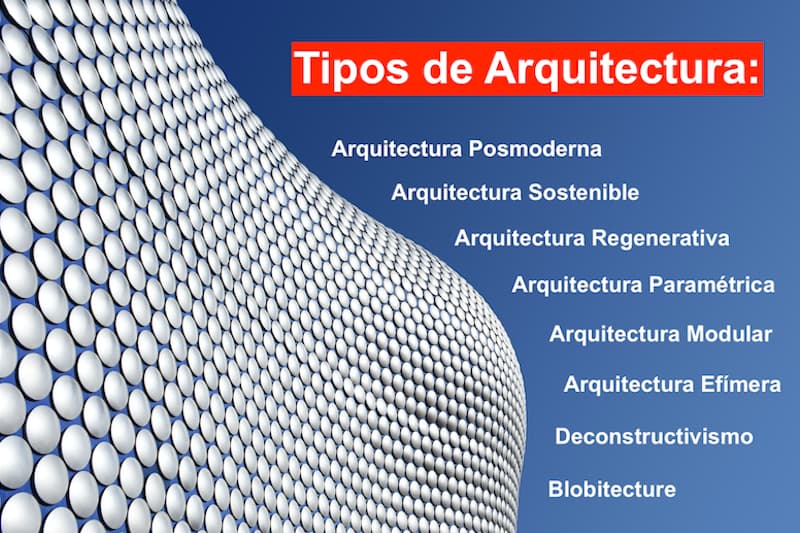
Tipos de Arquitectura: Explorando Más Allá de los Diseños Convencionales

FRASES DE ARQUITECTOS

Roles Arquitectura y Construcción (Profesiones Arquitectura)

Certificaciones para Arquitectos: Avanzando en la Excelencia Profesional

Roles BIM más Demandados en la Industria de la Construcción y el Sector AECO

Software BIM para Proyectos de Arquitectura y Construcción

Tecnología BIM: Beneficios y Ventajas en el sector AECO: Arquitectura, Ingeniería, Construcción y Operaciones

Modelo BIM

Modelo MEP

BIM 3D 4D 5D 6D 7D
AECO: Sector Arquitectura, Ingeniería, Construcción y Operaciones

Avances Tecnológicos en la Industria de la Construcción

Normas Técnicas de Edificación

!Explora el Mejor Directorio de Construcción! 🚧 🏗️ 👷♂️ (Sólo en ArquitecturaCarreras.com)


www.jmhdezhdez.com
Arquitectura, Ingeniería y Documentación Técnica AECO
