- Inicio
- Ecosistema AECO
- _ATLAS AECO
- __Mapa Global Obras
- __Serie Const. Vanguardistas
- _Estudios de Arquitectura
- __en Madrid
- __en Barcelona
- _Estudios de Ingeniería
- __en Madrid
- _Estudios de Interiorismo
- __en Madrid
- _Empresas Constructoras
- __en Madrid
- __en Barcelona
- _Empresas de Reformas
- __en Madrid
- _Empresas AECO
- __Fabricantes en España
- _Empresas de Modelado BIM
- __En España
- _Biblioteca Técnica AECO
- __Glosario AECO Global
- __Glosario de Construcción
- __Glosario de Edificación
- __Glosario BIM GTB-300
- __Edificación Circular
- _Entrevistas AECO
- __Jaime Sánchez-Álvarez
- _Visibilidad B2B y Partners AECO
- Arquitectura
- _RASCACIELOS
- __Burj Khalifa Dubai
- __Edificio Chrysler, NY
- _Estilos Arquitectónicos
- __Arquitectura Posmoderna
- __Deconstructivismo
- __Arquitectura High Tech
- Arte
- _Arte Universal
- _Arte Contemporáneo
- __Serge Marshennikov
- __Damian Lechoszest
- __John Kacere
- _Escultura
- __El Ángel del Norte
- __La Musa Dormida
- __Venus de Milo
- __Moisés de Miguel Ángel
- __Baldaquino de San Pedro
- __El rapto de Proserpina
- __La Verdad Velada
- __Perseo con cabeza de Medusa
- __Venus de Willendorf
- _Pintura
- __Capilla Sixtina
- __Cuadros Famosos
- __La Creación de Adán
- __Venus del Espejo Velázquez
- __Hipómenes y Atalanta
- __Venus Boticelli
- __Silla de van Gogh
- __Jugadores de Cartas Cézanne
- __Cabeza de Medusa Caravaggio
- __Impresionismo
- __Posimpresionismo
- _Historia
- __Edad Moderna
- Curiosidades
- _Arquitectura y Arte
- _Tumba de Miguel Ángel
- FRASES
- _Frases de la semana
- _Arquitectos
- __Frank Gehry
- _Escultores
- __Miguel Ángel Buonarroti
- __Bernini
- __Rodin
- _Pintores
- __Picasso
- __Vincent van Gogh
- __Cézanne
- __Claude Monet
- __Henri Matisse
- __René Magritte
- __Caravaggio
- __Miguel Ángel
- Formación AECO
- _Másteres en España
- __Másteres BIM en España
- __Másteres de Arquitectura
- __Másteres de Ingeniería
- __Másteres de Construcción
- __Másteres en Interiorismo
- __Másteres Inmobiliarios
- __Máster Facility Management
- __Másteres de Smart Building
- __Máster Energía y Edificación
- __Máster en Infraestructuras
- __Másteres en Urbanismo
- __M. Project Management
- __M. Construcción Sostenible
- __M. Instalaciones MEP
- _Cursos BIM
- __Cursos BIM Online
- __Cursos Revit Online
- __Cursos Revit MEP online
- _Partner de Formación AECO
- _Formación AECO Empresas
- __en España
- __Capacitación en México
- __en Colombia


Arquitectura, Escultura, Pintura, Ingeniería, Software-Programas de Diseño Arquitectónico: Metodología BIM, Revit, AutoCAD, 3ds max, Animación; Software de Adobe; Cursos online, Libros, Historia, Cultura, Timelapse y Dronelapse sobre Arquitectura y ciudades, Frases Célebres, Curiosidades, Rascacielos, Puentes, Edificios interesantes, Construcciones vanguardistas, Construcciones famosas, Diseño, Arte, Fotografía Arquitectónica / Architecture, Sculpture, Painting, Engineering, Software-Architectural Design Programs: BIM Methodology, Revit, AutoCAD, 3ds max, Animation; Adobe software; Online courses, Books, History, Culture, Timelapse and Dronelapse on Architecture and cities, Famous Phrases, Curiosities, Skyscrapers, Bridges, Interesting buildings, Avant-garde constructions, Famous constructions, Design, Art, Architectural Photography

Woermann Tower: The Virtual Forest and Variable Geometry

Series: Avant-Garde Constructions
Masterpieces of Architecture and Engineering: #23 Woermann Tower, Las Palmas de Gran Canaria
How to make a 60-meter building look like an anthropomorphic sculpture in motion without compromising its stability?
Located on the Isthmus of Guanarteme, that singular "neck of land" connecting the peninsula of Gran Canaria with La Isleta, the Woermann Tower stands as a beacon of contemporary architecture. What was once a tongue of dunes and sand is today the stage for a technical feat where deconstructivism ceases to be an aesthetic intention and becomes a structural engineering challenge. This installment dissects how architects Ábalos & Herreros, alongside the mastery of BOMA, managed to materialize a "virtual forest" that redefines the skyline of Las Palmas.
The tower is not born from a desire for form, but from a desire for landscape. We wanted to build a 'virtual forest' that would mediate between the sea and the city. — Iñaki Ábalos and Juan Herreros


The Structural Challenge: The Core as a Backbone
The great achievement of BOMA's engineering was allowing the formal freedom of Ábalos & Herreros without resorting to massive solutions that would penalize net usable area.
Eccentric Core: A high-strength reinforced concrete central core was designed to concentrate circulations and services. This core acts as a rigid mast that absorbs not only vertical loads, but also the torsional moments generated by the swaying of the floor plates.
The challenge at the Woermann was managing eccentricity. When a building 'moves' or leans, the center of gravity shifts, and the concrete core must work not only in compression, but by compensating for torsional moments. — Robert Brufau (BOMA)

Transfer Geometry: To achieve the inclined "torso" effect, the columns do not always align vertically. Deep transfer girders were utilized on strategic floors to transfer loads from the offset columns back to the core and the foundations, allowing the tower to "dance" on its base.
Other Issues in the Series:
ISSUE #01 | Burj Khalifa: The Wind Code
Stepping technique: how geometric variation tames vortices at 828 meters.
ISSUE #02 | CCTV Tower: Defying the Void
Beijing's most ambitious cantilever and the structural steel diagrid-grid that supports this continuous loop.
ISSUE #07 | Porta Fira Towers: Ruled Geometry
Analysis of Toyo Ito's system: how the repetition of straight elements generates an organic envelope.
ISSUE #13 | Aqua Tower: The Liquid Sculpture Defying the Wind
Studio Gang: An algorithmic optimization feat where undulating terraces "confuse" the wind and columns "walk" to defy gravity.

The Facade: Control Skin and Digital Art
The envelope of the Woermann Tower is not a simple enclosure; it is a solar filtering system and a multilingual aesthetic statement.
Smart Curtain Wall: A laminated glass system with high thermal performance is utilized. The innovation lies in the integration of a brise-soleil that is not an external add-on component, but forms part of the skin's modulation.
The Oehlen Layer: In collaboration with the artist Albert Oehlen, silk-screened fritted motifs were applied to the glass panes. These patterns do not only fragment light to reduce thermal heat gain, but "dematerialize" the building's mass, helping it blend with the sky and sea of Las Palmas.
My intervention on the facade glass is not decoration; it is a layer of information that alters the perception of the volume to merge it with the Canarian sky. — Albert Oehlen

Sustainability and Integration into the Isthmus
The project leverages its strategic location within the geographical narrowing between Las Canteras Beach and the Puerto de la Luz to optimize its passive performance.
We were looking for an 'other' beauty, not one of geometric perfection, but one of commitment to the site. The facade is not a skin; it is a brise-soleil that vibrates with the Atlantic light. — Ábalos & Herreros

Hybrid Architecture: By combining residential, administrative, and cultural uses above a public square, the building functions as an urban micro-ecosystem that minimizes commuting, aligning itself with European sustainability goals.
Venturi Effect and Ventilation: The arrangement of the openings and the tower's orientation take advantage of the constant Atlantic breezes of the isthmus to promote cross-ventilation, drastically reducing dependence on active HVAC systems.

The Urban Node: Public Space and Connectivity
We cannot overlook that the avant-garde tower does not "land" aggressively; instead, it folds back to yield space to the citizen.
The Tropical Square: The Portuguese cobblestone pavement and the medium-height vegetation create a shaded microclimate. It is an example of tactical urbanism where the ground floor is liberated to act as a pedestrian connector between the port and the beach.
Digital Integration: The operations of the mixed-use hybrid building (library, offices, housing) require an intelligent management of accesses and flows, turning the Woermann Tower into a precursor to the Smart Building in the Canary Islands.

Materiality and Atlantic Resilience
An analysis of how to combat corrosion and the saline environment of the Isthmus.
High-Strength Concrete: The use of specific mix designs to withstand the marine atmosphere (exposure class IIIc), vital to ensure that the building's "backbone" does not suffer premature carbonation.

Photometric Control Glass: Oehlen's silk-screening technique is not just art; it is a physical barrier against salt spray, facilitating the maintenance of a curtain wall that is exposed to the constant erosion of the northeasterly winds.
The structure cannot be a rigid grid; it has to be a transfer system. We had to design deep transfer girders to allow the columns to 'dance' according to the aesthetic intent. — Robert Brufau (BOMA)


Industrial Specifications and Partners
OFFICIAL TECHNICAL DATASHEET| Technical Specialty | Official Partner / Vendor | Site Execution and Supply |
|---|---|---|
| Site Execution and Construction | Ferrovial Agromán | Main contractor in charge of complex materialization, subcontracting management, and monolithic concrete structure execution. |
| Chemical Glass & Interlayer | Solutia / Eastman | Supply of structural PVB interlayer sheet technology from the Vanceva range, essential for UV filtering and acoustic control of the curtain wall. |
| Advanced Glass Processing | Cricursa | Advanced manufacturing, bending, and tempering of over 2,000 m² of laminated glass panels embedding the artistic patterns of the facade. |
| Envelope Systems | Custom Modular Profiles | Development and extrusion of the curtain wall system tailored to the tower's geometry under the architectural team's guidelines. |
| Structural Concrete | Marine Mix Design Class IIIc | High-strength concrete formulation with specific additives to withstand environmental aggressiveness and carbonation caused by saline environments. |
Are you the manufacturer, installer, or technical specifier for any of these components?
Request your partner link activation by writing to:
info@jmhdezhdez.com

The building absorbs the urban and climatic stresses of this narrow point of the city, integrating seamlessly and positively with the surrounding marine landscape.
The Isthmus as a Canvas: Where Technique Meets Identity
The Woermann Tower is not just a high-rise building; it is the architectural response to a territorial question. Situated at the Guanarteme bottleneck, the work acts as a dynamic connector that joins two opposing maritime realities through a geometry that, while appearing fragile due to its tilt, is a marvel of rigidity and technical control. It is, in essence, proof that sculptural and iconic architecture can simultaneously be deeply respectful of the landscape that hosts it.

The Woermann Tower aims to embody the illusions, desires, and fantasies of a society seeking to find its place between nature and development. — Ábalos & Herreros
Frequently Asked Questions about the Woermann Tower designed by Ábalos & Herreros:
Why is the tower said to have an "anthropomorphic" figure?
Because its design is inspired by the twisting of a human torso, avoiding a rigid vertical extrusion to generate an organic movement that appears to "peer out" into the landscape.
What real function does the artistic silk-screening on the facade glass serve?
Beyond Albert Oehlen's aesthetic contribution, it functions as a passive solar filter that reduces glare and interior thermal heat gain without sacrificing ocean views or natural daylighting.
How do Atlantic winds affect such an asymmetrical structure?
BOMA's rigid core is oversized to absorb the lateral forces and twisting moments that the wind exerts on the building's shifted faces.
What is a "deep transfer girder" in this context?
It is a concrete beam of exceptional dimensions that allows the structural system to "collect" the load from columns that do not reach the ground and redirect it toward stable bearing points.
Why is its location on the isthmus important?
Geographically, the isthmus is a bottleneck for winds and urban stresses. The tower leverages this for natural ventilation and to act as a visual landmark between two waterfronts.
AECO Architecture & Engineering Glossary | Woermann Tower, Las Palmas
Interlocking Geometry: The intersection of independent geometric blocks that merge into a single unit. This volumetric displacement breaks the vertical prism and generates cantilevers that force the shifting of structural columns.
Eccentric Core: A vertical reinforced concrete structure offset from the building's central axis. It functions as a rigid mast to house utilities and absorb wind loads and horizontal shear forces.
Torsional Moment: The twisting stress experienced by the structure due to the asymmetrical action of wind on its variable geometry. It is counteracted by the high rigidity and inertia of the central core.
Deep Transfer Girder: A concrete beam of exceptional depth used as a structural transfer element to "collect" columns misaligned by volumetric interlocking and redirect their loads back to the core.
Brise-soleil: A passive protection element against solar radiation. In the tower, it is unbundled and integrated directly into the curtain wall modulation instead of being installed as an external add-on component.
Laminated Glass (PVB): Technical glazing featuring Polyvinyl Butiral interlayers (Vanceva range). It provides structural safety against breakage, port-area acoustic attenuation, and ultraviolet filtering.
Photometric Control: A vitrified ceramic printing technique (Albert Oehlen's artistic silk-screening) that functions as passive pixels, reducing the solar factor $g$ and protecting the glass pane from salt spray erosion.
Marine Mix Design Class IIIc: A high-strength concrete formulation with specific additives and a low water-to-cement ratio. It prevents chloride penetration and premature carbonation within the harsh atmosphere of the isthmus.
Venturi Effect: A physical phenomenon where fluids accelerate when passing through a constricted area. The tower leverages the natural compression of the wind across the Guanarteme isthmus to drive passive cross-ventilation.
Hybrid Architecture: A high-density typology unifiying disparate programs (residential, office, commercial, and a public square) within a single volume to optimize energy flows and minimize urban commuting requirements.
Series: Avant-Garde Constructions | jmhdezhdez.com
Credits and Documentation
Photography, Text, and Editing: © José Miguel Hernández Hernández: Author, Technical Editor, and AECO Consultant
Plans, Drawings, and Conceptual Sketches of the Project: © Ábalos & Herreros

José Miguel Hernández Hernández
International benchmark in the technical analysis of iconic and sculptural architecture. Specialist at the intersection of engineering, aesthetics, and the avant-garde. Author of the bilingual technical books Turning Torso – Santiago Calatrava and Famous Constructions / Construcciones Famosas.

Publicado por José Miguel


José Miguel Hernández Hernández
Consultor Smart Home y Movilidad Eléctrica AECO
Servicios Destacados
⚡ Consultoría Movilidad Eléctrica
Proyectos CICE e ITC-BT-52.
🎓 Formación BIM / AECO
Especialización técnica avanzada.
📩 Suscripción Nodo Maestro
Innovación y normativa Smart.


Ecosistemas Smart Home por Tipología Guías técnicas y selección de dispositivos para proyectos de arquitectura e interiorismo en Pisos, Lofts, Casas Grandes, Dúplex, Áticos y Villas de Lujo. Integra automatización adaptada a cada espacio.
Ver Guía por Tipologías →
Directorio de Fotógrafos de Arquitectura en España: Descubre a los Mejores Expertos en Fotografía Arquitectónica para Documentar tus Proyectos y Obras

Fotografía Arquitectónica: La Guía Definitiva para Capturar Diseño, Estética y Función de Edificios y Estructuras

Fotografía y Vídeo Timelapse

El Rol del Fotógrafo de Arquitectura

Cámaras Réflex y Objetivos Tilt-Shift para Fotografía de Arquitectura

Estilos Arquitectónicos Modernos: Un Viaje a Través de la Creatividad y la Innovación

ARQUITECTURA CARRERA: Descubre todas las Opciones de la Carrera en Arquitectura y Grados en España

Comparativa de las Mejores Universidades de Arquitectura del Mundo: Internacional, Europa, LATAM

Los Mejores Libros de Arquitectura para Arquitectos

Libros para Estudiar Arquitectura

Libros para Arquitectos Principiantes: Guías y Recursos Esenciales para Comenzar tu Carrera

Los Mejores Libros de Arquitectura para Estudiantes durante la Carrera

Era Digital de la Construcción: Innovaciones Tecnológicas en Arquitectura y Edificación

Comparativa de Los Mejores Ordenadores para Arquitectos en 2024

Las Mejores Laptops para Arquitectura en 2024

Los Mejores Ordenadores de Arquitectura para Estudiantes

Significado de: Términos Clave sobre Arquitectura, Ingeniería y Construcción

Arquitectos: Descubre el Mejor Directorio de Arquitectos que podrás encontrar en Internet (Sólo en AC)
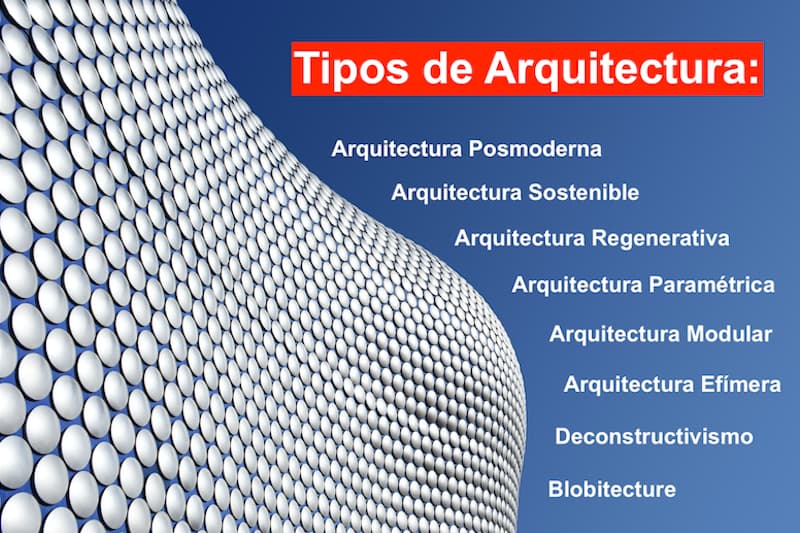
Tipos de Arquitectura: Explorando Más Allá de los Diseños Convencionales

FRASES DE ARQUITECTOS

Roles Arquitectura y Construcción (Profesiones Arquitectura)

Certificaciones para Arquitectos: Avanzando en la Excelencia Profesional

Roles BIM más Demandados en la Industria de la Construcción y el Sector AECO

Software BIM para Proyectos de Arquitectura y Construcción

Tecnología BIM: Beneficios y Ventajas en el sector AECO: Arquitectura, Ingeniería, Construcción y Operaciones

Modelo BIM

Modelo MEP

BIM 3D 4D 5D 6D 7D

AECO: Sector Arquitectura, Ingeniería, Construcción y Operaciones

Avances Tecnológicos en la Industria de la Construcción

Normas Técnicas de Edificación
!Explora el Mejor Directorio de Construcción! 🚧 🏗️ 👷♂️ (Sólo en ArquitecturaCarreras.com)


www.jmhdezhdez.com
jmhdezhdez.com — Arquitectura, Ingeniería y Documentación Técnica AECO
