- Inicio
- Ecosistema AECO
- _ATLAS AECO
- __Mapa Global Obras
- __Serie Const. Vanguardistas
- _Estudios de Arquitectura
- __en Madrid
- __en Barcelona
- _Estudios de Ingeniería
- __en Madrid
- _Estudios de Interiorismo
- __en Madrid
- __en Barcelona
- _Empresas Constructoras
- __en Madrid
- __en Barcelona
- _Empresas de Reformas
- __en Madrid
- _Empresas AECO en España
- __Fabricantes de Materiales
- __Modelado BIM
- __Software BIM
- __ Mediciones y Presupuesto
- __Consultoras BIM
- __Inmobiliarias y Real Estate
- __Investment & Transactions
- __Investment & Capital
- __Const. Industrializada
- __Neoconstrucción
- __Inversión y Des. de Suelo
- __CDE y Gestión Documental
- __Laboratorios AECO
- _Biblioteca Técnica AECO
- __Glosario AECO Global
- __Glosario de Construcción
- __Glosario de Edificación
- __Glosario BIM GTB-300
- __Edificación Circular
- _Entrevistas AECO
- __Jaime Sánchez-Álvarez
- _Visibilidad B2B
- __Premium Multicategoría
- __Ficha Corporativa B2B
- __Partners AECO
- Arquitectura
- _RASCACIELOS
- __Burj Khalifa Dubai
- __Edificio Chrysler, NY
- _Estilos Arquitectónicos
- __Arquitectura Posmoderna
- __Deconstructivismo
- __Arquitectura High Tech
- Arte
- _Arte Universal
- _Arte Contemporáneo
- __Serge Marshennikov
- __Damian Lechoszest
- __John Kacere
- _Escultura
- __El Ángel del Norte
- __La Musa Dormida
- __Venus de Milo
- __Moisés de Miguel Ángel
- __Baldaquino de San Pedro
- __El rapto de Proserpina
- __La Verdad Velada
- __Perseo con cabeza de Medusa
- __Venus de Willendorf
- _Pintura
- __Capilla Sixtina
- __Cuadros Famosos
- __La Creación de Adán
- __Venus del Espejo Velázquez
- __Hipómenes y Atalanta
- __Venus Boticelli
- __Silla de van Gogh
- __Jugadores de Cartas Cézanne
- __Cabeza de Medusa Caravaggio
- __Impresionismo
- __Posimpresionismo
- _Historia
- __Edad Moderna
- Curiosidades
- _Arquitectura y Arte
- _Tumba de Miguel Ángel
- FRASES
- _Frases de la semana
- _Arquitectos
- __Frank Gehry
- _Escultores
- __Miguel Ángel Buonarroti
- __Bernini
- __Rodin
- _Pintores
- __Picasso
- __Vincent van Gogh
- __Cézanne
- __Claude Monet
- __Henri Matisse
- __René Magritte
- __Caravaggio
- __Miguel Ángel
- Formación AECO
- _Másteres en España
- __Másteres BIM en España
- __Másteres de Arquitectura
- __Másteres de Ingeniería
- __Másteres de Construcción
- __Másteres en Interiorismo
- __Másteres Inmobiliarios
- __Máster Facility Management
- __Másteres de Smart Building
- __Máster Energía y Edificación
- __Máster en Infraestructuras
- __Másteres en Urbanismo
- __M. Project Management
- __M. Construcción Sostenible
- __M. Instalaciones MEP
- _Cursos BIM
- __Cursos BIM Online
- __Cursos Revit Online
- __Cursos Revit MEP online
- _Partner de Formación AECO
- _Formación AECO Empresas
- __en España
- __Capacitación en México
- __en Colombia


Arquitectura, Ingeniería, Construcción y Real Estate; tecnología AECO, metodología BIM, software AEC, modelado BIM, CDE, construcción industrializada, neoconstrucción, fabricantes de materiales y sistemas constructivos; empresas constructoras, promotoras inmobiliarias, fabricantes, proveedores y soluciones para el sector; investigación técnica, Atlas de Arquitectura e Innovación AECO, directorios profesionales y glosarios técnicos; Smart Home, Smart Building, diseño, arte, fotografía arquitectónica, ciudades, edificios, infraestructuras y cultura arquitectónica.
Architecture, Engineering, Construction and Real Estate; AECO technology, BIM methodology, AEC software, BIM modelling, CDE, industrialized construction, advanced construction, building materials manufacturers and construction systems; construction companies, real estate developers, manufacturers, suppliers and solutions for the industry; technical research, Atlas of Architecture and AECO Innovation, professional directories and technical glossaries; Smart Home, Smart Building, design, art, architectural photography, cities, buildings, infrastructure and architectural culture.

Arganzuela Footbridge: Dominique Perrault’s Helical Embrace in Madrid Río

Series: Avant-Garde Constructions
Architectural and Engineering Masterpieces: #24 Arganzuela Footbridge, Madrid
Can a steel megastructure become a living organism that breathes and shades the citizen?
The Arganzuela Footbridge (2005—2011), designed by architect Dominique Perrault and structural engineer Julio Martínez Calzón (MC2), has rapidly become one of the most innovative and interesting engineering works of the 21st century from both a structural and architectural standpoint. This sculptural work stands as the most recognizable and visible landmark within the Manzanares River Special Plan (Madrid Río), where the geometric complexity of its self-supporting double helix masterfully intertwines structural audacity with landscape architecture.

A bridge is not just a path over water; in the Arganzuela Footbridge, the structure is the landscape itself.
— Dominique Perrault
This compelling Urban Planning Project has successfully and positively revitalized the urban fabric of this area of Madrid by undergrounding the M-30 Urban Highway tunnels—an exercise in urban justice that transformed a degraded space of noise and asphalt into a massive 215,400 m² green lung. It extends along the eastern bank of the river, from the historic Toledo Bridge to the greenhouse of the Arganzuela Crystal Palace.


With this innovative plan carried out by the Madrid Local Authorities, the capital reclaimed an immense surface area dedicated exclusively to green zones, sports, leisure, and recreational areas. In its conceptual approach, this urban regeneration process recalls the impact of diverting the Turia River in Valencia, which paved the way for the construction of the City of Arts and Sciences.

Today, the environment surrounding the Arganzuela Footbridge serves as a vibrant civic stage. The master plan allows citizens to enjoy recreational interaction with water; one of the most iconic spots is the "urban beach," where the famous water jets and splash pads allow children and adults to cool off on hot days, a concept previously explored by artist and sculptor Jaume Plensa in Chicago's Crown Fountain. These fountains, paired with the shade projected by the helical structure itself, generate an ideal microclimate for sports and leisure, establishing a necessary climate shelter in the heart of the capital that drastically reduces environmental and noise pollution.

The footbridge does not conform to the classic bridge typology; it is a continuous space structure where structural resistance and geometric form are one and the same. The cones are not ornamental; they are the self-supporting framework itself that allows the deck to float over the river.
— Julio Martínez Calzón
Technical Analysis: The Geometry of the Spiraling Cone
The project, executed alongside renowned engineer Julio Martínez Calzón (MC2 Estudio de Ingeniería), consists of two independent helical cones measuring 150 and 128 meters in length, respectively. It is located near the emblematic Toledo Bridge—with whose Churrigueresque Baroque style it establishes an open architectural dialogue—acting as a link between the boundaries of the Carabanchel and Arganzuela districts. Both structures face one another but have intentionally offset axes, a design decision that helps shape the elevated space of the central viewpoint plaza.

The true challenge of the Arganzuela was translating a purely sculptural and geometric idea into an efficient structural behavior in steel. Every node had to be calculated three-dimensionally so that the curved diagonals could absorb torsional and bending stresses, maintaining the visual lightness demanded by the Madrid Río landscape.
— Julio Martínez Calzón

The Space Truss and Structural Behavior:
The main structure stands out for its bold parametric geometry: a truncated conical space truss with a circular cross-section that tapers toward its ends, varying from 12 meters in diameter at its central section to 5 meters at its boundaries. It features four straight longitudinal chords intertwined by curved diagonals and transverse circular ribs (rings), enclosing the entire structure within an authentically modern and avant-garde truncated conical surface. This three-dimensional configuration behaves in a purely self-supporting manner, transferring loads proportionally to the abutments and end piers. This layout eliminates the need for intermediate supports within the Manzanares River bed, achieving clear structural spans of up to 100 meters.
I wanted the pedestrian not just to cross a river, but to be enveloped by a mesh of light. The bridge is a passage, a sensory experience of shadow and reflections.
— Dominique Perrault
Other Issues in the Series:
ISSUE #01 | Burj Khalifa: The Wind Code
Stepping Technique: how geometric variation tames vortices at 828 meters.
ISSUE #02 | CCTV Tower: The Cantilever Challenge
The gravity-defying colossus: precision engineering and a critical dawn connection.
ISSUE #04 | Hearst Tower: The NY Diamond
Structural efficiency: Norman Foster's Diagrid system and steel savings.
ISSUE #16 | Infinity Bridge: The Geometry of Technical Resilience
Expedition Engineering & Chris Wise: A prodigy of structural lightness merging biomimicry with reactive precision engineering.
ISSUE #26 | Turning Torso: Structural Synthesis of Anatomy in Motion
The feat of translating a human torso into a 190m helical skyscraper. An analysis of the master core and exterior steel spine engineered to manage extreme torsion and the Baltic water table.
The Wire Mesh Skin (Shade and Airflow):
This is Perrault's unmistakable signature, materializing concepts he previously explored with textile-like elements at the Caja Mágica. This AISI 316 stainless steel wire mesh (Escale model, developed by GKD) is wrapped helicoidally across distinct geometric sections along the footbridge. It functions as a porous passive solar control membrane: filtering direct solar radiation and providing extensive shaded areas during the Madrid summer, protecting pedestrians without blocking the natural ventilation that flows over the Manzanares River.
The Deck and Mixed-Use Allocation:
Crafted from treated natural Ipe wood slats, the bridge deck features an ascending ramp extending from both ends. It accommodates a segregated bike lane and a pedestrian path arranged at different levels. The slats are spaced apart to allow natural daylight to penetrate downward, flowing as zenithal lighting into the park below. Both lanes are visually and functionally split by an integrated linear lighting system and wooden urban furniture arranged as stepped seating, inviting users to rest and contemplate the landscape.
Architecture is the inscription of a moment of emotion in the history of a territory.
— Dominique Perrault

Specifications & Industrial Solutions
AECO VERIFIED| Component / Role | Partner / Brand | Detailed Technical Execution |
|---|---|---|
| Ownership / Client | Madrid City Council | Institutional management driven by the General Directorate for Special Urban Planning Projects. |
| Project Management | DPA + Julio Martínez Calzón | Joint site management handled by Dominique Perrault Architecture alongside the core structural engineering team. |
| Main Contractor | Dragados S.A. | General general contractor executing the global technical project, structural bridge work, and civil infrastructure. |
| Boilermaking & Steel Fabrication | Megusa | Metalúrgica del Guadalquivir S.A. — Responsible for material preparation, steel profile rolling, workshop pre-assembly, and manual high-penetration welding of the space truss structural rings. |
| Mesh Supply | GKD Gebr. Kufferath AG | Weaving engineering, manufacturing, and supply of custom-engineered architectural stainless steel mesh ("Escale 7x1" Model, featuring a variable pitch). |
| Detail Engineering | MC2 Estudio de Ingeniería | Matrix modeling of three-dimensional rigid nodes and dynamic stability analysis under wind loads, seismic events, and pedestrian vibrations. |
| Special Foundations | Rodio Kronsa | Execution of reinforced concrete diaphragm walls, pile caps, and micropiles for the perimeter structural supports. |
| Urban Planning & Landscape | M-RÍO + West 8 | Team leadership by M-RÍO Arquitectos alongside the Dutch firm for the design of the artificial transfer hill and the topographic integration of the footbridge (Madrid Río Special Plan). |
| Quality Control & Testing | Eurocontrol S.A. | Technical control agency (OCT) tasked with non-destructive testing (NDT), radiographic inspection, and ultrasonic assessment across critical welded joints. |
| Hydraulic Engineering | GHESA Ingeniería | Design of the pumping, filtration, and automated control systems for the recreational water jets in the Urban Beach and the surrounding Arganzuela Park environment. |
| Lighting Supply | Lamp Lighting | Development of bespoke integrated linear perimeter fixtures engineered to provide uniform indirect wall-washing over the metal wire mesh skin. |
| Wind Tunnel Testing | CEDEX | Aerodynamic testing performed on scaled structural models to validate structural response against wind pressures and determine the mesh drag coefficients. |
Are you the manufacturer, installer, or specifier for any of these systems?
Request the activation of your partner link by writing to:
info@jmhdezhdez.com

It is not a bridge that sits on the ground; it is a bridge born from the very topography of the artificial hill, merging engineering and geography.
— Dominique Perrault
The Philosophy of "Groundscape"
With this work, Dominique Perrault seeks the "disappearance" of the traditional architectural object. Within Arganzuela Park, the bridge does not impose itself aggressively on its surroundings; it originates and terminates on an intermediate artificial mound that functions as a topographical nexus, blending into the sculpted landscape of the park. From this elevated plaza, the descent toward both pedestrian footbridges is organized through integrated ramps. As the architect notes: "Architecture should not be an object, but a place; not a form, but a territory." — Dominique Perrault
The footbridge by Perrault and Martínez Calzón proves that the most essential architecture is that which responds to a site's deficiencies and heals the scars of heavy infrastructural projects from the past. Alongside contemporary milestones like Santiago Calatrava’s Peace Bridge in Calgary, or Madrid's own landmarks such as the Cuatro Torres (CTBA), Barajas Terminal 4, or Distrito C, the Arganzuela Monumental Bridge redefines the city's contemporary identity. By embedding sports, water features, and landscape architecture, it transformed a peripheral void into a global node of urban well-being. It represents, in essence, the architecture of the void, daylighting control, and structural sustainability brought to life.
Frequently Asked Questions about the Arganzuela Park Monumental Bridge:
Why was a conical and helical geometry selected for the structure?
This parametric geometry allows the structure to perform as a rigid, self-supporting three-dimensional tube. It is highly efficient aerodynamically, as it disrupts wind vortex shedding and prevents structural resonance phenomena. This setup enables the bridge to clear spans up to 115 meters between supports, completely removing the need for intermediate piers within the riverbed.
How does this project benefit the city's environmental and urban health?
By undergrounding the M-30 urban highway and establishing this massive green lung (Madrid Río), atmospheric pollution and the acoustic footprint have been drastically reduced in the adjacent districts. Madrid has gained cleaner air, river biodiversity, and thousands of square meters of permeable soil dedicated to physical exercise and direct contact with nature.
What technical and hygrothermal significance does the metal wire mesh hold in the design?
It is a translucent technical textile membrane that responds to ambient lighting conditions. By day, it acts as a passive solar control system that provides shade, supports cross-ventilation, and generates a cool microclimate. At night, it allows internal lighting to project outward, transforming the footbridge into a glowing sculpture or "urban lighthouse" without causing glare.
What premium materials ensure the long-term durability of the footbridge?
High-strength structural carbon steel with multi-layer anti-corrosion coatings is utilized for the primary space frame, while AISI 316 stainless steel is selected for the mesh due to its exceptional weathering resistance. The deck is paved with natural tropical Ipe wood, an extremely dense species featuring inherent protection against fungi and insects, optimal for heavy pedestrian traffic and continuous exposure to moisture.
How does its innovative integrated night-time lighting system function?
The scheme completely rules out the use of conventional lampposts or freestanding fixtures that would visually clutter the architectural volume. The LED lighting is entirely hidden and integrated within the perimeter elements and street furniture, projecting the light beam directly toward the metal wire mesh. The mesh glows by reflection, creating a soft urban lantern effect that guides users with absolute safety.
AECO Architecture & Engineering Glossary | Arganzuela Footbridge, Madrid
Truncated-Conical Space Truss: A structural system composed of interconnected members forming a truncated cone (open at both ends), where the cross-sectional diameter progressively widens or narrows along its longitudinal axis to optimize load paths and shear force distribution.
Architectural Wire Mesh: A technical textile membrane engineered through the industrial weaving of stainless steel rods and cables. In this project, it functions as a porous passive solar control envelope, allowing continuous airflow while refracting direct solar radiation.
Structural Span: The clear horizontal distance between two consecutive supports, piers, or abutments of a bridge structure. The Arganzuela design stands out for achieving structural clear spans reaching up to 115 meters across the Manzanares River channel.
Three-Dimensional Rigid Node: The spatial intersection point where straight longitudinal chords and curved diagonals meet. It requires continuous, high-penetration structural welding and ultrasonic non-destructive quality control to ensure proper moment transmission.
Ipe Timber (Technical Specification): High-density tropical hardwood (exceeding 1000 kg/m³) with inherent fire-resistance classification and virtually zero permeability. Deployed across the bridge deck due to its excellent dimensional stability under heavy pedestrian traffic and constant environmental moisture.
Aerodynamic Resistance (Wind Vortices): The capacity of a geometric form to mitigate and dissipate wind forces. The helical orientation of the steel profiles combined with the calibrated porosity of the mesh disrupts parallel wind vortex shedding, avoiding harmful structural vibrations.
Transition Abutment: A solid reinforced concrete mass structure situated at the bridge approaches. It acts as the structural interface between the natural ground of the artificial hill and the steel deck, absorbing horizontal thrusts while accommodating thermal expansion via neoprene bearing pads.
Self-Supporting Structure: A structural system capable of carrying its own dead weight and active live loads (pedestrians, cyclists) through its intrinsic three-dimensional geometric rigidity (the spiral tube/cone), reducing the need for intermediate vertical support columns.
Series: Avant-Garde Construction Landmarks | jm6dezhdez.com
Documentation Credits
Text, Photography & Content Curation: © José Miguel Hernández Hernández
Blueprints and Architectural Drawings: © Dominique Perrault Architecture (DPA)
Aerial Zenith Photography: © Madrid City Council (Cartography Services Department)

José Miguel Hernández Hernández
International expert in the technical analysis of iconic and sculptural architecture. Specialist at the intersection of engineering, aesthetics, and avant-garde design. Author of the bilingual engineering volumes Turning Torso – Santiago Calatrava and Construcciones Famosas / Famous Constructions.

Publicado por José Miguel


José Miguel Hernández Hernández
Consultor Smart Home y Movilidad Eléctrica AECO
Servicios Destacados
⚡ Consultoría Movilidad Eléctrica
Proyectos CICE e ITC-BT-52.
🎓 Formación BIM / AECO
Especialización técnica avanzada.
📩 Suscripción Nodo Maestro
Innovación y normativa Smart.


Ecosistemas Smart Home por Tipología Guías técnicas y selección de dispositivos para proyectos de arquitectura e interiorismo en Pisos, Lofts, Casas Grandes, Dúplex, Áticos y Villas de Lujo. Integra automatización adaptada a cada espacio.
Ver Guía por Tipologías →
Directorio de Fotógrafos de Arquitectura en España: Descubre a los Mejores Expertos en Fotografía Arquitectónica para Documentar tus Proyectos y Obras

Fotografía Arquitectónica: La Guía Definitiva para Capturar Diseño, Estética y Función de Edificios y Estructuras

Fotografía y Vídeo Timelapse

El Rol del Fotógrafo de Arquitectura

Cámaras Réflex y Objetivos Tilt-Shift para Fotografía de Arquitectura

Estilos Arquitectónicos Modernos: Un Viaje a Través de la Creatividad y la Innovación

ARQUITECTURA CARRERA: Descubre todas las Opciones de la Carrera en Arquitectura y Grados en España

Comparativa de las Mejores Universidades de Arquitectura del Mundo: Internacional, Europa, LATAM

Los Mejores Libros de Arquitectura para Arquitectos

Libros para Estudiar Arquitectura

Libros para Arquitectos Principiantes: Guías y Recursos Esenciales para Comenzar tu Carrera

Los Mejores Libros de Arquitectura para Estudiantes durante la Carrera

Era Digital de la Construcción: Innovaciones Tecnológicas en Arquitectura y Edificación

Comparativa de Los Mejores Ordenadores para Arquitectos en 2024

Las Mejores Laptops para Arquitectura en 2024

Los Mejores Ordenadores de Arquitectura para Estudiantes

Significado de: Términos Clave sobre Arquitectura, Ingeniería y Construcción

Arquitectos: Descubre el Mejor Directorio de Arquitectos que podrás encontrar en Internet (Sólo en AC)
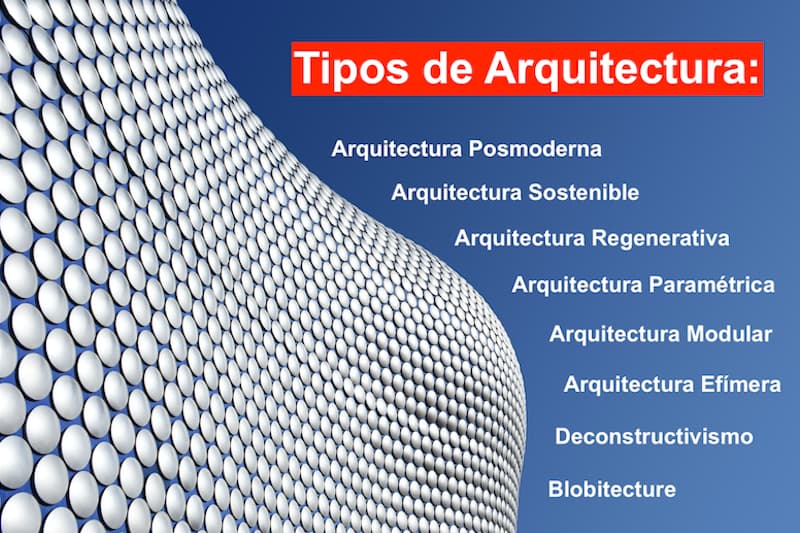
Tipos de Arquitectura: Explorando Más Allá de los Diseños Convencionales

FRASES DE ARQUITECTOS

Roles Arquitectura y Construcción (Profesiones Arquitectura)

Certificaciones para Arquitectos: Avanzando en la Excelencia Profesional

Roles BIM más Demandados en la Industria de la Construcción y el Sector AECO

Software BIM para Proyectos de Arquitectura y Construcción

Tecnología BIM: Beneficios y Ventajas en el sector AECO: Arquitectura, Ingeniería, Construcción y Operaciones

Modelo BIM

Modelo MEP

BIM 3D 4D 5D 6D 7D
AECO: Sector Arquitectura, Ingeniería, Construcción y Operaciones

Avances Tecnológicos en la Industria de la Construcción

Normas Técnicas de Edificación
!Explora el Mejor Directorio de Construcción! 🚧 🏗️ 👷♂️ (Sólo en ArquitecturaCarreras.com)


www.jmhdezhdez.com
Arquitectura, Ingeniería y Documentación Técnica AECO
