- Inicio
- Arquitectura
- _RASCACIELOS
- __Burj Khalifa Dubai
- __Edificio Chrysler, NY
- _Estilos Arquitectónicos
- __Arquitectura Posmoderna
- __Deconstructivismo
- __Arquitectura High Tech
- _Serie Const. Vanguardistas
- Arte
- _Arte Universal
- _Arte Contemporáneo
- __Serge Marshennikov
- __Damian Lechoszest
- __John Kacere
- _Escultura
- __El Ángel del Norte
- __La Musa Dormida
- __Venus de Milo
- __Moisés de Miguel Ángel
- __Baldaquino de San Pedro
- __El rapto de Proserpina
- __La Verdad Velada
- __Perseo con cabeza de Medusa
- __Venus de Willendorf
- _Pintura
- __Capilla Sixtina
- __Cuadros Famosos
- __La Creación de Adán
- __Venus del Espejo Velázquez
- __Hipómenes y Atalanta
- __Venus Boticelli
- __Silla de van Gogh
- __Jugadores de Cartas Cézanne
- __Cabeza de Medusa Caravaggio
- __Impresionismo
- __Posimpresionismo
- _Historia
- __Edad Moderna
- Curiosidades
- _Arquitectura y Arte
- _Tumba de Miguel Ángel
- FRASES
- _Frases de la semana
- _Arquitectos
- __Frank Gehry
- _Escultores
- __Miguel Ángel Buonarroti
- __Bernini
- __Rodin
- _Pintores
- __Picasso
- __Vincent van Gogh
- __Cézanne
- __Claude Monet
- __Henri Matisse
- __René Magritte
- __Caravaggio
- __Miguel Ángel
- CULTURA
- _Museos
- __Museo del Louvre
- Formación
- _Formación BIM Online
- _Cursos Domestika
- Más
- _ENTREVISTAS
- __Johannes Wesskmark
- __Nathan Zawaya


Arquitectura, Escultura, Pintura, Ingeniería, Software-Programas de Diseño Arquitectónico: Metodología BIM, Revit, AutoCAD, 3ds max, Animación; Software de Adobe; Cursos online, Libros, Historia, Cultura, Timelapse y Dronelapse sobre Arquitectura y ciudades, Frases Célebres, Curiosidades, Rascacielos, Puentes, Edificios interesantes, Construcciones vanguardistas, Construcciones famosas, Diseño, Arte, Fotografía Arquitectónica / Architecture, Sculpture, Painting, Engineering, Software-Architectural Design Programs: BIM Methodology, Revit, AutoCAD, 3ds max, Animation; Adobe software; Online courses, Books, History, Culture, Timelapse and Dronelapse on Architecture and cities, Famous Phrases, Curiosities, Skyscrapers, Bridges, Interesting buildings, Avant-garde constructions, Famous constructions, Design, Art, Architectural Photography

Infinity Bridge – The Geometry of Technical Resilience

Series: Avant-Garde Constructions
Masterpieces of Architecture and Engineering: #16 Infinity Bridge, Stockton
What happens when a structural engineer applies the lessons from a historical failure to create a masterpiece?
Following the "Wobbly Bridge" phenomenon in London, engineer Chris Wise —then leading his own firm, Expedition Engineering— designed a structure in Stockton-on-Tees that defies not only gravity but visual perception itself: the Infinity Bridge. A footbridge that does more than connect two banks of the River Tees; it symbolizes the technical maturity of an engineering field that learned to listen to movement.

The Concept: From Chaos to Symbol and the Glide of a Bird
The challenge from Tees Valley Regeneration was clear: an iconic structure at a low cost. The response from Wise and Spence Associates was a double-arch design whose magic lies in the seamless integration of form and physics.
Genesis of a Masterpiece: Original sketchbook by Chris Wise. The right-hand page shows a sequence of abstract strokes where the engineer seeks the ultimate expression of weightlessness. While the reflection in the water forms the mathematical symbol for infinity (∞), the original sketches reveal that the asymmetry of the double arch (120 m and 60 m) was inspired by the flight of a seagull or a bird, capturing the dynamics of lightness. © Expedition Engineering / Chris Wise.

Structural Analysis and Visualization: Technical render of the Infinity Bridge based on the Expedition Engineering model. The structure was optimized using GSA analysis software, integrating automated data flows to achieve maximum steel slenderness without compromising lateral stability.
Persuading people to change their perceptions of what is possible through your actions is important. The skills you need for art or music are the same as the ones you need for engineering. — Chris Wise
Anatomy of the Structure: The Suspended Double Arch
Unlike London's "Blade of Light," where cables were lateral and nearly invisible, the Infinity Bridge utilizes a steel arch typology that works in harmony with the suspension system:Structural Asymmetry: A main arch of 120 meters and a smaller one of 60 meters bifurcate from a single central pier, creating an upward visual dynamic.

Extreme Lightness: The Triumph of Structural Efficiency
With a total length of 272 meters and a main suspended span of 180 meters, the bridge appears to float over the water. Chris Wise’s team utilized steel so efficiently that they managed to drastically reduce the initial budget, completing the project at £12.5 million.This lightness is not just visual, but technical: the deck consists of 32 high-strength precast concrete units, with a record thickness of only 125 mm. By eliminating heavy layers like asphalt, pedestrians walk directly on the top surface of the concrete, laterally reinforced by 380 mm deep edge beams.
💡 Technical Milestone: The 1:20 Scale Trials
Before its definitive footprint on the River Tees, the structural feasibility and modular assembly sequence of the Infinity Bridge were rigorously trialled at a 1:20 scale within the facilities of Constructionarium Ltd. This pioneering pilot program—developed in close collaboration with Expedition Engineering and undergraduate students from Imperial College London—served as a critical hands-on benchmark to validate the DfMA (Design for Manufacture and Assembly) protocols and the behavior of its slender arches under controlled physical stress tests, bridging the gap between digital parametric models and real-world infrastructure deployment.
This design is a pioneering example of Design for Manufacture and Assembly (DfMA): each 7.5-meter piece was cast in a single mold on-site by the contractor, integrating drainage channels, gullies, and handrail supports directly during fabrication.
Designed with a 120-year service life, it uses painted sealed box sections of high-grade steel to protect the structure. This technical choice ensures that the slenderness of the arches withstands the environmental conditions of Northeast England without the financial burden of constant repairs, bridging economic sustainability and structural boldness.
Other Issues in the Series:
ISSUE #01 | Burj Khalifa: The Wind Code
Stepping Technique: how geometric variation tames vortices at 828 meters.
ISSUE #02 | CCTV Tower: The Cantilever Challenge
The gravity-defying colossus: precision engineering and a critical dawn connection.
ISSUE #04 | Hearst Tower: The NY Diamond
Structural efficiency: Norman Foster's Diagrid system and steel savings.
ISSUE #09 | JK Bridge: The Disruption of Symmetry
Analysis of Alexandre Chan's "skipping stone": how three oblique arches defy torsion and structural logic.

Responsive Architecture: The Bridge that "Feels" the Pedestrian
The Infinity Bridge is not a static structure; it is a reactive environment thanks to a sophisticated lighting system designed by Speirs and Major Associates.Presence Sensors: The bridge utilizes programmable LED units concealed within the handrails. When unoccupied, the structure emits a soft electric blue glow that highlights the arches' reflection in the water.
Dynamic Interaction: Upon detecting a pedestrian, the sensors activate a trail of white light that follows the user, creating a luminous "comet" effect that moves with them.
Energy Efficiency: Much like a smart home, the lighting only operates at full power on demand, reducing light pollution and consumption, integrating itself as an intelligent node within the urban infrastructure.

Technical Specifications & Industrial Solutions
PROJECT PARTNERS| Component | Partner / Brand | Detailed Technical Execution |
|---|---|---|
| Contractor & Infrastructure | Balfour Beatty plc | Execution of the main contract and site engineering, managing the complex in-situ casting and lifting sequence of the high-strength precast concrete modular units. |
| Structural Steelwork | Cleveland Bridge UK | Precision metallurgical fabrication of the twin arches and welding of the Sealed Box Sections, optimizing torsional stiffness against environmental corrosion. |
| Tensioning Systems | Macalloy | Supply of high-strength tension bars and adjustable anchoring systems for the bottom tie-rod, ensuring optimal absorption of the arch's outward horizontal thrusts. | Luminaire & LED Supply | Philips Lighting / Thorn Lighting | Supply and integration of solid-state LED luminaires and low-consumption programmable drivers, engineered to withstand weathering inside the handrails. |
| Sensor Infrastructure | Dynalite (Philips) | Deployment and commissioning of intelligent presence sensors and reactive control infrastructure that guide and modulate the dynamic white light trail. |
| Technical Concrete | Tarmac (LafargeHolcim) | Formulation and supply of high-strength, low-shrinkage concrete mixes to achieve the record-breaking minimum deck thickness of 125 mm on precast panels. |
| Formwork Systems | Cordek | Design and supply of bespoke, high-density structural formwork molds utilized on-site to deliver a seamless geometric finish on the architectural exposed concrete. |
| Analysis Software | Oasys GSA | Advanced Finite Element Analysis (FEA/FEM) platform utilized to automate multi-disciplinary data workflows and achieve extreme structural slenderness on the arches. |
Are you the manufacturer, installer, or technical specifier for any of these components?
Request the activation of your partner link by writing to:
info@jmhdezhdez.com

If you're not prepared to make a mistake, you're never going to be able to do anything original. Engineering is about stretching the imagination to see what's possible, and then using rigor to make it happen. — Chris Wise
The Lesson from London's Millennium Bridge: Dynamic Stability
While the 2000 Millennium Bridge was marked by the decision to remove dampers—which Wise described as his "most obvious mistake"—the vibration dynamics in the Infinity Bridge were integrated from the very first sketch.
The Expedition Engineering structure leverages the geometry of the arches and sophisticated resonance analysis to ensure that pedestrian and cyclist traffic does not trigger uncomfortable oscillations. It is an honest technical response: the structure no longer fights against movement; it understands and distributes it through its nodes.
The Infinity Bridge is not just a bridge: it is proof that engineering advances when it dares to learn from its own mistakes.
Passionate about engineering that breaks the mold?
If the structural resilience and weightlessness of the Infinity Bridge fascinated you, discover how other global skyline landmarks defy physics. In my works, I dissect—through technical illustrations—the mastery behind the most avant-garde structures on the planet.
Bilingual Technical Works / Obras Técnicas Bilingües


Technical Insights: The Legacy of Chris Wise & Expedition Engineering
How did the London "mistake" influence this design?
In his approach to the Infinity Bridge, Wise applied the "structural honesty" learned after the Millennium Bridge. Here, precision engineering does not hide its supports; instead, it integrates them into the sculptural narrative, merging aesthetics with a dynamic response that avoids the critical oscillations of the past.
Why is it considered a landmark of modern High-tech architecture?
Because of its material and technological symbiosis. The combination of high-strength steel and precast concrete, paired with dynamic LED lighting that interacts with users, turns it into a "living" structure. It is a benchmark in the Smart Space design philosophy applied to public infrastructure.
How was the challenge of the River Tees' "soft ground" resolved?
This is one of the strokes of genius from Expedition Engineering. Chris Wise compared the structure to "tuning guitar strings": it was designed as a tied-arch where horizontal forces do not push against the banks but are absorbed by tension cables parallel to the deck. This "fine-tuned tension" allowed for an ultra-lightweight structure, eliminating the need for massive abutments and optimizing the budget.
What impact does the bridge have on urban regeneration?
It acts as a social and economic catalyst for the North Shore Project. Much like the great icons of Avant-Garde Architecture, it demonstrates that intelligent investment in engineering can transform an industrial area into a global design landmark, redefining the identity of the urban landscape.
AECO Architecture & Engineering Glossary | Infinity Bridge, Stockton
Tied-arch: A structural typology where the outward horizontal thrusts of the arch are self-absorbed by a bottom tie-rod working in tension. This was key to overcoming the soft soil conditions of the River Tees, eliminating the need for massive abutments on the banks.
DfMA (Design for Manufacture and Assembly): A design philosophy focused on the prefabrication and industrialization of components to streamline on-site assembly. The deck was segmented into 32 precast concrete modular units cast in-situ, integrating drainage channels and railing fixtures directly from fabrication.
Dynamic Stability / Coincident Resonance: The structural capacity to dissipate external excitation forces, preventing them from locking into phase with the natural frequencies of the structure. It was engineered to mitigate synchronous lateral excitation following the lessons learned from London's Millennium Bridge.
Suspended Span: The clear distance of a structure that remains completely suspended in the air between two fixed supports or piers. Out of the bridge's 272-meter total length, 180 meters comprise the main suspended span, granting the footbridge its weightless silhouette.
Sealed Box Section: A hollow, hermetically closed steel structural profile that provides exceptional torsional and flexural stiffness. Its airtight design minimizes external corrosion, ensuring a 120-year design life under Eurocode standards.
Responsive Architecture / Reactive Environment: A technological infrastructure that utilizes sensors and programmed systems to detect environmental changes and respond physically. The LED infrastructure shifts from a passive electric blue to a dynamic white light wake that tracks the pedestrian's movement.
Edge Beam: A longitudinal structural element positioned at the perimeter of a deck to stiffen the edges. It allows the precast concrete panels to maintain a record-breaking, ultra-lightweight thickness of just 125 mm by transferring loads to the suspension hangers.
GSA Analysis Software (Oasys GSA): An advanced Finite Element Analysis (FEA/FEM) tool utilized by Expedition Engineering. It automated cross-disciplinary data workflows to optimize the geometry of the steel arches, achieving the ultimate structural slenderness.
Series: Avant-Garde Constructions | jmhdezhdez.com

José Miguel Hernández Hernández
Global authority in the technical analysis of iconic and sculptural architecture. Specialist at the intersection of structural engineering, aesthetics, and avant-garde design. Author of the bilingual technical works Turning Torso – Santiago Calatrava and Famous Constructions.

Publicado por José Miguel


José Miguel Hernández Hernández
Consultor Smart Home y Movilidad Eléctrica AECO
Servicios Destacados
⚡ Consultoría Movilidad Eléctrica
Proyectos CICE e ITC-BT-52.
🎓 Formación BIM / AECO
Especialización técnica avanzada.
📩 Suscripción Nodo Maestro
Innovación y normativa Smart.


Arquitectura y Tecnología al servicio del diseño inteligente.
Esta guía esencial para Smart Homes te muestra cómo integrar dispositivos inteligentes en viviendas contemporáneas, mejorando el confort, la eficiencia energética y el diseño funcional. Ideal para arquitectos, interioristas y entusiastas del arte del habitar.
👉 Descubre la guía completa

Directorio de Fotógrafos de Arquitectura en España: Descubre a los Mejores Expertos en Fotografía Arquitectónica para Documentar tus Proyectos y Obras

Fotografía Arquitectónica: La Guía Definitiva para Capturar Diseño, Estética y Función de Edificios y Estructuras

Fotografía y Vídeo Timelapse

El Rol del Fotógrafo de Arquitectura

Cámaras Réflex y Objetivos Tilt-Shift para Fotografía de Arquitectura

Estilos Arquitectónicos Modernos: Un Viaje a Través de la Creatividad y la Innovación

ARQUITECTURA CARRERA: Descubre todas las Opciones de la Carrera en Arquitectura y Grados en España

Comparativa de las Mejores Universidades de Arquitectura del Mundo: Internacional, Europa, LATAM

Los Mejores Libros de Arquitectura para Arquitectos

Libros para Estudiar Arquitectura

Libros para Arquitectos Principiantes: Guías y Recursos Esenciales para Comenzar tu Carrera

Los Mejores Libros de Arquitectura para Estudiantes durante la Carrera

Era Digital de la Construcción: Innovaciones Tecnológicas en Arquitectura y Edificación

Comparativa de Los Mejores Ordenadores para Arquitectos en 2024

Las Mejores Laptops para Arquitectura en 2024

Los Mejores Ordenadores de Arquitectura para Estudiantes

Significado de: Términos Clave sobre Arquitectura, Ingeniería y Construcción

Arquitectos: Descubre el Mejor Directorio de Arquitectos que podrás encontrar en Internet (Sólo en AC)
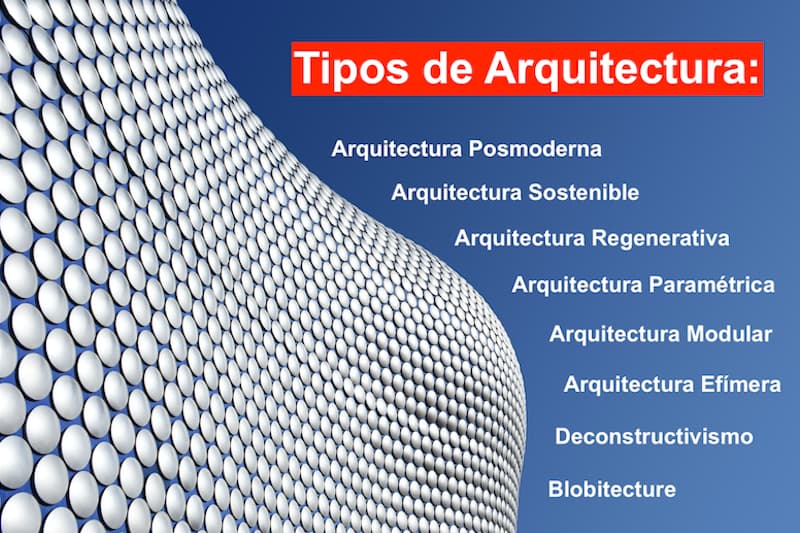
Tipos de Arquitectura: Explorando Más Allá de los Diseños Convencionales

FRASES DE ARQUITECTOS

Roles Arquitectura y Construcción (Profesiones Arquitectura)

Certificaciones para Arquitectos: Avanzando en la Excelencia Profesional

Roles BIM más Demandados en la Industria de la Construcción y el Sector AECO

Software BIM para Proyectos de Arquitectura y Construcción

Tecnología BIM: Beneficios y Ventajas en el sector AECO: Arquitectura, Ingeniería, Construcción y Operaciones

Modelo BIM

Modelo MEP

BIM 3D 4D 5D 6D 7D

AECO: Sector Arquitectura, Ingeniería, Construcción y Operaciones

Avances Tecnológicos en la Industria de la Construcción

Normas Técnicas de Edificación
!Explora el Mejor Directorio de Construcción! 🚧 🏗️ 👷♂️ (Sólo en ArquitecturaCarreras.com)


- CATEGORÍAS DE CURSOS ONLINE
▷ Formación online
▷ Cursos online
▷ Domestika Cursos
▷ Domestika cupón descuento
▷ Cursos de Arquitectura online
▷ Cursos online de Ilustración
▷ Cursos online de Diseño gráfico
▷ Cursos online de Fotografía y Vídeo
▷ Cursos online de 3D y Animación
▷ Cursos de Diseño online
▷ Cursos online de Dibujo
▷ Cursos online de Bellas Artes
▷ Cursos online de Dirección de Arte
- CURSOS ONLINE DOMESTIKA (POR SOFTWARE)
▷ AutoCAD
▷ SketchUp
▷ 3ds Max
▷ Adobe Photoshop
▷ Adobe Illustrator
▷ Adobe After Effects
▷ Adobe Lightroom
▷ Cinema 4D
▷ Adobe Indesign
LOS MEJORES CURSOS ONLINE PARA CREATIVOS | CURSOS DOMESTIKA
- ÚLTIMAS RESEÑAS CURSOS DOMESTIKA
 ▷ Curso Revit Online, por Majo Mora
 ▷ Curso de AutoCAD Online, por Isabel Martínez Abascal
 ▷ Curso SketchUp online, por Alejandro Soriano
 ▷ Curso Infoarquitectura 3D, por Amo Visual 3D
 ▷ Curso de Lumion, por Salva Moret


www.jmhdezhdez.com
(Blog sobre Arquitectura y Arte)
