- Inicio
- Arquitectura
- _RASCACIELOS
- __Burj Khalifa Dubai
- __Edificio Chrysler, NY
- _Estilos Arquitectónicos
- __Arquitectura Posmoderna
- __Deconstructivismo
- __Arquitectura High Tech
- _ATLAS AECO
- __Serie Const. Vanguardistas
- _Biblioteca Técnica AECO
- __Glosario AECO Global
- __Glosario de Edificación
- __Glosario de Construcción
- __Glosario BIM GTB-300
- _Entrevistas AECO
- Arte
- _Arte Universal
- _Arte Contemporáneo
- __Serge Marshennikov
- __Damian Lechoszest
- __John Kacere
- _Escultura
- __El Ángel del Norte
- __La Musa Dormida
- __Venus de Milo
- __Moisés de Miguel Ángel
- __Baldaquino de San Pedro
- __El rapto de Proserpina
- __La Verdad Velada
- __Perseo con cabeza de Medusa
- __Venus de Willendorf
- _Pintura
- __Capilla Sixtina
- __Cuadros Famosos
- __La Creación de Adán
- __Venus del Espejo Velázquez
- __Hipómenes y Atalanta
- __Venus Boticelli
- __Silla de van Gogh
- __Jugadores de Cartas Cézanne
- __Cabeza de Medusa Caravaggio
- __Impresionismo
- __Posimpresionismo
- _Historia
- __Edad Moderna
- Curiosidades
- _Arquitectura y Arte
- _Tumba de Miguel Ángel
- FRASES
- _Frases de la semana
- _Arquitectos
- __Frank Gehry
- _Escultores
- __Miguel Ángel Buonarroti
- __Bernini
- __Rodin
- _Pintores
- __Picasso
- __Vincent van Gogh
- __Cézanne
- __Claude Monet
- __Henri Matisse
- __René Magritte
- __Caravaggio
- __Miguel Ángel
- CULTURA
- _Museos
- __Museo del Louvre
- Formación
- _Formación BIM Online
- _Cursos Domestika
- Más
- _ENTREVISTAS
- __Johannes Wesskmark
- __Nathan Zawaya


Arquitectura, Escultura, Pintura, Ingeniería, Software-Programas de Diseño Arquitectónico: Metodología BIM, Revit, AutoCAD, 3ds max, Animación; Software de Adobe; Cursos online, Libros, Historia, Cultura, Timelapse y Dronelapse sobre Arquitectura y ciudades, Frases Célebres, Curiosidades, Rascacielos, Puentes, Edificios interesantes, Construcciones vanguardistas, Construcciones famosas, Diseño, Arte, Fotografía Arquitectónica / Architecture, Sculpture, Painting, Engineering, Software-Architectural Design Programs: BIM Methodology, Revit, AutoCAD, 3ds max, Animation; Adobe software; Online courses, Books, History, Culture, Timelapse and Dronelapse on Architecture and cities, Famous Phrases, Curiosities, Skyscrapers, Bridges, Interesting buildings, Avant-garde constructions, Famous constructions, Design, Art, Architectural Photography

Absolute Towers: The Rebellion Against the Straight Line

Series: Avant-Garde Constructions
Masterpieces of Architecture and Engineering: #22 Absolute Towers, Mississauga, CA
Can a concrete skyscraper reclaim the fluidity of nature?
Located in Mississauga, the financial heart of Toronto’s periphery, the Absolute Towers emerged in 2012 as a rebellion against the monotony of the "International Style." In an era where cities have become catalogs of glass and steel boxes, this project by MAD Architects decided to ignore the straight line.

This is not a simple exercise in aesthetics; it is a critical response to urban planning. While most modern skyscrapers are designed as mechanical "machines for living," the Absolute World Towers were conceived as living organisms. Their design seeks to awaken the senses, reintroducing concepts of softness and biophilic connection into a high-density environment.
We wanted the towers to be something alive, not a machine for living. With this project, we aimed to recover the emotional connection between the citizen and nature through the curve. — Ma Yansong (MAD Architects)

Design Philosophy: The Emotional Skyscraper
The design breaks away from traditional orthogonality to prioritize user experience.Organicism vs. Mechanicism: It moves away from rigidity to seek an emotional connection. The use of anthropomorphic curves humanizes the structure, allowing the building to "dance" with the wind and light.

Structure and Engineering: The Challenge of the Twist
Bringing fluidity from paper to structural reality required a feat of engineering by Sigmund, Soudack & Associates Inc.The Master Core: A highly rigid reinforced concrete core was designed to absorb torsional forces. Contrary to what its sinuous silhouette suggests, the central core is a simple, orthogonal rectangle. The brilliance of the project lies in keeping this backbone static and cost-effective, allowing the rotation to occur exclusively within the "skin" (the slabs and balconies), which drastically optimized construction costs.

Slab and Column Rotation: Since each floor plan is unique in shape and surface area, the perimeter columns cannot follow a continuous vertical line. Instead, the building utilizes "walking columns" that shift rhythmically at each level. Weight is transferred incrementally as the building ascends—a calculation feat that reinforces the analogy of a living organism: the structure is not a rigid skeleton, but a system that adapts and "evolves" toward the sky.

Absolute Towers Section: Both orthogonal cores act as rigid axes supporting the independent rotation of the slabs, enabling the structures to evolve into organic forms. This internal logic is what liberates their silhouettes, transforming concrete into anthropomorphic figures that dialogue with each other and their surroundings.
Other Issues in the Series:
ISSUE #01 | Burj Khalifa: The Wind Code
Stepping Technique: how geometric variation tames vortices at 828 meters.
ISSUE #02 | CCTV Tower: The Cantilever Challenge
The gravity-defying colossus: precision engineering and a critical dawn connection.
ISSUE #04 | Hearst Tower: The NY Diamond
Structural efficiency: Norman Foster's Diagrid system and steel savings.
ISSUE #16 | Infinity Bridge: The Geometry of Technical Resilience
Expedition Engineering & Chris Wise: A prodigy of structural lightness merging biomimicry with reactive precision engineering.
The Paradigm of Organic Architecture
To understand the Absolute Towers, one must comprehend that they were not designed as rigid buildings, but as organisms. Their "organicism" manifests across four fundamental axes:The Form as a Living Organism: The building is not an industrial assembly of rectangular pieces, but a structure that appears to have grown under the influence of natural forces, such as the flow of water or the growth of a plant.
Anthropomorphism and Sensory Scale: By utilizing curves that evoke the human figure—which earned the project the popular nickname "Marilyn Monroe Towers"—the design breaks urban alienation. Organic architecture ensures that the resident does not live in a "box," but in an environment that breathes and adapts to their sensory and emotional scale, allowing a direct connection with the outdoors through its terraces.
Symbiosis and Passive Biophilia: The building utilizes its 360° balconies as a protective "skin." Just as an organism regulates its temperature, these cantilevers naturally manage solar radiation and heat, eliminating the barrier between the interior and the outdoor landscape.
Dynamic Rotation Axis: The organization is based on a central axis around which the floors rotate independently, creating a silhouette that changes radically depending on the viewing angle, allowing each home to have a unique relationship with light and the landscape.

From Geometry to Life: The Rotation Process
The fluidity of the Absolute Towers does not stem from chaos, but from a rigorous geometric progression. As observed in the formal evolution diagram, the design originates from a perfect ellipse that is replicated and rotated at each level:Base Ellipse: A constant elliptical floor plan is used to maximize views and natural light penetration.
Independent Rotation: Each slab rotates relative to the central axis, reaching a total rotation of up to 209° in the tallest tower.
Surface Generation: By connecting these rotated ellipses, the facade ceases to be a flat wall, turning into a curved and dynamic surface that wraps around the luxury apartments; pure sculptural architecture.
Slab Surfaces: This logic allows the continuous perimeter balconies to act as passive solar shading elements, improving the overall energy efficiency of the complex.
Technical Note: It is this rotation that forces the perimeter columns to shift rhythmically (the concept of walking columns), while the orthogonal cores remain as the steadfast anchor that allows the rest of the building to "dance."

Located in Mississauga, not far from the Toronto skyline with the iconic CN Tower dominating the horizon, the Absolute Towers by MAD Architects stand out for introducing the curve as an organic gesture that challenges the rigidity of the Canadian urban landscape.
Wind Response: Their aerodynamic profiles "confuse" the wind, eliminating the vortex shedding effect common in prismatic towers. This curved geometry reduces wind loads by 25-30% compared to a rectangular skyscraper. This is not merely efficiency; it allowed for a significant reduction in structural steel and reinforcement concrete, proving that organic beauty is, ultimately, technical optimization.
The challenge lay in the constant variation. We had to design an extremely rigid concrete core capable of absorbing the torsional forces generated by slabs that rotate up to 8 degrees per floor. — Sigmund Soudack (Structural Engineer)
Slab and Column Rotation: Since each floor plan is unique, the perimeter columns shift rhythmically within a "walking columns" system, demanding constant vertical load transfer calculations.
Aerodynamic Efficiency: The organic silhouettes are not just a visual whim; their aerodynamic form "confuses" the wind, reducing lateral loads by nearly 30%. This optimized the required structural steel, demonstrating that organic forms can be more efficient than orthogonal ones.

Facade and Sustainability: The Dematerialized Skin
The facade transcends the visual realm to become an active climate control device.Continuous 360° Balconies: They provide an uninterrupted connection to the outdoors, democratizing access to fresh air and light while eliminating the vertical barriers typical of conventional skyscrapers.
The Thermal Challenge in Extreme Climates: To make these "sculptures" viable during Toronto's harsh winters, structural thermal breaks (Schöck Isokorb) were implemented. These elements physically separate the balcony's concrete from the interior slab using high-density insulation, maintaining structural continuity solely through stainless steel rebar. This effectively eliminates thermal bridging, preventing balconies from acting as heat sinks that would compromise indoor energy efficiency.
Passive Sustainability (Brise-soleil Strategy): The balconies function as a perimeter brise-soleil of variable geometry. By cantilevering outwards, they act as deep shading devices: shading the glazing during the summer (drastically reducing cooling loads) while allowing low-angle winter solar radiation to penetrate the living spaces, taking full advantage of natural passive solar gains.

Industrial Specifications & Solutions
PROJECT PARTNERS| Component | Partner / Brand | Detailed Technical Execution |
|---|---|---|
| Vertical Transportation | OTIS Elevators | High-speed elevator systems featuring destination dispatch technology to optimize traffic flow in high-rise environments. |
| Unitized Curtain Wall | Sotawall Limited | Engineering and fabrication of a modular facade system (Unitized Curtain Wall) with customized anchoring brackets to absorb rotational tolerances. |
| Facade & Glazing | Oldcastle BuildingEnvelope® | Installation of low-E insulated glass units (IGUs) engineered to fit precisely along the elliptical building geometry. |
| Thermal Bridging | Schöck Isokorb® | Integration of structural thermal breaks in balcony connections to prevent thermal bridging and maximize building energy efficiency. |
| Formwork Systems | PERI ACS | Utilization of automatic climbing formwork for the rapid, rhythmic pouring of cores and slabs, accommodating the building's geometric twist. |
| Building Management System (BMS) | Johnson Controls | Integration of building automation systems (Metasys BMS) to optimize HVAC and lighting energy consumption across floor plates with variable configurations. |
Are you the manufacturer, installer, or specifier for any of these building components?
Request your active partner link by contacting us at:
info@jmhdezhdez.com

A New Skyline Where Form Follows Emotion
The true vanguard of the Absolute Towers does not lie in their height, but in their capacity to transform urban density into a sculptural experience. By proving that it is possible to build highly complex structures without sacrificing human livability, Ma Yansong has charted a new path—one where structural technology does not dictate the rigidity of life, but bends to embrace it.
The challenge was not just to create a beautiful form. The 360-degree wrap-around balconies are not an aesthetic whim; they are a way to democratize views and fresh air. — Dang Qun (MAD Architects)
Frequently Asked Questions about MAD's Absolute Towers Design:
How is the 209° rotation achieved without compromising structural stability?
It is achieved through the incremental displacement of floor plates around a rigid, orthogonal concrete central core. While the core resists torsional loads, structural engineering allowed each floor plate to rotate between 1° and 8°, keeping the center of gravity perfectly aligned with the foundation.
Why did the "Marilyn Monroe Towers" moniker resonate so deeply with critics and architects?
Because it serves as the perfect metaphor for anthropomorphic organicism. For Ma Yansong, the fact that the public associated concrete with the fluidity of a human silhouette confirmed the project's success: humanizing high density and breaking away from the rigidity of the traditional urban "box."
How are gravity loads managed if the perimeter columns are not vertical?
The building utilizes a system of walking columns (columns that shift location from floor to floor). As the floor plates rotate, the perimeter columns transition rhythmically at each level, transferring gravity loads incrementally downward to the foundations.
Why did BIM modeling present a critical challenge for this project?
Modeling the Absolute Towers in software like Revit is exceptionally complex due to the variable elliptical floor plates and incremental rotation. Standard curtain wall systems fail when attempting to align complex framing with a static central core, necessitating advanced parametric design workflows.
What is the purpose of the vertical lines (pinstripes) on the balcony glass?
The design incorporates ceramic frit glass (Frit Pattern), using inorganic enamels fused into the glass during tempering to guarantee lifelong durability. Its primary function is to ensure resident privacy and introspection, preventing direct exposure on such an open facade. The pattern remains imperceptible from mid to long distances to preserve the tower's sculptural silhouette, yet up close it reduces solar heat gain and protects local bird populations by breaking up continuous reflections on the glazing.
How does a "concrete sculpture" survive Toronto winters without losing heat?
Through the integration of high-performance engineered thermal connectors (Schöck Isokorb). These assemblies create a structural thermal break that physically isolates the cantilevered balconies from the interior floor slabs, preventing the concrete from acting as a massive thermal bridge that transfers cold indoors.
What sustainability innovations does the facade offer?
The 360° balconies function as a perimeter brise-soleil. Their variable geometry naturally shades the glazing during high-angle summer sun (reducing cooling loads) while allowing low-angle winter sunlight to penetrate and passively warm the living spaces.
How are MEP utilities routed through a twisting skyscraper?
All critical mechanical, electrical, and plumbing infrastructure is consolidated within the static, orthogonal central core. As a straight vertical axis, water risers, drainage, elevators, and electrical busways ascend conventionally, distributing horizontally across each individual apartment slab.
What did the CTBUH Award mean for MAD Architects?
It marked their global breakthrough. By winning the "Best Tall Building Americas" award in 2012, the studio demonstrated that emotional architecture and extreme structural engineering could successfully compete with the standards of established corporate firm structures in the West.
AECO Architecture & Engineering Glossary | Absolute Towers, Mississauga
Walking Columns: A structural engineering technique where vertical load-bearing supports shift away from a continuous vertical axis. Due to the twisting geometry of the floor plates, the perimeter columns transition position incrementally at each slab level to transfer axial loads down to the foundations.
Thermal Bridging Mitigation: The deployment of high-strength, low-conductivity structural connectors to isolate exterior balconies from interior floor slabs. This halts thermal bridging through the conductive concrete frame during Canada's extreme sub-zero winters.
Vortex Shedding: An aerodynamic phenomenon mitigated by the building's shifting elliptical geometry. Lacking fixed orthogonal windward faces, the towers disrupt uniform crosswind airflow patterns, substantially reducing dynamic wind excitation forces.
Torsional Stiffness: The capacity of the central orthogonal reinforced concrete core to resist twisting moments generated by the cumulative 209° structural rotation, maintaining global stability without compromising organic aesthetics.
Ceramic Frit Glass: Glazing treated with silk-screened inorganic ceramic patterns that optimize building envelope thermal performance. It controls radiant solar heat gain while lowering external glass reflectivity to safeguard local bird species.
Passive Solar Shading (Brise-soleil): A bioclimatic design mechanism where deep, cantilevered continuous balconies act as architectural overhangs. The variable geometry blocks intense, high-angle solar radiation in summer while letting low-angle winter sun penetrate deep into the floor plates.
Advanced Parametric Modeling: An algorithmic design workflow utilizing complex interconnected geometric variables. Critical for managing the changing elliptical profiles and incremental twist of the structures, automating component fabrication sizing and reconciling structural tolerances within the master BIM model.
Self-Climbing Formwork: An industrial vertical construction system that elevates autonomously via integrated hydraulic cylinders independent of tower cranes. Used on the structural core to streamline pouring cycles and guarantee rigorous vertical alignment against asymmetric floor loads.
Series: Avant-Garde Constructions | jmhdezhdez.com
Credits & Documentation
Text & Editorial: © José Miguel Hernández Hernández
Images (1, 2, 4 & 5): © Iwan Baan
Image 3: Architectural Plans & Concept Drawings:
© MAD Architects;
Photography: Tom Arban
Image 7: © peri.ae
Technical data verified via the Council on Tall Buildings and Urban Habitat (CTBUH), currently known as the Council of Vertical Urbanism (CVU).

José Miguel Hernández Hernández
Global authority in the technical analysis of iconic and sculptural architecture. Specialist at the intersection of structural engineering, aesthetics, and avant-garde design. Author of the bilingual technical works Turning Torso – Santiago Calatrava and Famous Constructions.

Publicado por José Miguel


José Miguel Hernández Hernández
Consultor Smart Home y Movilidad Eléctrica AECO
Servicios Destacados
⚡ Consultoría Movilidad Eléctrica
Proyectos CICE e ITC-BT-52.
🎓 Formación BIM / AECO
Especialización técnica avanzada.
📩 Suscripción Nodo Maestro
Innovación y normativa Smart.


Ecosistemas Smart Home por Tipología Guías técnicas y selección de dispositivos para proyectos de arquitectura e interiorismo en Pisos, Lofts, Casas Grandes, Dúplex, Áticos y Villas de Lujo. Integra automatización adaptada a cada espacio.
Ver Guía por Tipologías →
Directorio de Fotógrafos de Arquitectura en España: Descubre a los Mejores Expertos en Fotografía Arquitectónica para Documentar tus Proyectos y Obras

Fotografía Arquitectónica: La Guía Definitiva para Capturar Diseño, Estética y Función de Edificios y Estructuras

Fotografía y Vídeo Timelapse

El Rol del Fotógrafo de Arquitectura

Cámaras Réflex y Objetivos Tilt-Shift para Fotografía de Arquitectura

Estilos Arquitectónicos Modernos: Un Viaje a Través de la Creatividad y la Innovación

ARQUITECTURA CARRERA: Descubre todas las Opciones de la Carrera en Arquitectura y Grados en España

Comparativa de las Mejores Universidades de Arquitectura del Mundo: Internacional, Europa, LATAM

Los Mejores Libros de Arquitectura para Arquitectos

Libros para Estudiar Arquitectura

Libros para Arquitectos Principiantes: Guías y Recursos Esenciales para Comenzar tu Carrera

Los Mejores Libros de Arquitectura para Estudiantes durante la Carrera

Era Digital de la Construcción: Innovaciones Tecnológicas en Arquitectura y Edificación

Comparativa de Los Mejores Ordenadores para Arquitectos en 2024

Las Mejores Laptops para Arquitectura en 2024

Los Mejores Ordenadores de Arquitectura para Estudiantes

Significado de: Términos Clave sobre Arquitectura, Ingeniería y Construcción

Arquitectos: Descubre el Mejor Directorio de Arquitectos que podrás encontrar en Internet (Sólo en AC)
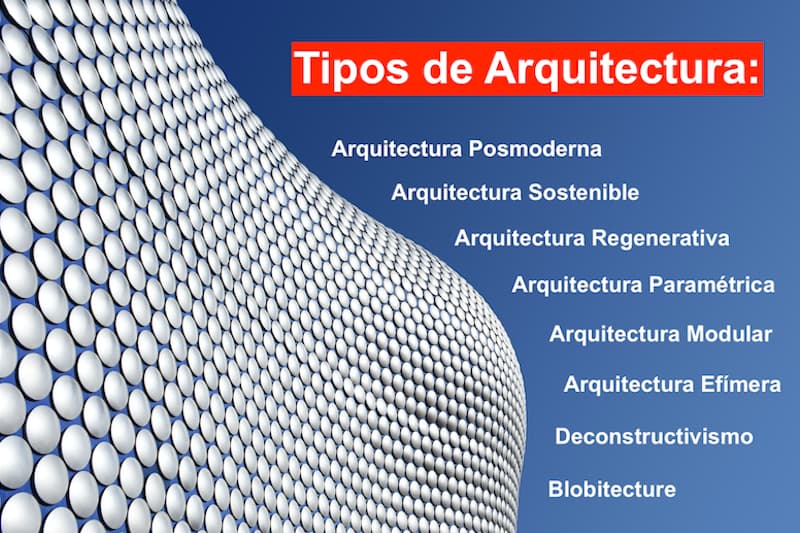
Tipos de Arquitectura: Explorando Más Allá de los Diseños Convencionales

FRASES DE ARQUITECTOS

Roles Arquitectura y Construcción (Profesiones Arquitectura)

Certificaciones para Arquitectos: Avanzando en la Excelencia Profesional

Roles BIM más Demandados en la Industria de la Construcción y el Sector AECO

Software BIM para Proyectos de Arquitectura y Construcción

Tecnología BIM: Beneficios y Ventajas en el sector AECO: Arquitectura, Ingeniería, Construcción y Operaciones

Modelo BIM

Modelo MEP

BIM 3D 4D 5D 6D 7D

AECO: Sector Arquitectura, Ingeniería, Construcción y Operaciones

Avances Tecnológicos en la Industria de la Construcción

Normas Técnicas de Edificación

!Explora el Mejor Directorio de Construcción! 🚧 🏗️ 👷♂️ (Sólo en ArquitecturaCarreras.com)


- CATEGORÍAS DE CURSOS ONLINE
▷ Formación online
▷ Cursos online
▷ Domestika Cursos
▷ Domestika cupón descuento
▷ Cursos de Arquitectura online
▷ Cursos online de Ilustración
▷ Cursos online de Diseño gráfico
▷ Cursos online de Fotografía y Vídeo
▷ Cursos online de 3D y Animación
▷ Cursos de Diseño online
▷ Cursos online de Dibujo
▷ Cursos online de Bellas Artes
▷ Cursos online de Dirección de Arte
- CURSOS ONLINE DOMESTIKA (POR SOFTWARE)
▷ AutoCAD
▷ SketchUp
▷ 3ds Max
▷ Adobe Photoshop
▷ Adobe Illustrator
▷ Adobe After Effects
▷ Adobe Lightroom
▷ Cinema 4D
▷ Adobe Indesign
LOS MEJORES CURSOS ONLINE PARA CREATIVOS | CURSOS DOMESTIKA
- ÚLTIMAS RESEÑAS CURSOS DOMESTIKA
 ▷ Curso Revit Online, por Majo Mora
 ▷ Curso de AutoCAD Online, por Isabel Martínez Abascal
 ▷ Curso SketchUp online, por Alejandro Soriano
 ▷ Curso Infoarquitectura 3D, por Amo Visual 3D
 ▷ Curso de Lumion, por Salva Moret


www.jmhdezhdez.com
jmhdezhdez.com — Arquitectura, Ingeniería y Documentación Técnica AECO
