- Inicio
- Arquitectura
- _RASCACIELOS
- __Burj Khalifa Dubai
- __Edificio Chrysler, NY
- _Estilos Arquitectónicos
- __Arquitectura Posmoderna
- __Deconstructivismo
- __Arquitectura High Tech
- _Serie Const. Vanguardistas
- Arte
- _Arte Universal
- _Arte Contemporáneo
- __Serge Marshennikov
- __Damian Lechoszest
- __John Kacere
- _Escultura
- __El Ángel del Norte
- __La Musa Dormida
- __Venus de Milo
- __Moisés de Miguel Ángel
- __Baldaquino de San Pedro
- __El rapto de Proserpina
- __La Verdad Velada
- __Perseo con cabeza de Medusa
- __Venus de Willendorf
- _Pintura
- __Capilla Sixtina
- __Cuadros Famosos
- __La Creación de Adán
- __Venus del Espejo Velázquez
- __Hipómenes y Atalanta
- __Venus Boticelli
- __Silla de van Gogh
- __Jugadores de Cartas Cézanne
- __Cabeza de Medusa Caravaggio
- __Impresionismo
- __Posimpresionismo
- _Historia
- __Edad Moderna
- Curiosidades
- _Arquitectura y Arte
- _Tumba de Miguel Ángel
- FRASES
- _Frases de la semana
- _Arquitectos
- __Frank Gehry
- _Escultores
- __Miguel Ángel Buonarroti
- __Bernini
- __Rodin
- _Pintores
- __Picasso
- __Vincent van Gogh
- __Cézanne
- __Claude Monet
- __Henri Matisse
- __René Magritte
- __Caravaggio
- __Miguel Ángel
- CULTURA
- _Museos
- __Museo del Louvre
- Formación
- _Formación BIM Online
- _Cursos Domestika
- Más
- _ENTREVISTAS
- __Johannes Wesskmark
- __Nathan Zawaya


Arquitectura, Escultura, Pintura, Ingeniería, Software-Programas de Diseño Arquitectónico: Metodología BIM, Revit, AutoCAD, 3ds max, Animación; Software de Adobe; Cursos online, Libros, Historia, Cultura, Timelapse y Dronelapse sobre Arquitectura y ciudades, Frases Célebres, Curiosidades, Rascacielos, Puentes, Edificios interesantes, Construcciones vanguardistas, Construcciones famosas, Diseño, Arte, Fotografía Arquitectónica / Architecture, Sculpture, Painting, Engineering, Software-Architectural Design Programs: BIM Methodology, Revit, AutoCAD, 3ds max, Animation; Adobe software; Online courses, Books, History, Culture, Timelapse and Dronelapse on Architecture and cities, Famous Phrases, Curiosities, Skyscrapers, Bridges, Interesting buildings, Avant-garde constructions, Famous constructions, Design, Art, Architectural Photography

Fountain Place: Geometry in Motion and Dematerialization

Series: Avant-Garde Constructions
Masterpieces of Architecture and Engineering: #08 Fountain Place, Dallas
When does a skyscraper cease to be a repetitive object and become an unrepeatable form?
The Fountain Place (1986), originally conceived as the Allied Bank Tower, is far more than just a landmark in the Dallas skyline; it is the manifesto of Pei Cobb Freed & Partners on the liberation of form within order.
Under the direction of Henry N. Cobb, the project transcends the orthodox functionalism of the 1980s to materialize a piece of hybrid architecture where structural engineering and polyhedral geometry merge into a sculptural object of extreme precision.

Genesis and Urban Vision: The Mirror Effect
The original project was conceived as a bold ensemble of two twin towers. The technical genius lay in the fact that the second tower was to be positioned rotated 90º with respect to the first, generating a sophisticated dialogue of reflections, visual tensions, and urban voids.Although the budget crisis of the developer Crescent Real Estate Equities only allowed the execution of the first phase, the single tower built possesses such formal magnetism that it has redefined the city's identity on its own, establishing itself as one of the clearest symbols of modernity in Texas, alongside the Margaret Hunt Hill Bridge designed by Santiago Calatrava.

Sculptural Geometry: The Polyhedral Transition
The complexity of its envelope is not an arbitrary gesture, but rather the result of a rigorous geometric logic:Square Base: The building is anchored to the ground through a footprint of 58.50 meters per side, establishing a clear initial order.

10-Faceted Volumetry: Through oblique cuts that generate tetrahedrons and rhombic lozenges, the mass evolves into a dynamic polyhedral configuration.
Variable Section and Pinnacle: As it rises, the section tapers asymmetrically until it culminates in a triangular prism. This gesture allows natural light to flood the executive penthouse, reinforcing the sense of lightness and vertical projection "reaching for the sky."

Structural Engineering: The Triumph of Steel
Supporting this 219.5-meter-high icon required cutting-edge solutions developed by CBM Engineers:Cross-Braced Tube System: Behind the curtain wall lies a load-bearing steel structure based on an X-bracing grid (St. Andrew's crosses). This system is critical for absorbing torsional stresses and lateral loads resulting from its complex polyhedral asymmetry.
Structural Levitation: The load is masterfully transferred to two large asymmetric triangular columns strategically placed at two of its corners. This solution frees the ground-level entrance, generating a sense of weightlessness that breaks away from the visual heaviness typical of a conventional skyscraper base.

Dematerialized Facade: The green-tinted reflective glass curtain wall acts as a specular skin. Its goal is to dissolve the volume into the atmosphere, causing the building to oscillate between presence and disappearance. The greenish hue is also a subtle symbolic reference to the financial capital (U.S. dollars) it originally housed.
Other Issues in the Series:
ISSUE #01 | Burj Khalifa: The Wind Code
Stepping technique: how geometric variation tames vortices at 828 meters.
ISSUE #03 | Taipei 101: Dynamic Balance
Defying typhoons and earthquakes with the iconic 660-ton tuned mass damper.
ISSUE #04 | Hearst Tower: The NY Diamond
The efficiency of the Diagrid system: saving 20% of steel and redefining sustainability.
ISSUE #05 | Marqués de Riscal: Deconstructing Tradition
Frank Gehry’s parametric maturity: symbiosis between anodized titanium and 1860 heritage via aerospace software.
Dan Kiley's Landscape Architecture: An Oasis of 217 Fountains
The building's name originates from the geometric garden designed by Dan Kiley, a key element in the spatial experience:Rigidity vs. Fluidity: In contrast to the faceted precision of the vertical volume, Kiley deploys a grid of cypress trees and 217 fountains, constructing a sensory landscape based on the sound and movement of water.
Social Space: This garden does not merely accompany the building; it completes it as a spatial and climatic system at an urban scale, insulating pedestrians from traffic and creating a sanctuary within the dense urban fabric. Its significance was such that the ensemble represented the U.S. in the 1991 exhibition "The Socially Responsible Environment".

Form is not static; it is an object whose geometry and character change radically according to the position of the observer and the conditions of the sky. — Henry N. Cobb
Technical Data Sheet: Fountain Place Dallas
Lead Architect: Henry N. Cobb (Pei Cobb Freed & Partners)Structural Engineering: CBM Engineers, Inc. (Houston, TX)
Height / Floors: 219.5 meters / 62 stories
Facade System: Green reflective glass curtain wall (10-faceted prism)
Typology: Skyscraper Architecture / Polyhedral Prism
Architectural Style: Post-Modern
Recognition: Texas Society of Architects – 25 Year Award
The Original Concept: Gold Ingots in the Skyline

Original design model. Henry N. Cobb’s (Pei Cobb Freed & Partners) vision conceptualized the two towers as genuine "gold ingots," a direct allusion to the developer's original name: Allied Bank Tower. This model visualized the bank's financial power through polyhedral architecture.
Links of Interest
Fountain Place: 2013 Analysis – jmhdezhdez.comFountain Place – Pei Cobb Freed & Partners
Fountain Place Residences – Page
Fountainplace.com
I.M. Pei: Meyerson Symphony Center / Henry N. Cobb and Dan Kiley: Fountain Place [Exhibition Photographs]
The Dallas Morning News (Update 2023)

The Evolution of the Master Plan: AMLI Fountain Place
After more than three decades as a solitary piece, the void left by the 1980s crisis has finally been filled, albeit with a programmatic and formal shift from the original plan. The new AMLI Fountain Place tower (2020), designed by Page, rises as a 45-story, 172-meter residential prism that pays absolute respect to Cobb's icon.Unlike the second rotated office tower projected in 1986, this new volume introduces luxury apartments into the heart of the financial district, revitalizing the sector after business hours. From a structural and architectural standpoint, the AMLI tower acts as an echo: it employs a high-efficiency glass curtain wall that seeks the same greenish dematerialization as its predecessor, but with a more restrained geometry that allows the original Fountain Place to remain the dominant apex of the ensemble.
This addition not only completes the urban density of the site but also validates the enduring relevance of Dan Kiley's oasis, which now serves as a shared green lobby for a vibrant residential community.

The logical limit of modernity: When does a skyscraper cease to be mass and become pure geometry?
The Fountain Place in Dallas does not break the rules of modern architecture; it pushes them to their logical limit. In an era dominated by typological repetition, Henry N. Cobb demonstrates that innovation arises from extreme precision: from pushing geometry, structure, and light to a point where matter is no longer perceived as mass and begins to behave as a pure idea.
Frequently Asked Questions about Fountain Place, Dallas
How does a 219-meter structure break the rigidity of a skyscraper?
Under the direction of Henry N. Cobb, the project utilizes a dynamic 10-faceted polyhedral geometry. Oblique cuts generate tetrahedrons and lozenges that cause the section to vary asymmetrically as it rises, transforming the mass into a living sculpture reaching for the sky.
What structural system supports the asymmetry of its 10 glass faces?
Behind the curtain wall lies a cross-braced tube system made of steel, designed by CBM Engineers. This structural network absorbs variable stresses, allowing the load to be transferred to large asymmetric columns, thus freeing the ground floor to create a sense of weightlessness.

Why is Dan Kiley’s garden considered an oasis of rigidity and motion?
Kiley designed a strict geometric grid of cypress trees that contrasts with the tower's faceted precision. Movement is provided by 217 fountains that create a sensory landscape based on the sound of water, insulating pedestrians from Dallas's dense traffic.
What is the relationship between the original Fountain Place and the new AMLI Tower?
The AMLI Tower (2020), designed by Page, is a residential "echo" that completes the original master plan. It employs the same green reflective glass language to integrate visually, but with a restrained geometry that respects the prominence of the 1986 icon.

José Miguel Hernández Hernández
International reference in the technical analysis of iconic and sculptural architecture. Specialist in the intersection between engineering, aesthetics, and vanguard design. Author of the bilingual technical books Turning Torso – Santiago Calatrava and Famous Constructions.

Publicado por José Miguel


José Miguel Hernández Hernández
Consultor Smart Home y Movilidad Eléctrica AECO
Servicios Destacados
⚡ Consultoría Movilidad Eléctrica
Proyectos CICE e ITC-BT-52.
🎓 Formación BIM / AECO
Especialización técnica avanzada.
📩 Suscripción Nodo Maestro
Innovación y normativa Smart.


Arquitectura y Tecnología al servicio del diseño inteligente.
Esta guía esencial para Smart Homes te muestra cómo integrar dispositivos inteligentes en viviendas contemporáneas, mejorando el confort, la eficiencia energética y el diseño funcional. Ideal para arquitectos, interioristas y entusiastas del arte del habitar.
👉 Descubre la guía completa

Directorio de Fotógrafos de Arquitectura en España: Descubre a los Mejores Expertos en Fotografía Arquitectónica para Documentar tus Proyectos y Obras

Fotografía Arquitectónica: La Guía Definitiva para Capturar Diseño, Estética y Función de Edificios y Estructuras

Fotografía y Vídeo Timelapse

El Rol del Fotógrafo de Arquitectura

Cámaras Réflex y Objetivos Tilt-Shift para Fotografía de Arquitectura

Estilos Arquitectónicos Modernos: Un Viaje a Través de la Creatividad y la Innovación

ARQUITECTURA CARRERA: Descubre todas las Opciones de la Carrera en Arquitectura y Grados en España

Comparativa de las Mejores Universidades de Arquitectura del Mundo: Internacional, Europa, LATAM

Los Mejores Libros de Arquitectura para Arquitectos

Libros para Estudiar Arquitectura

Libros para Arquitectos Principiantes: Guías y Recursos Esenciales para Comenzar tu Carrera

Los Mejores Libros de Arquitectura para Estudiantes durante la Carrera

Era Digital de la Construcción: Innovaciones Tecnológicas en Arquitectura y Edificación

Comparativa de Los Mejores Ordenadores para Arquitectos en 2024

Las Mejores Laptops para Arquitectura en 2024

Los Mejores Ordenadores de Arquitectura para Estudiantes

Significado de: Términos Clave sobre Arquitectura, Ingeniería y Construcción

Arquitectos: Descubre el Mejor Directorio de Arquitectos que podrás encontrar en Internet (Sólo en AC)
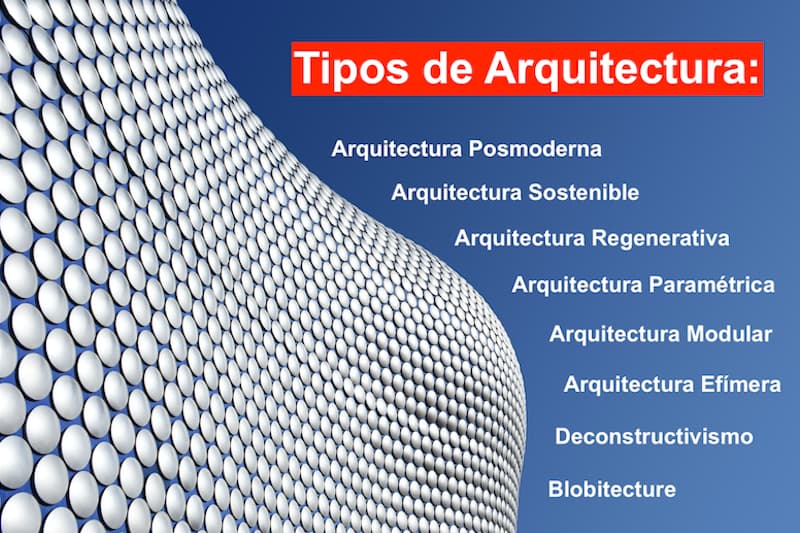
Tipos de Arquitectura: Explorando Más Allá de los Diseños Convencionales

FRASES DE ARQUITECTOS

Roles Arquitectura y Construcción (Profesiones Arquitectura)

Certificaciones para Arquitectos: Avanzando en la Excelencia Profesional

Roles BIM más Demandados en la Industria de la Construcción y el Sector AECO

Software BIM para Proyectos de Arquitectura y Construcción

Tecnología BIM: Beneficios y Ventajas en el sector AECO: Arquitectura, Ingeniería, Construcción y Operaciones

Modelo BIM

Modelo MEP

BIM 3D 4D 5D 6D 7D

AECO: Sector Arquitectura, Ingeniería, Construcción y Operaciones

Avances Tecnológicos en la Industria de la Construcción

Normas Técnicas de Edificación

!Explora el Mejor Directorio de Construcción! 🚧 🏗️ 👷♂️ (Sólo en ArquitecturaCarreras.com)


- CATEGORÍAS DE CURSOS ONLINE
▷ Formación online
▷ Cursos online
▷ Domestika Cursos
▷ Domestika cupón descuento
▷ Cursos de Arquitectura online
▷ Cursos online de Ilustración
▷ Cursos online de Diseño gráfico
▷ Cursos online de Fotografía y Vídeo
▷ Cursos online de 3D y Animación
▷ Cursos de Diseño online
▷ Cursos online de Dibujo
▷ Cursos online de Bellas Artes
▷ Cursos online de Dirección de Arte
- CURSOS ONLINE DOMESTIKA (POR SOFTWARE)
▷ AutoCAD
▷ SketchUp
▷ 3ds Max
▷ Adobe Photoshop
▷ Adobe Illustrator
▷ Adobe After Effects
▷ Adobe Lightroom
▷ Cinema 4D
▷ Adobe Indesign
LOS MEJORES CURSOS ONLINE PARA CREATIVOS | CURSOS DOMESTIKA
- ÚLTIMAS RESEÑAS CURSOS DOMESTIKA
 ▷ Curso Revit Online, por Majo Mora
 ▷ Curso de AutoCAD Online, por Isabel Martínez Abascal
 ▷ Curso SketchUp online, por Alejandro Soriano
 ▷ Curso Infoarquitectura 3D, por Amo Visual 3D
 ▷ Curso de Lumion, por Salva Moret


www.jmhdezhdez.com
(Blog sobre Arquitectura y Arte)
