- Inicio
- Ecosistema AECO
- _ATLAS AECO
- __Mapa Global Obras
- __Serie Const. Vanguardistas
- _Biblioteca Técnica AECO
- __Glosario AECO Global
- __Glosario de Construcción
- __Glosario de Edificación
- __Glosario BIM GTB-300
- _Entrevistas AECO
- __Jaime Sánchez-Álvarez
- _Visibilidad B2B y Partners AECO
- Arquitectura
- _RASCACIELOS
- __Burj Khalifa Dubai
- __Edificio Chrysler, NY
- _Estilos Arquitectónicos
- __Arquitectura Posmoderna
- __Deconstructivismo
- __Arquitectura High Tech
- Arte
- _Arte Universal
- _Arte Contemporáneo
- __Serge Marshennikov
- __Damian Lechoszest
- __John Kacere
- _Escultura
- __El Ángel del Norte
- __La Musa Dormida
- __Venus de Milo
- __Moisés de Miguel Ángel
- __Baldaquino de San Pedro
- __El rapto de Proserpina
- __La Verdad Velada
- __Perseo con cabeza de Medusa
- __Venus de Willendorf
- _Pintura
- __Capilla Sixtina
- __Cuadros Famosos
- __La Creación de Adán
- __Venus del Espejo Velázquez
- __Hipómenes y Atalanta
- __Venus Boticelli
- __Silla de van Gogh
- __Jugadores de Cartas Cézanne
- __Cabeza de Medusa Caravaggio
- __Impresionismo
- __Posimpresionismo
- _Historia
- __Edad Moderna
- Curiosidades
- _Arquitectura y Arte
- _Tumba de Miguel Ángel
- FRASES
- _Frases de la semana
- _Arquitectos
- __Frank Gehry
- _Escultores
- __Miguel Ángel Buonarroti
- __Bernini
- __Rodin
- _Pintores
- __Picasso
- __Vincent van Gogh
- __Cézanne
- __Claude Monet
- __Henri Matisse
- __René Magritte
- __Caravaggio
- __Miguel Ángel
- Formación AECO
- _Másteres en España
- __Másteres BIM en España
- __Másteres de Arquitectura
- __Másteres de Ingeniería
- __Másteres de Construcción
- __Másteres Inmobiliarios
- __Máster Facility Management
- __Másteres de Smart Building
- __Máster Energía y Edificación
- __Máster en Infraestructuras
- __M. Project Management
- _Partner de Formación AECO


Arquitectura, Escultura, Pintura, Ingeniería, Software-Programas de Diseño Arquitectónico: Metodología BIM, Revit, AutoCAD, 3ds max, Animación; Software de Adobe; Cursos online, Libros, Historia, Cultura, Timelapse y Dronelapse sobre Arquitectura y ciudades, Frases Célebres, Curiosidades, Rascacielos, Puentes, Edificios interesantes, Construcciones vanguardistas, Construcciones famosas, Diseño, Arte, Fotografía Arquitectónica / Architecture, Sculpture, Painting, Engineering, Software-Architectural Design Programs: BIM Methodology, Revit, AutoCAD, 3ds max, Animation; Adobe software; Online courses, Books, History, Culture, Timelapse and Dronelapse on Architecture and cities, Famous Phrases, Curiosities, Skyscrapers, Bridges, Interesting buildings, Avant-garde constructions, Famous constructions, Design, Art, Architectural Photography

Aqua Tower Chicago: The Liquid Sculpture Defying Wind Loads

Series: Avant-Garde Constructions
Masterpieces of Architecture and Engineering: #13 Aqua Tower, Chicago
Can the aesthetics of an undulating facade be the structural key for a 262-meter-tall colossus to defy Chicago's winds?
The Aqua Tower (2009) is the built manifesto of Actionable Idealism: the conviction that beauty must solve engineering problems. Located at 211 North Columbus Drive in Chicago, Illinois, USA, this masterpiece designed by architect Jeanne Gang (Studio Gang) in collaboration with structural engineer Ron Klemencic (MKA) transcends the traditional curtain wall to propose an interface architecture. Here, the 86 stories do not merely define a skyline; they create a space of continuous negotiation where the interior, the exterior, and the gusts of Lake Michigan converge in a unique dynamic equilibrium.

Technical Analysis: The Engineering of "Systematic Irregularity"
Far from being an aesthetic whim, the Aqua Tower in Chicago is a feat of algorithmic optimization and applied physics. Its three disruptive pillars are:Vortex Confusion (Passive Aerodynamics)
In conventional skyscrapers, wind forces generate rhythmic eddies that induce dangerous oscillations. The undulating terraces —with cantilever extensions of up to 3.5 meters— act as a structural aerodynamic disruptor. By interrupting the coherent formation of vortices, the waves "confuse" the wind and drastically reduce the lateral load.This effect breaks up the emergence of the Von Kármán vortex street, preventing the rhythmic wind shedding from reaching the Strouhal frequency associated with resonant oscillations in high-rise buildings. Aqua’s variable geometry desynchronizes the flow, impeding the wind from organizing into repetitive patterns capable of exciting the structure. The form is not decoration; it is an integrated motion damper.

“Walking Columns”: Defying Gravity
The structural challenge consisted in managing a geometry where none of the 82 concrete floor slabs are identical. To solve this, MKA engineered a system of Walking Columns: pillars that shift progressively at each level to transfer the loads to the central core with absolute precision.In Aqua, this displacement is not symbolic: the columns can migrate between 15 and 60 cm per floor to line up with the highest load points of the irregular slabs. Despite this controlled drift, the accumulated eccentricity throughout the 86 levels is kept below 2% of the total height, ensuring that the gravitational resultant force stays within the structural core without compromising its stiffness.
Regarding this challenge, Ron Klemencic was categorical:
The greatest challenge was not the shape, but gravity. We had to design a column system that would 'walk' or shift slightly to align with the highest load points of these irregular slabs, always maintaining the integrity of the core.
— Ron Klemencic
This engineering solution allowed for extreme cantilevers without compromising the open-plan spaces of the 819 apartments, creating a structure that re-adjusts organically over its height.

Thermal Shielding for an Extreme Climate
Chicago demands advanced thermal engineering to prevent external concrete slabs from acting as cold-conducting radiators. Thus, 800 Schöck Isokorb connectors were installed —specifically the Isokorb® CM model engineered for cantilever slabs— to establish a structural thermal break between the interior and exterior slabs. This technology guarantees energy efficiency throughout the 184,936 m² colossus, allowing the building envelope to breathe without thermal loss.
Materiality and Tectonics: Concrete as a Fluid
To attain the iconic water-like appearance on the facade, material selection was critical. The building utilizes a high-performance, low-emissivity (Low-E) glass curtain wall system that varies its tinting based on the depth of the terrace projection. While the tower incorporates fritted glass to optimize avian safety and modulate solar heat gain, this treatment is applied selectively across strategic areas of the perimeter rather than the entire envelope. This calibrated distribution successfully balances thermal performance, transparency, and the liquid reading of the facade.
The Glass: Different opacity levels were implemented to intensify the relief effect. In areas where the concrete slab recedes, the use of darker glazing generates a visual depth that simulates "water puddles" or natural pools, according to the project brief; an optical illusion distributed across the facades to materialize the liquid concept that gives the tower its name.
The Concrete: A high-strength concrete mix was used, featuring a pure white finish achieved by incorporating titanium dioxide (TiO₂) pigment to guarantee stable, long-lasting whiteness against weather exposure, particularly on the vulnerable terrace surfaces. This stark contrast between the bright white structure and the deep blue glass creates the interplay of light and shadow that defines its plastic, sculptural character.
Other Issues in the Series:
ISSUE #01 | Burj Khalifa: The Wind Code
Stepping Technique: how geometric variation tames vortices at 828 meters.
ISSUE #02 | CCTV Tower: The Cantilever Challenge
The gravity-defying colossus: precision engineering and a critical dawn connection.
ISSUE #04 | Hearst Tower: The NY Diamond
Structural efficiency: Norman Foster's Diagrid system and steel savings.
ISSUE #07 | Porta Fira Towers: Ruled Geometry
Analyzing Toyo Ito's system: how the repetition of straight elements generates an organic envelope.
ISSUE #26 | Turning Torso: Structural Synthesis of Anatomy in Motion
The feat of translating a human torso into a 190m helical skyscraper. An analysis of the master core and exterior steel spine engineered to manage extreme torsion and the Baltic water table.

Architectural dialogue in Chicago: the Aqua Tower (2009) precedes the St. Regis (2020), both landmark achievements by Studio Gang. Separated by just four blocks in Lakeshore East, these two skyscrapers demonstrate Jeanne Gang's evolution toward an urban scale with a greater public impact.
Good design is one that makes people stop and look at the world in a different way.
— Jeanne Gang

Innovation in the Construction Process: Digital Topography
One of the greatest milestones of the Aqua Tower was proving that geometric complexity does not have to be cost-prohibitive. Studio Gang and MKA implemented an unprecedented Digital Topography methodology:GPS Layout: Instead of traditional construction blueprints, digital coordinate files were used, which surveyors uploaded into total stations to mark out each curve via laser mapping.
Flexible Formwork: To shape the fluid waves, flexible formwork edge bands were utilized and adjusted point by point. This allowed each concrete slab floor to be executed with clockwork precision, achieving a layout tolerance of ±6 mm at the slab edges—an exceptional margin for such a highly variable geometry.
Passive Sustainability and Urban Ecology
The Aqua Tower functions as a vertical brise-soleil. The depth of each terrace was calculated algorithmically to provide maximum shading during the summer (reducing thermal gain), achieving an estimated 20–25% reduction in summer solar heat load due to the variable geometry of the cantilevers, while allowing direct sunlight penetration in winter. Furthermore, the terrace design promotes natural cross-ventilation—a technical luxury in high-rises of this scale that minimizes reliance on mechanical HVAC systems.
Industrial Specifications and Consulting Team
OFFICIAL REGISTRY AND ANALYSIS
Technical Transparency Note: Engineering consultants and prime contractors have been sourced directly from official project directories. Specific product brands and subsystems are attributed via industrial field research and comparative analysis of high-rise buildings.
| System / Discipline | Official Consultant and Brands | Execution and Engineering Context |
|---|---|---|
| General Contractor and Structure |
McHugh Construction OFFICIAL Formwork: Doka Systems TECHNICAL ALLIANCE |
Core and slab execution using floor-to-floor adaptive modular formwork systems. The success of the McHugh-Doka partnership established this method as Studio Gang’s preferred standard for their Chicago skyscrapers, including the subsequent St. Regis tower. |
| Structural Engineering | Magnusson Klemencic Associates (MKA) OFFICIAL | Structural skeleton modeling and calculations. Development of passive aerodynamics to combat vortex shedding and integration of the perimeter Walking Columns system for gravity load transfer within a variable geometry. |
| Façade and Curtain Wall Engineering | Horvath Reich CDC OFFICIAL Glazing: AGA / Alumicor & PPG Solarban® MARKET ALLOCATION |
Wind load resistance calculations and design of three-dimensionally adjustable mechanical anchor nodes to resolve unitized structural glazing joints across the slab perimeter transition zones. |
| Thermal Efficiency | dbHMS OFFICIAL LEED Thermal Break: Schöck Isokorb® TECHNICAL STANDARD |
Sustainability and energy performance analysis. Solar shading modeling utilizing the cantilevered balconies and prescription of thermal decoupling methods to eliminate interstitial condensation caused by Chicago's extreme winter thermal bridging. |
| Mechanical Engineering and HVAC | Advance Mechanical Systems, Inc. OFFICIAL | Design of the building's central plant and multi-zone climate control systems, critical to balancing the demanding thermodynamic requirements of a massive vertical mixed-use program. |
| Electrical Infrastructure | Gurtz Electric Co. OFFICIAL | Design and integration of high-voltage distribution networks, emergency power infrastructure (generators), and riser system optimization (power busways) throughout the 86 stories. |
| Life Safety and Fire Protection | Northstar Fire Protection / McDaniel Fire Systems OFFICIAL | Design of life safety systems, high-pressure water pump stations, and zoned suppression infrastructure, calculated under high-rise regulations to meet emergency response criteria. |
| Vertical Transportation | Otis Elevator Company MARKET ALLOCATION | Sizing and calibration of the high-speed vertical transportation core consisting of 24 elevators, optimized to manage massive user traffic across the residential, hotel, and retail segments. |
Are you an official consultant, contractor, or verified supplier for the Aqua Tower?
Help us refine our architectural record or request your link activation by writing to:
info@jmhdezhdez.com

Jeanne Gang's Vision: Interface Architecture
For Jeanne Gang, the Aqua Tower is an “inhabited sculpture,” a concept that resonates with the architectural vision of Constantin Brâncuși himself. The curves function as a brise-soleil, but also as a social invitation: they compel the inhabitant to step out and engage with the city. It is a relational architecture where technology—ranging from BIM modeling to the 24 high-speed elevators—is placed strictly at the service of the human experience and urban biodiversity.
The true avant-garde is not in what the building displays, but in what the building facilitates.
— Jeanne Gang
The Legacy of Aqua: Toward an Engineering of Empathy
The Aqua Tower in Chicago proved that structural efficiency does not have to be rigid or predictable. By "confusing" the wind and making the columns "walk," it taught us that the avant-garde lies in adapting to natural forces, not dominating them. It is a masterclass in how engineering can transform cold concrete into a living organism that breathes with the city. The Aqua Tower is not a building that resists the wind: it is a building that converses with it.
Frequently Asked Questions about Chicago's Aqua Tower:
Why is it considered a bird-friendly building?
The undulating terraces and fritted glass (frit-glass) break up sky reflections, allowing birds to perceive the building as a solid object rather than an open void. For this conscious design, the project received PETA's "Proggy" Award.
How was the budget controlled with such a complex design?
The key was digital engineering: a GPS coordinate system was utilized to map out the curve points onto the formwork with millimeter precision. This allowed the geometric complexity to cost just 2% more than a conventional skyscraper.
What happens to rainwater on the irregular terraces?
Each terrace features a subtle slope toward dedicated drains integrated directly into the concrete slab. This layout prevents a "waterfall" effect onto lower floors and protects the concrete from damaging freeze-thaw cycles, which are critical in Chicago's climate where 40 to 60 annual cycles are recorded—potentially compromising the material's durability if not managed properly.
What is the technical link between Aqua and the St. Regis Chicago?
Aqua functioned as the laboratory for passive wind damping. At the St. Regis, Jeanne Gang and Ron Klemencic evolved this concept into "blow-through floors"—uninhabited, open levels that allow the wind to pass through to reduce sway at a height of 363 meters, utilizing openings equivalent to 30–40% of the perimeter to maximize lateral load dissipation.
How does the "Walking Columns" system manage load eccentricity without oversizing the core?
The progressive displacement of the columns to match the variable slab edges generates substantial bending moments. To avoid a massive thickening of the central core, MKA utilized ultra-high-strength concrete of 80 MPa (11,600 psi) at the lower levels along with densified passive reinforcement. The columns "walk" by shifting subtly at each floor, allowing the resulting gravity loads to be routed in a controlled manner toward deep caissons embedded directly into bedrock more than 30 meters underground.
What chemical innovations were applied to the concrete to withstand Lake Michigan's aggressive climate?
The terraces act as unconditioned, exposed structures subject to extreme thermal swings. To guarantee the durability of the pure white concrete and prevent carbonation, a mix design featuring silica fume and blast-furnace slag admixtures was implemented to reduce material porosity. Additionally, air-entraining admixtures (between 5% and 7%) were incorporated to generate microbubbles within the matrix; this microscopic space absorbs the expansion of internal water upon freezing, preventing the slabs from cracking during winter frosts.
How does the curtain wall framing system vary to absorb the tolerances of the undulating slabs?
The shifting perimeter required the design of a three-dimensionally adjustable modular anchoring system. Each glass panel was secured using structural steel brackets bolted to embedded profiles (cast-in channels) placed in the concrete during the pour. These anchors allow millimeter-level adjustment across three axes (X, Y, Z), featuring adjustment ranges of ±25 mm in X/Y and ±15 mm in Z to absorb both concrete field placement tolerances and long-term deflexions (creep) caused by the self-weight of the large cantilevers.
AECO Architecture & Engineering Glossary | Aqua Tower, Chicago
Vortex Shedding Confusion: A passive aerodynamic strategy utilizing variable geometry. The undulating terraces act as flow disruptors, preventing wind from organizing into rhythmic eddies and disrupting the formation of the von Kármán vortex street to prevent resonant oscillations induced by the Strouhal frequency.
Walking Columns: An inclined column system undergoing progressive displacement or drift per floor (migrating between 15 and 60 cm per level in Aqua). This technique redirects the resulting gravity loads from the irregular slabs back toward the core and deep foundations (caissons), maintaining cumulative eccentricity below 2% of the total height.
Thermal Break: Thermodynamic decoupling using structural insulating connectors (Schöck Isokorb® CM model). It prevents conductive temperature transfer between the weather-exposed cantilevers and the interior building slabs, eliminating interstitial condensation.
Digital Topography: A layout and surveying methodology based on uploading digital coordinate files into laser total stations. This enables precise control of the variable geometry and flexible formwork during civil works with millimeter accuracy (strict tolerance of ±6 mm at slab edges).
Fritted Glass (Frit-glass): Glazing featuring printed ceramic patterns that alter the continuous reflectivity of the building envelope. It is selectively applied to optimize the solar heat gain coefficient (SHGC) and serve as a bird-safe design measure (visual macro-texture).
Vertical Brise-Soleil: The passive bioclimatic function of the perimeter cantilevered balconies. Their variable depth is algorithmically calculated to reduce solar radiation thermal gain by 20% to 25% during summer, while maximizing daylight harvesting in winter.
Concrete Creep: The progressive, viscoelastic deformation that concrete undergoes under sustained loads over time. It represents a critical factor in calculating large curved cantilevers and structures exposed to extreme freeze-thaw cycles (40 to 60 annual cycles in Chicago).
Cast-in Channels: Steel profiles anchored and integrated into the concrete mass during the pouring phase. They act as mechanical insertion receivers for curtain wall anchors, allowing adjustable three-dimensional regulation (margins of ±25 mm on X/Y axes and ±15 mm on the Z axis) to absorb construction tolerances.
Series: Avant-Garde Constructions | jmhdezhdez.com
View Universal Technical Datasheet (UTD v1.1.1) ▾
| UNIVERSAL TECHNICAL DATASHEET (UTD) v1.1.1 | AECO-ATLAS-2026-04-013 | |
|---|---|
| Subject / Typology | Aqua Tower, Chicago | Residential Skyscraper / Hotel / Offices |
| Architect / Structure | Studio Gang Architects | Magnusson Klemencic Associates (MKA) |
| Technical Systems | Structural: Inclined Columns (Walking Columns) | Facade: Cantilevered Undulating Terraces | Digital: Algorithmic Optimization | Damping: Aerodynamic Wind Dispersal |
| Validation / Custodia | Level: Primary (100%) | Sources: Studio Gang, MKA, AECO Technical Archives |
| Integrity / License | Hash: SHA256-AECO-013 | License: CC BY-NC-ND 4.0 |
AECO-ATLAS-2026-04-013 | Typology: Skyscraper | Systems: Undulating Terraces, Walking Columns, Algorithmic Optimization. | Validation: Primary (100%).
CITATION AND DISSEMINATION:
Hernández Hernández, José Miguel (2026). "Aqua Tower: The Liquid Sculpture That Defies the Wind". AECO Atlas. v1.1.1. Ref: AECO-ATLAS-2026-04-013. Source: https://www.jmhdezhdez.com/2026/04/aqua-tower-chicago-facade-studio-gang.html
Technical knowledge grows when shared. If you find this analysis useful, you are free to share it as long as you include the full citation to maintain source traceability. Thank you for helping raise the professional standards of the AECO sector!

José Miguel Hernández Hernández
International reference in the technical analysis of iconic and sculptural architecture. Specialist in the intersection between engineering, aesthetics, and vanguard design. Author of the bilingual technical books Turning Torso – Santiago Calatrava and Famous Constructions.

Publicado por José Miguel


José Miguel Hernández Hernández
Consultor Smart Home y Movilidad Eléctrica AECO
Servicios Destacados
⚡ Consultoría Movilidad Eléctrica
Proyectos CICE e ITC-BT-52.
🎓 Formación BIM / AECO
Especialización técnica avanzada.
📩 Suscripción Nodo Maestro
Innovación y normativa Smart.


Ecosistemas Smart Home por Tipología Guías técnicas y selección de dispositivos para proyectos de arquitectura e interiorismo en Pisos, Lofts, Casas Grandes, Dúplex, Áticos y Villas de Lujo. Integra automatización adaptada a cada espacio.
Ver Guía por Tipologías →
Directorio de Fotógrafos de Arquitectura en España: Descubre a los Mejores Expertos en Fotografía Arquitectónica para Documentar tus Proyectos y Obras

Fotografía Arquitectónica: La Guía Definitiva para Capturar Diseño, Estética y Función de Edificios y Estructuras

Fotografía y Vídeo Timelapse

El Rol del Fotógrafo de Arquitectura

Cámaras Réflex y Objetivos Tilt-Shift para Fotografía de Arquitectura

Estilos Arquitectónicos Modernos: Un Viaje a Través de la Creatividad y la Innovación

ARQUITECTURA CARRERA: Descubre todas las Opciones de la Carrera en Arquitectura y Grados en España

Comparativa de las Mejores Universidades de Arquitectura del Mundo: Internacional, Europa, LATAM

Los Mejores Libros de Arquitectura para Arquitectos

Libros para Estudiar Arquitectura

Libros para Arquitectos Principiantes: Guías y Recursos Esenciales para Comenzar tu Carrera

Los Mejores Libros de Arquitectura para Estudiantes durante la Carrera

Era Digital de la Construcción: Innovaciones Tecnológicas en Arquitectura y Edificación

Comparativa de Los Mejores Ordenadores para Arquitectos en 2024

Las Mejores Laptops para Arquitectura en 2024

Los Mejores Ordenadores de Arquitectura para Estudiantes

Significado de: Términos Clave sobre Arquitectura, Ingeniería y Construcción

Arquitectos: Descubre el Mejor Directorio de Arquitectos que podrás encontrar en Internet (Sólo en AC)
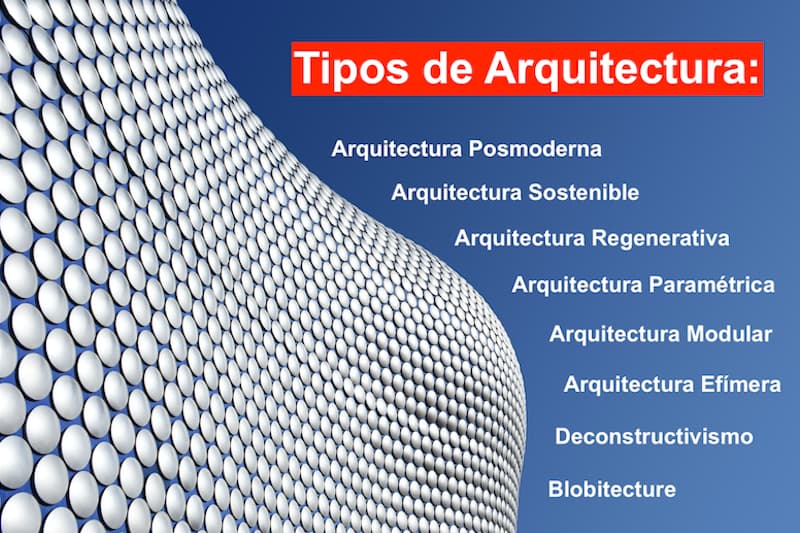
Tipos de Arquitectura: Explorando Más Allá de los Diseños Convencionales

FRASES DE ARQUITECTOS

Roles Arquitectura y Construcción (Profesiones Arquitectura)

Certificaciones para Arquitectos: Avanzando en la Excelencia Profesional

Roles BIM más Demandados en la Industria de la Construcción y el Sector AECO

Software BIM para Proyectos de Arquitectura y Construcción

Tecnología BIM: Beneficios y Ventajas en el sector AECO: Arquitectura, Ingeniería, Construcción y Operaciones

Modelo BIM

Modelo MEP

BIM 3D 4D 5D 6D 7D

AECO: Sector Arquitectura, Ingeniería, Construcción y Operaciones

Avances Tecnológicos en la Industria de la Construcción

Normas Técnicas de Edificación
!Explora el Mejor Directorio de Construcción! 🚧 🏗️ 👷♂️ (Sólo en ArquitecturaCarreras.com)


www.jmhdezhdez.com
jmhdezhdez.com — Arquitectura, Ingeniería y Documentación Técnica AECO
