- Inicio
- Arquitectura
- _RASCACIELOS
- __Burj Khalifa Dubai
- __Edificio Chrysler, NY
- _Estilos Arquitectónicos
- __Arquitectura Posmoderna
- __Deconstructivismo
- __Arquitectura High Tech
- _Serie Const. Vanguardistas
- Arte
- _Arte Universal
- _Arte Contemporáneo
- __Serge Marshennikov
- __Damian Lechoszest
- __John Kacere
- _Escultura
- __El Ángel del Norte
- __La Musa Dormida
- __Venus de Milo
- __Moisés de Miguel Ángel
- __Baldaquino de San Pedro
- __El rapto de Proserpina
- __La Verdad Velada
- __Perseo con cabeza de Medusa
- __Venus de Willendorf
- _Pintura
- __Capilla Sixtina
- __Cuadros Famosos
- __La Creación de Adán
- __Venus del Espejo Velázquez
- __Hipómenes y Atalanta
- __Venus Boticelli
- __Silla de van Gogh
- __Jugadores de Cartas Cézanne
- __Cabeza de Medusa Caravaggio
- __Impresionismo
- __Posimpresionismo
- _Historia
- __Edad Moderna
- Curiosidades
- _Arquitectura y Arte
- _Tumba de Miguel Ángel
- FRASES
- _Frases de la semana
- _Arquitectos
- __Frank Gehry
- _Escultores
- __Miguel Ángel Buonarroti
- __Bernini
- __Rodin
- _Pintores
- __Picasso
- __Vincent van Gogh
- __Cézanne
- __Claude Monet
- __Henri Matisse
- __René Magritte
- __Caravaggio
- __Miguel Ángel
- CULTURA
- _Museos
- __Museo del Louvre
- Formación
- _Formación BIM Online
- _Cursos Domestika
- Más
- _ENTREVISTAS
- __Johannes Wesskmark
- __Nathan Zawaya





Arquitectura, Escultura, Pintura, Ingeniería, Software-Programas de Diseño Arquitectónico: Metodología BIM, Revit, AutoCAD, 3ds max, Animación; Software de Adobe; Cursos online, Libros, Historia, Cultura, Timelapse y Dronelapse sobre Arquitectura y ciudades, Frases Célebres, Curiosidades, Rascacielos, Puentes, Edificios interesantes, Construcciones vanguardistas, Construcciones famosas, Diseño, Arte, Fotografía Arquitectónica / Architecture, Sculpture, Painting, Engineering, Software-Architectural Design Programs: BIM Methodology, Revit, AutoCAD, 3ds max, Animation; Adobe software; Online courses, Books, History, Culture, Timelapse and Dronelapse on Architecture and cities, Famous Phrases, Curiosities, Skyscrapers, Bridges, Interesting buildings, Avant-garde constructions, Famous constructions, Design, Art, Architectural Photography

Steel Dawn: The Structural Challenge of Joining Two Towers in the Void (CCTV Beijing)

Series: Avant-Garde Constructions
Masterpieces of Architecture and Engineering: #02 CCTV Tower, Beijing
Can a 473,000 m² colossus float over 160 meters above the ground with no visible supports?
In Beijing, the CCTV Tower headquarters decided to shatter the sacred rule of the skyscraper: the tradition of verticality as the only path to success. It is not a tower; it is a continuous three-dimensional loop that folds upon itself at impossible angles, creating a 75-meter cantilever that defies gravity.

The Duel of Geniuses: Where "Delirium" met Logic
The structure of the CCTV was not born from software, but from a unique intellectual symbiosis between two brilliant minds who challenged architectural tradition: architect Rem Koolhaas (OMA) and structural engineer Cecil Balmond (Arup).
We are not designing a form, we are designing a system of forces. — Cecil Balmond.
Koolhaas wanted to put an end to the tradition of the skyscraper as an isolated and predictable "parallelepiped." Balmond, for his part, understood that to achieve this, the building should not be a shape, but an interconnected system of forces. Together, they made the structure the absolute protagonist: it is not a building with a structure, it is the structure made into a building.

The Invisible Enemy: Thermal Expansion
The greatest challenge was not just supporting the cantilever, but joining it. The two leaning towers were built separately. Due to high solar exposure in Beijing, the steel of each tower expanded differently depending on the time of day. Attempting to weld them at noon would have been a fatal error; the structures would have been "out of alignment" by several dozen centimeters.

The Epic Solution: The final connection was carried out at dawn—the only moment when both towers were in thermal equilibrium and their geometric positions were identical. It was the instant when the two cantilevers touched for the first time, culminating in an unprecedented engineering maneuver that closed the circuit of forces in December 2007.
A Challenge of Precision: The operation was so sensitive that hours before the closing, four key corner columns had to be temporarily removed. This allowed the structure to gain the necessary flexibility to absorb stresses uniformly before being sealed forever. A precision surgery at an urban scale that transformed two independent towers into a single symbiotic organism.
Other Issues in the Series:
ISSUE #01 | Burj Khalifa: The Wind Code
Stepping technique: how geometric variation tames vortices at 828 meters.
ISSUE #04 | Hearst Tower: The NY Diamond
The efficiency of the Diagrid system: saving 20% of steel and redefining sustainability.
ISSUE #05 | Marqués de Riscal: Deconstructing Tradition
Frank Gehry’s parametric maturity: symbiosis between anodized titanium and 1860 heritage via aerospace software.
ISSUE #17 | Allianz Arena: The ETFE Lighthouse
Herzog & de Meuron: Analysis of pneumatic ETFE cushions and the world's first shifting facade.

The Facade as a "Stress Map" (The Web)
If you look closely at the building, you will notice a network of steel diamonds (diagrid) that is not uniform. This is not an aesthetic whim; it is pure physics.
- High-density zones: Where the diamonds multiply and the diagonals tighten, the structure endures the greatest tension and compression forces (especially at the cantilever nodes).
- Low-density zones: Where the stress is lower, the mesh opens up to allow more natural light.

Technical Comparison: Stability through Geometry
As I analyze in my book "TURNING TORSO - SANTIAGO CALATRAVA", engineering tackles iconic landmarks in radically different ways:
Turning Torso (190 m): Relies on a rigid cylindrical concrete core and a steel exoskeleton that "holds" the 90° twist.
CCTV Tower Beijing (234 m): Relies on interconnectivity. Being a closed loop, the towers support each other. It is a symbiotic structure where the rigidity of the whole compensates for the lack of verticality.
The tower is a bourgeois typology. We have made a building that questions the tower; it is a loop, a circuit, a building that moves. — Rem Koolhaas.
Why doesn't it collapse?
Unlike a conventional skyscraper that works primarily in compression, the CCTV functions as a giant rigid frame. The 75-meter cantilever is supported thanks to the rigidity of the nodes in its external diagrid — diagonal load-bearing beams, which convert bending into axial forces distributed throughout the ring. It is a challenge to logic that only advanced engineering can solve.
Industrial Specs & Solutions | CCTV Headquarters
AECO VERIFIED| Component | Partner / Brand | Technical Execution Detailed |
|---|---|---|
| Structural Steel | Baosteel Group | Supply of heavy-duty steel plates for variable-geometry diagrid nodes and high-stress load transfers. |
| Facade Systems | Permasteelisa Group | Advanced unitized curtain wall custom-engineered to follow the non-planar and inclined geometry of the towers. |
| Vertical Transport | Schindler Group | Custom S-7001 lift systems specifically designed to operate within inclined and angled elevator shafts. |
| Fire Protection | Promat | High-performance passive fireproofing solutions for critical structural steel nodes and external connections. |
| Anchoring Systems | Hilti | Seismic-grade fastening solutions for the high-performance building envelope and MEP service integration. |
Are you the manufacturer, installer, or technical specifier of any of these components?
Request your partner link activation for this technical series by writing to:
info@jmhdezhdez.com
Want to dive deeper into structural design?
If you are passionate about cutting-edge engineering, discover all the secrets of structural design in my bilingual book (ES - EN). 144 pages and 109 illustrations explaining how architecture defies the limits of the possible.
Available in premium digital technical edition for immediate download.
Frequently Asked Questions:
Is a leaning building safe?
Yes. Through the diagrid system, loads are distributed across the "skin" of the building, making it extremely resistant to earthquakes and lateral winds.
What is a Linked Cantilever?
It is a cantilever that is not "loose" but connects two structures, closing a circuit of forces that provides a global stability unattainable for an isolated tower.
Why were the towers joined at dawn?
To prevent thermal expansion caused by the sun from asymmetricaly deforming the steel. At dawn, both towers share the same temperature, and their geometric positions are perfect for assembly.
What does "The Web" mean in this building?
It is the technical term used to describe the steel diagrid wrapping the building. It acts as an active exoskeleton that distributes stresses across the entire facade, making the building function as a living organism.
How does it compare to the Turning Torso?
While the Turning Torso relies on a rigid reinforced concrete core to master the twist through an external spinal cord that runs along the full length of the facade, transmitting loads to the foundation, the CCTV Tower in Beijing employs a closed-loop symbiotic structure where both towers support each other, optimizing steel through geometry rather than mass.
AECO Architecture & Engineering Glossary | CCTV Tower, Beijing
Thermal Equilibrium: The physical state achieved at dawn when both tower sections reach an identical temperature. This was the critical factor for welding the cantilever, preventing metric deviations caused by asymmetric solar expansion.
Linked Cantilever: A 75-meter spanning overhang. Unlike a simple cantilever, it closes a structural circuit, merging two independent towers into a single interconnected force system.
Variable Diagrid (The Web): A continuous steel exoskeleton where mesh density is non-uniform; cells are compressed in high-stress areas (cantilever nodes) and expanded where load requirements are lower.
Giant Rigid Frame: A structural typology that replaces pure compression with a system that absorbs bending moments and converts them into axial forces distributed across the entire ring surface.
Symbiotic Structure: A design concept where global stiffness does not rely on the verticality of individual elements, but on the mutual support of inclined volumes closing a 3D loop.
Seismic Performance: The capacity of the perimeter diagrid to dissipate energy and resist seismic loads through the redundancy of high-strength steel connections.
Series: Avant-Garde Constructions | jmhdezhdez.com

José Miguel Hernández Hernández
International reference in the technical analysis of iconic and sculptural architecture. Specialist in the intersection between engineering, aesthetics, and vanguard design. Author of the bilingual technical books Turning Torso – Santiago Calatrava and Famous Constructions.

Publicado por José Miguel


José Miguel Hernández Hernández
Consultor Smart Home y Movilidad Eléctrica AECO
Servicios Destacados
⚡ Consultoría Movilidad Eléctrica
Proyectos CICE e ITC-BT-52.
🎓 Formación BIM / AECO
Especialización técnica avanzada.
📩 Suscripción Nodo Maestro
Innovación y normativa Smart.


Arquitectura y Tecnología al servicio del diseño inteligente.
Esta guía esencial para Smart Homes te muestra cómo integrar dispositivos inteligentes en viviendas contemporáneas, mejorando el confort, la eficiencia energética y el diseño funcional. Ideal para arquitectos, interioristas y entusiastas del arte del habitar.
👉 Descubre la guía completa

Directorio de Fotógrafos de Arquitectura en España: Descubre a los Mejores Expertos en Fotografía Arquitectónica para Documentar tus Proyectos y Obras

Fotografía Arquitectónica: La Guía Definitiva para Capturar Diseño, Estética y Función de Edificios y Estructuras

Fotografía y Vídeo Timelapse

El Rol del Fotógrafo de Arquitectura

Cámaras Réflex y Objetivos Tilt-Shift para Fotografía de Arquitectura

Estilos Arquitectónicos Modernos: Un Viaje a Través de la Creatividad y la Innovación

ARQUITECTURA CARRERA: Descubre todas las Opciones de la Carrera en Arquitectura y Grados en España

Comparativa de las Mejores Universidades de Arquitectura del Mundo: Internacional, Europa, LATAM

Los Mejores Libros de Arquitectura para Arquitectos

Libros para Estudiar Arquitectura

Libros para Arquitectos Principiantes: Guías y Recursos Esenciales para Comenzar tu Carrera

Los Mejores Libros de Arquitectura para Estudiantes durante la Carrera

Era Digital de la Construcción: Innovaciones Tecnológicas en Arquitectura y Edificación

Comparativa de Los Mejores Ordenadores para Arquitectos en 2024

Las Mejores Laptops para Arquitectura en 2024

Los Mejores Ordenadores de Arquitectura para Estudiantes

Significado de: Términos Clave sobre Arquitectura, Ingeniería y Construcción

Arquitectos: Descubre el Mejor Directorio de Arquitectos que podrás encontrar en Internet (Sólo en AC)
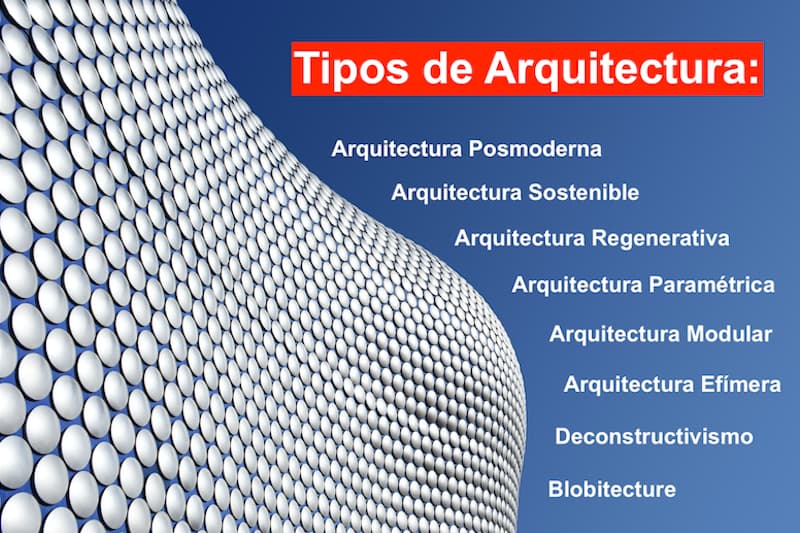
Tipos de Arquitectura: Explorando Más Allá de los Diseños Convencionales

FRASES DE ARQUITECTOS

Roles Arquitectura y Construcción (Profesiones Arquitectura)

Certificaciones para Arquitectos: Avanzando en la Excelencia Profesional

Roles BIM más Demandados en la Industria de la Construcción y el Sector AECO

Software BIM para Proyectos de Arquitectura y Construcción

Tecnología BIM: Beneficios y Ventajas en el sector AECO: Arquitectura, Ingeniería, Construcción y Operaciones

Modelo BIM

Modelo MEP

BIM 3D 4D 5D 6D 7D

AECO: Sector Arquitectura, Ingeniería, Construcción y Operaciones

Avances Tecnológicos en la Industria de la Construcción

Normas Técnicas de Edificación
!Explora el Mejor Directorio de Construcción! 🚧 🏗️ 👷♂️ (Sólo en ArquitecturaCarreras.com)


- CATEGORÍAS DE CURSOS ONLINE
▷ Formación online
▷ Cursos online
▷ Domestika Cursos
▷ Domestika cupón descuento
▷ Cursos de Arquitectura online
▷ Cursos online de Ilustración
▷ Cursos online de Diseño gráfico
▷ Cursos online de Fotografía y Vídeo
▷ Cursos online de 3D y Animación
▷ Cursos de Diseño online
▷ Cursos online de Dibujo
▷ Cursos online de Bellas Artes
▷ Cursos online de Dirección de Arte
- CURSOS ONLINE DOMESTIKA (POR SOFTWARE)
▷ AutoCAD
▷ SketchUp
▷ 3ds Max
▷ Adobe Photoshop
▷ Adobe Illustrator
▷ Adobe After Effects
▷ Adobe Lightroom
▷ Cinema 4D
▷ Adobe Indesign
LOS MEJORES CURSOS ONLINE PARA CREATIVOS | CURSOS DOMESTIKA
- ÚLTIMAS RESEÑAS CURSOS DOMESTIKA
 ▷ Curso Revit Online, por Majo Mora
 ▷ Curso de AutoCAD Online, por Isabel Martínez Abascal
 ▷ Curso SketchUp online, por Alejandro Soriano
 ▷ Curso Infoarquitectura 3D, por Amo Visual 3D
 ▷ Curso de Lumion, por Salva Moret


)

www.jmhdezhdez.com
(Blog sobre Arquitectura y Arte)
