- Inicio
- Arquitectura
- _RASCACIELOS
- __Burj Khalifa Dubai
- __Edificio Chrysler, NY
- _Estilos Arquitectónicos
- __Arquitectura Posmoderna
- __Deconstructivismo
- __Arquitectura High Tech
- _Serie Const. Vanguardistas
- Arte
- _Arte Universal
- _Arte Contemporáneo
- __Serge Marshennikov
- __Damian Lechoszest
- __John Kacere
- _Escultura
- __El Ángel del Norte
- __La Musa Dormida
- __Venus de Milo
- __Moisés de Miguel Ángel
- __Baldaquino de San Pedro
- __El rapto de Proserpina
- __La Verdad Velada
- __Perseo con cabeza de Medusa
- __Venus de Willendorf
- _Pintura
- __Capilla Sixtina
- __Cuadros Famosos
- __La Creación de Adán
- __Venus del Espejo Velázquez
- __Hipómenes y Atalanta
- __Venus Boticelli
- __Silla de van Gogh
- __Jugadores de Cartas Cézanne
- __Cabeza de Medusa Caravaggio
- __Impresionismo
- __Posimpresionismo
- _Historia
- __Edad Moderna
- Curiosidades
- _Arquitectura y Arte
- _Tumba de Miguel Ángel
- FRASES
- _Frases de la semana
- _Arquitectos
- _Escultores
- __Miguel Ángel Buonarroti
- __Bernini
- __Rodin
- _Pintores
- __Picasso
- __Vincent van Gogh
- __Cézanne
- __Claude Monet
- __Henri Matisse
- __René Magritte
- __Miguel Ángel
- CULTURA
- _Museos
- __Museo del Louvre
- Formación
- _Formación BIM Online
- _Cursos Domestika
- Más
- _ENTREVISTAS
- __Johannes Wesskmark
- __Nathan Zawaya


Arquitectura, Escultura, Pintura, Ingeniería, Software-Programas de Diseño Arquitectónico: Metodología BIM, Revit, AutoCAD, 3ds max, Animación; Software de Adobe; Cursos online, Libros, Historia, Cultura, Timelapse y Dronelapse sobre Arquitectura y ciudades, Frases Célebres, Curiosidades, Rascacielos, Puentes, Edificios interesantes, Construcciones vanguardistas, Construcciones famosas, Diseño, Arte, Fotografía Arquitectónica / Architecture, Sculpture, Painting, Engineering, Software-Architectural Design Programs: BIM Methodology, Revit, AutoCAD, 3ds max, Animation; Adobe software; Online courses, Books, History, Culture, Timelapse and Dronelapse on Architecture and cities, Famous Phrases, Curiosities, Skyscrapers, Bridges, Interesting buildings, Avant-garde constructions, Famous constructions, Design, Art, Architectural Photography

Hearst Tower: The Diagrid Diamond Revitalizing Manhattan

Series: Avant-Garde Constructions
Masterpieces of Architecture and Engineering: #04 Hearst Tower, New York
How do you build a glass colossus upon a stone pedestal left orphaned by the Great Depression?
In 1928, Joseph Urban completed the construction of the Art Deco base for the Hearst Corporation headquarters. Although this six-story building was originally engineered to support a skyscraper, the economic circumstances of the 1929 Great Depression prevented the completion of the projected tower. Eighty years later, Norman Foster and WSP Cantor Seinuk not only fulfilled that dream but did so by breaking a sacred rule of architecture: they eliminated vertical perimeter columns.

Giant Surgery: Megacolumns vs. Art Deco
Following the wounds of 9/11, New York didn’t just need another building; it needed a manifesto of resilience. The Hearst Tower represents extreme urban surgery: the heart of the original monument was hollowed out, leaving only a six-story historical "shell."
To prevent the new tower from crushing the past, high-strength steel megacolumns were inserted, piercing the ancient base like surgical needles. The result is a colossal atrium where the tower appears to levitate above a 25-meter-high structural void.
The best architecture comes from a synthesis of all the elements that compose a building: the structure that supports it, the services that allow it to work, and the ecology of the building.

The "Diagrid": The Absolute Geometry of the Triangle
Forget the traditional orthogonal grid. The Hearst Tower relies on absolute triangulation. This diamond-shaped exoskeleton, known as Diagrid, is not an aesthetic whim; it is the purest form of physical efficiency:
The Triangle is Non-Deformable: While a rectangular frame deforms under lateral wind pressure, the triangle locks. This provides the tower with a torsional rigidity that a conventional skyscraper could only dream of.
Radical Material Saving: By allowing the diagonals to carry the full load (both gravity and wind), corner columns were eliminated. The result: 2,000 tons of steel saved (20% less than a standard building).
Uncluttered Views: With no perimeter pillars, the office floor plates are open fields. The steel does not block the view; it frames it.
The reliability and precision of the diagrid system in the Hearst Tower can be compared to that of a Swiss watch; my work has always been about stretching the horizon.

The Transfer Platform: The Gordian Knot
The most critical point of this engineering feat occurs on the seventh floor. Here, the Diagrid terminates and must transfer thousands of tons of diagonal loads into the vertical megacolumns that lead to the foundation.
A massive transfer platform was designed—invisible to the human eye, but vital for the building's structural integrity. It is at this junction where the physics of the diamonds yield to gravity, channeling forces into the ground without ever touching the 1928 historic facade.

"Icefall": The Water-Driven Lung
In a conventional skyscraper, HVAC systems face a losing battle against solar gain. In the Hearst Tower, the building "breathes." The "Icefall" water sculpture is not merely decorative; it is a psychrometric machine:
Evaporative Cooling: It utilizes harvested rainwater to naturally cool and humidify the atrium.
Radiant Flooring: This marked New York's first large-scale use of a capillary tube network beneath the floor, radiating cooling or heating while eliminating the noise and energy consumption of massive air handlers.

Battle of the Titans: Technical Comparison
Turning Torso (Malmö), 190 m: Achieves stability through a circular reinforced concrete core and an external steel "spine" that enables the 90-degree rotation of its floor plates.
CCTV Beijing (Beijing), 234 m: Defies gravity through a continuous loop design and an irregular structural skin that distributes stresses across an extreme cantilever.
Hearst Tower (New York), 182 m: Relies on the intelligent geometry of the Diagrid. By utilizing 85% recycled steel and eliminating corner columns, it proves that the avant-garde is not just about height, but structural efficiency.

Do you want to delve deeper into structural design?
If you are passionate about avant-garde engineering, discover the secrets of structural design in my works. Hundreds of technical illustrations dissect how the world's greatest skyline milestones defy the limits of physics and architecture.
Bilingual Technical Works / Obras Técnicas Bilingües


Frequently Asked Questions about the Hearst Tower, New York:
How does the 1928 base support the weight of the new tower?
In fact, it does not. Joseph Urban's original structure was hollowed out and acts only as an aesthetic shell. The weight of the glass tower is transferred directly to the ground through steel megacolumns that pierce the ancient base without resting upon it.
Why was 85% recycled steel chosen for the project?
It was a pioneering decision for New York skyscrapers to achieve LEED Gold certification. By combining the geometric efficiency of the Diagrid (which uses less material) with recycled steel, the building's carbon footprint was drastically reduced.
What technical function do the "diamond birds" (chamfers) serve?
The cut vertices at the tower's corners are not merely aesthetic; they serve to disrupt wind turbulence. By softening the corners, lateral pressure is reduced, preventing the oscillation effect caused by vortex shedding.
How does the "Icefall" climate control system work?
The lobby water feature utilizes rainwater harvested from the roof. This water helps to humidify and cool the air in summer through evaporation, working in conjunction with radiant flooring to optimize energy consumption.
Is the Diagrid system safer than a conventional one?
Yes. The redundancy of the triangular system offers superior torsional stability. If a node were compromised, loads are naturally redistributed through adjacent diagonals—a process that does not occur as easily in vertical pillar structures.

José Miguel Hernández Hernández
International reference in the technical analysis of iconic and sculptural architecture. Specialist in the intersection between engineering, aesthetics, and vanguard design. Author of the bilingual technical books Turning Torso – Santiago Calatrava and Famous Constructions.

Publicado por José Miguel


José Miguel Hernández Hernández
Consultor Smart Home y Movilidad Eléctrica AECO
Servicios Destacados
⚡ Consultoría Movilidad Eléctrica
Proyectos CICE e ITC-BT-52.
🎓 Formación BIM / AECO
Especialización técnica avanzada.
📩 Suscripción Nodo Maestro
Innovación y normativa Smart.


Arquitectura y Tecnología al servicio del diseño inteligente.
Esta guía esencial para Smart Homes te muestra cómo integrar dispositivos inteligentes en viviendas contemporáneas, mejorando el confort, la eficiencia energética y el diseño funcional. Ideal para arquitectos, interioristas y entusiastas del arte del habitar.
👉 Descubre la guía completa

Directorio de Fotógrafos de Arquitectura en España: Descubre a los Mejores Expertos en Fotografía Arquitectónica para Documentar tus Proyectos y Obras

Fotografía Arquitectónica: La Guía Definitiva para Capturar Diseño, Estética y Función de Edificios y Estructuras

Fotografía y Vídeo Timelapse

El Rol del Fotógrafo de Arquitectura

Cámaras Réflex y Objetivos Tilt-Shift para Fotografía de Arquitectura

Estilos Arquitectónicos Modernos: Un Viaje a Través de la Creatividad y la Innovación

ARQUITECTURA CARRERA: Descubre todas las Opciones de la Carrera en Arquitectura y Grados en España

Comparativa de las Mejores Universidades de Arquitectura del Mundo: Internacional, Europa, LATAM

Los Mejores Libros de Arquitectura para Arquitectos

Libros para Estudiar Arquitectura

Libros para Arquitectos Principiantes: Guías y Recursos Esenciales para Comenzar tu Carrera

Los Mejores Libros de Arquitectura para Estudiantes durante la Carrera

Era Digital de la Construcción: Innovaciones Tecnológicas en Arquitectura y Edificación

Comparativa de Los Mejores Ordenadores para Arquitectos en 2024

Las Mejores Laptops para Arquitectura en 2024

Los Mejores Ordenadores de Arquitectura para Estudiantes

Significado de: Términos Clave sobre Arquitectura, Ingeniería y Construcción

Arquitectos: Descubre el Mejor Directorio de Arquitectos que podrás encontrar en Internet (Sólo en AC)
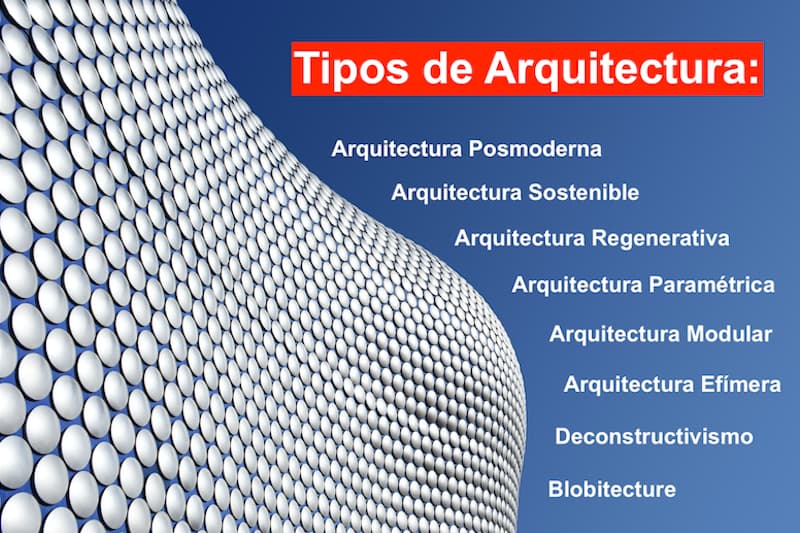
Tipos de Arquitectura: Explorando Más Allá de los Diseños Convencionales

FRASES DE ARQUITECTOS

Roles Arquitectura y Construcción (Profesiones Arquitectura)

Certificaciones para Arquitectos: Avanzando en la Excelencia Profesional

Roles BIM más Demandados en la Industria de la Construcción y el Sector AECO

Software BIM para Proyectos de Arquitectura y Construcción

Tecnología BIM: Beneficios y Ventajas en el sector AECO: Arquitectura, Ingeniería, Construcción y Operaciones

Modelo BIM

Modelo MEP

BIM 3D 4D 5D 6D 7D

AECO: Sector Arquitectura, Ingeniería, Construcción y Operaciones

Avances Tecnológicos en la Industria de la Construcción

Normas Técnicas de Edificación

!Explora el Mejor Directorio de Construcción! 🚧 🏗️ 👷♂️ (Sólo en ArquitecturaCarreras.com)


- CATEGORÍAS DE CURSOS ONLINE
▷ Formación online
▷ Cursos online
▷ Domestika Cursos
▷ Domestika cupón descuento
▷ Cursos de Arquitectura online
▷ Cursos online de Ilustración
▷ Cursos online de Diseño gráfico
▷ Cursos online de Fotografía y Vídeo
▷ Cursos online de 3D y Animación
▷ Cursos de Diseño online
▷ Cursos online de Dibujo
▷ Cursos online de Bellas Artes
▷ Cursos online de Dirección de Arte
- CURSOS ONLINE DOMESTIKA (POR SOFTWARE)
▷ AutoCAD
▷ SketchUp
▷ 3ds Max
▷ Adobe Photoshop
▷ Adobe Illustrator
▷ Adobe After Effects
▷ Adobe Lightroom
▷ Cinema 4D
▷ Adobe Indesign
LOS MEJORES CURSOS ONLINE PARA CREATIVOS | CURSOS DOMESTIKA
- ÚLTIMAS RESEÑAS CURSOS DOMESTIKA
 ▷ Curso Revit Online, por Majo Mora
 ▷ Curso de AutoCAD Online, por Isabel Martínez Abascal
 ▷ Curso SketchUp online, por Alejandro Soriano
 ▷ Curso Infoarquitectura 3D, por Amo Visual 3D
 ▷ Curso de Lumion, por Salva Moret


www.jmhdezhdez.com
(Blog sobre Arquitectura y Arte)
