- Inicio
- Ecosistema AECO
- _ATLAS AECO
- __Mapa Global Obras
- __Serie Const. Vanguardistas
- _Estudios de Arquitectura
- __en Madrid
- __en Barcelona
- _Estudios de Ingeniería
- __en Madrid
- _Estudios de Interiorismo
- __en Madrid
- __en Barcelona
- _Empresas Constructoras
- __en Madrid
- __en Barcelona
- _Empresas de Reformas
- __en Madrid
- _Empresas AECO en España
- __Fabricantes de Materiales
- __Modelado BIM
- __Software BIM
- __ Mediciones y Presupuesto
- __Consultoras BIM
- __Inmobiliarias y Real Estate
- __Investment & Transactions
- __Investment & Capital
- __Const. Industrializada
- __Neoconstrucción
- __Inversión y Des. de Suelo
- __CDE y Gestión Documental
- __Laboratorios AECO
- _Biblioteca Técnica AECO
- __Glosario AECO Global
- __Glosario de Construcción
- __Glosario de Edificación
- __Glosario BIM GTB-300
- __Edificación Circular
- _Entrevistas AECO
- __Jaime Sánchez-Álvarez
- _Visibilidad B2B
- __Premium Multicategoría
- __Ficha Corporativa B2B
- __Partners AECO
- Arquitectura
- _RASCACIELOS
- __Burj Khalifa Dubai
- __Edificio Chrysler, NY
- _Estilos Arquitectónicos
- __Arquitectura Posmoderna
- __Deconstructivismo
- __Arquitectura High Tech
- Arte
- _Arte Universal
- _Arte Contemporáneo
- __Serge Marshennikov
- __Damian Lechoszest
- __John Kacere
- _Escultura
- __El Ángel del Norte
- __La Musa Dormida
- __Venus de Milo
- __Moisés de Miguel Ángel
- __Baldaquino de San Pedro
- __El rapto de Proserpina
- __La Verdad Velada
- __Perseo con cabeza de Medusa
- __Venus de Willendorf
- _Pintura
- __Capilla Sixtina
- __Cuadros Famosos
- __La Creación de Adán
- __Venus del Espejo Velázquez
- __Hipómenes y Atalanta
- __Venus Boticelli
- __Silla de van Gogh
- __Jugadores de Cartas Cézanne
- __Cabeza de Medusa Caravaggio
- __Impresionismo
- __Posimpresionismo
- _Historia
- __Edad Moderna
- Curiosidades
- _Arquitectura y Arte
- _Tumba de Miguel Ángel
- FRASES
- _Frases de la semana
- _Arquitectos
- __Frank Gehry
- _Escultores
- __Miguel Ángel Buonarroti
- __Bernini
- __Rodin
- _Pintores
- __Picasso
- __Vincent van Gogh
- __Cézanne
- __Claude Monet
- __Henri Matisse
- __René Magritte
- __Caravaggio
- __Miguel Ángel
- Formación AECO
- _Másteres en España
- __Másteres BIM en España
- __Másteres de Arquitectura
- __Másteres de Ingeniería
- __Másteres de Construcción
- __Másteres en Interiorismo
- __Másteres Inmobiliarios
- __Máster Facility Management
- __Másteres de Smart Building
- __Máster Energía y Edificación
- __Máster en Infraestructuras
- __Másteres en Urbanismo
- __M. Project Management
- __M. Construcción Sostenible
- __M. Instalaciones MEP
- _Cursos BIM
- __Cursos BIM Online
- __Cursos Revit Online
- __Cursos Revit MEP online
- _Partner de Formación AECO
- _Formación AECO Empresas
- __en España
- __Capacitación en México
- __en Colombia


Arquitectura, Ingeniería, Construcción y Real Estate; tecnología AECO, metodología BIM, software AEC, modelado BIM, CDE, construcción industrializada, neoconstrucción, fabricantes de materiales y sistemas constructivos; empresas constructoras, promotoras inmobiliarias, fabricantes, proveedores y soluciones para el sector; investigación técnica, Atlas de Arquitectura e Innovación AECO, directorios profesionales y glosarios técnicos; Smart Home, Smart Building, diseño, arte, fotografía arquitectónica, ciudades, edificios, infraestructuras y cultura arquitectónica.
Architecture, Engineering, Construction and Real Estate; AECO technology, BIM methodology, AEC software, BIM modelling, CDE, industrialized construction, advanced construction, building materials manufacturers and construction systems; construction companies, real estate developers, manufacturers, suppliers and solutions for the industry; technical research, Atlas of Architecture and AECO Innovation, professional directories and technical glossaries; Smart Home, Smart Building, design, art, architectural photography, cities, buildings, infrastructure and architectural culture.

Agbar Tower: The Bioclimatic Geyser That Transformed Barcelona’s Skyline

Series: Avant-Garde Constructions
Masterpieces of Architecture and Engineering: #25 Agbar Tower, Barcelona
Is it possible for a membrane made of 60,000 glass louvers to transform a concrete colossus into a breathing organism facing the Mediterranean?
In the heart of the 22@ District, Barcelona’s technological enclave, French architect Jean Nouvel designed not just an office tower, but a manifesto on 21st-century High-Tech Architecture and energy efficiency. Inspired by the rocky formations of the Montserrat Mountains and the architectural legacy left by Antoni Gaudí, the Agbar Tower—officially known today as Glòries Tower following the water company’s departure and its conversion into a dynamic multi-tenant hub—is a masterpiece of thermal engineering where the material ceases to be inert to become an active climate control device.

The Agbar Tower stands splendidly in the innovation district as an avant-garde high-rise that acts as a powerful urban catalyst. Located next to the confluence of Diagonal Avenue and Gran Via at the Plaça de las Glòries Catalanes, this cylindrical colossus not only acts as an architectural beacon redefining the city’s skyline, but also serves as a nexus connecting Poblenou’s industrial past with the contemporary dynamism of a densely interconnected urban fabric.

The Glòries Challenge: Foundations and Hydrogeological Control
Glòries Tower sits on terrain with an extremely high water table due to its proximity to the coast and the deltaic nature of Barcelona’s subsoil. To execute the four below-grade basement levels under conditions of absolute water tightness, a complex civil containment system was designed prior to excavation.
Perimeter Slurry Walls and Counterwalls: A double reinforced concrete barrier below grade was executed, consisting of perimeter diaphragm walls up to 1.20 meters thick and an integrated interior counterwall, guaranteeing absolute water tightness against the lateral pressure of the aquifer.
Sealing Concrete Plug: To block vertical groundwater infiltration, the base was consolidated using high-pressure grouting (jet-grouting), creating a water-tight horizontal bottom plug.
Hydrostatic Uplift: The foundation slab, a massive reinforced concrete mat foundation, was dimensioned with a critical thickness and passive anchoring to counteract the water's upward buoyancy (Archimedes' principle), preventing flotation or destabilization phenomena during both the construction phase and the tower's lifespan.

Structural Duality: The Double Ovoid Cylinder
Unlike conventional skyscrapers featuring a rigid central core, the Agbar Tower in Barcelona is based on a structural system of two non-concentric oval reinforced concrete cylinders:
The Eccentric Core: The inner cylinder houses building services and the vertical circulation of stairs and elevators. Its off-center position optimizes interior space, allowing for open-plan layouts that adapt to the building's complex curvature.
The Load-Bearing Envolope: The outer cylinder is not a simple enclosure; it is a structural element perforated by 4,500 windows, some fixed and others top-hung or tilt-and-turn. This configuration allows the load to be distributed perimetrally, freeing the internal space from intermediate columns and providing total spatial flexibility.

Construction Logic: The Climbing Formwork System
The complex geometry of the outer envelope, which progressively reduces its cross-section as it gains height while maintaining a variable elliptical floor plan, demanded a highly specialized formwork engineering solution. The thickness of the concrete decreases from 50 cm at the base to 25 cm at the upper levels.
To execute this design without structural discontinuities, a computer-guided climbing formwork system was used. This self-elevating mechanism advanced vertically in modular cycles, adapting the metallic panels down to the millimeter to the angle of inclination and curvature of each floor.

Construction phase: Low-angle view showing the integrated interaction between the independent central core and the perforated elliptical facade. Without interior columns, structural bracing via radial beams stabilizes both concrete walls and prepares the support for the floor slabs, executed at a steady pace using PERI ACS self-climbing technology (hydraulic self-climbing formworks).
This construction synchronization, which combined the use of ACS R, G, and P variants along with VARIO wall formwork, allowed the execution of the elevator cores to be independent of the exterior facade. Thanks to the system's high load capacity for safely lifting platforms and heavy concreting equipment, the project achieved an optimal industrial cadence, completing a regular cycle of one structural floor every 5 days.

The great structural challenge was not the height of 144 meters, but resolving the stability of a variable elliptical shape without a single interior column. Each floor is completely unique, and the perimeter concrete wall works in solidarity with the eccentric core, absorbing an immense axial load through a densely perforated grid.
— Robert Brufau (BOMA)

The layout and positioning of the more than 4,500 window openings arranged in an irregular pixelated pattern were coordinated using digital surveying typography and steel templates integrated into the formwork, ensuring that the openings did not compromise the axial load transmission of the bearing skin. Furthermore, to guarantee the hygrothermal performance of the enclosure, perimetral weatherstripping and sealing bands were executed framing each window. “I sought a certain dematerialization through the overlapping of layers. The interior concrete provides the chromatic nuances and the weight, while the exterior glass louvers capture the last rays of the sun and create an aura of lightness.”, Jean Nouvel

The tower changes its skin and behavior starting from the 26th floor. We had to devise a millimeter-precise transition ring to transfer the loads from a heavy, monolithic structure to a crown of lightweight trusses exposed to the maximum force of coastal winds. It is not an aesthetic hat; the metallic dome functions as a rigid damper against bending stresses at the building's crown.
— Agustí Obiol

The Steel Dome: Structural Transition at the Summit
From level 26 (26th floor) upward, the configuration of the double reinforced concrete cylinder is interrupted to lighten the building's dead load in its final section and finish its silhouette as an ogive dome. Levels 26 to 34 are resolved through a purely steel structure and a glass diaphragm.
The load transfer between the concrete shaft and the upper crown is executed through a transition ring with steel plates and high-strength bolts. This shear connection absorbs the tensile and compressive demands generated by wind loads. From this ring, a three-dimensional space frame structure unfolds, made of radial trusses and tubular steel ribs that converge at the top vertex. This lightweight skeleton not only supports the glazed enclosure but also acts as a rigid damper against bending moments at the summit of the building.
Other Issues in the Series:
ISSUE #01 | Burj Khalifa: The Wind Code
Stepping technique: how geometric variation tames vortices at 828 meters.
ISSUE #16 | Infinity Bridge: The Geometry of Technical Resilience
Expedition Engineering & Chris Wise: A prodigy of structural lightness merging biomimicry with reactive precision engineering.
ISSUE #18 | MAC Niterói: The Paradox of the Central Support
How can 5,500 tons be supported by a single 2.74-meter pier? A technical analysis of the symbiosis between Niemeyer and Contarini: from bedrock anchoring to the structural behavior of the prestressed radial system.
ISSUE #19 | Alamillo Bridge: The Triumph of Gravity and Counterweight
How does a giant stand without backstays? A technical journey through Santiago Calatrava's pylon cross-section and box girder. The absolute equilibrium between sculpture and civil engineering.

The "Bio-Skin": Glass as a Thermal Diaphragm
If concrete is the skeleton supporting the 144-meter-tall structure, glass is the soul and lungs of the project. The facade is a true masterpiece of building envelope engineering:

Double-Skin Geometry: The building features a water-tight interior wall and an exterior skin composed of 59,619 tempered glass louvers, varying between transparent and translucent finishes.

The Chromatic Prism: Beneath the glass layer, Nouvel arranged lacquered aluminum sheets in 40 different colors (including shades of red, blue, green, and gray). The glass acts as an optical filter that diffracts light, generating that vibrating "liquid geyser" effect that shifts according to the sun's angle and the observer's viewpoint.

The tower is not a skyscraper in the North American sense of the term; it is a unique experience in the middle of a calm city. It is a pressurized geyser, permanent and finely metered. The building's surface evokes water: a smooth, continuous texture, yet also vibrant, luminous, and full of nuances. This architecture springs from the earth but lacks the heavy burden of stone.
— Jean Nouvel

Media Architecture: Integrating the Luminous Skin
The facade functions not only as a thermodynamic regulator but also as a visual communication canvas at an urban scale based on the "glowing geyser" concept. An integrated architectural lighting system was designed between the interior painted concrete skin and the exterior glass louver curtain wall, developed in collaboration with light artist Yann Kersalé.
Grounded in the conceptual framework of "Un métaphare de l'eau" (a water meta-lighthouse), the system comprises more than 4,500 independently computer-controlled RGB LED devices to recreate the fluid effect of moving water at night. The translucent glass louvers and aluminum panels of the facade function as natural optical diffusers, expanding the light beam and preventing direct outward glare.
This design significantly mitigates skyward and upward light pollution, while simultaneously leveraging the ventilated air cavity to dissipate waste heat generated by the electronic components of the fixtures, protecting the entire system from summer overheating.

Passive Thermodynamics: The Chimney Effect
The true technical depth lies in its natural cooling system, a textbook example of sustainable architecture and energy efficiency:
Technical Air Cavity: The void between the concrete core wall and the glass envelope functions as an active thermal insulator.
Automated Ventilation: The building incorporates 4,349 integrated openings within the glass facade, dynamically managed via localized temperature sensors.
Natural Convection: Cool air enters at the base, and as it warms up within the intermediate cavity, it rises due to the chimney effect, passively exhausting thermal heat toward the top steel and glass dome. This process drastically reduces the building's thermal load and the demand for mechanical HVAC conditioning.
Sustainability Comparison: Glòries Tower (Agbar) vs. O-14 Tower
| Technical Parameter | Agbar Tower (Barcelona) | O-14 Tower (Dubai) |
|---|---|---|
| Outer Skin (Filter) | Adjustable glass louvers and aluminum sheets lacquered in 40 colors. | Perforated reinforced concrete exoskeleton (1,300 openings) functioning as a structural brise-soleil. |
| Intermediate Cavity | Perimetral ventilated air cavity. | 1-meter-deep open airspace. |
| Inner Skin | Perimetral curtain wall featuring over 4,500 pixelated windows. | Continuous high-performance glass curtain wall. |
| Fluid Mechanics | Hot air is passively exhausted through the upper steel and glass dome. | The stack effect pulls hot air upward toward the crown before it transfers heat to the inner glass window. |

Specifications and Industrial Solutions
AGENTS & PARTNERS| Component | Partner / Brand | Detailed Technical Execution |
|---|---|---|
| Structural Engineering (Design) | BAC Engineering Consultancy Group + Robert Brufau y Asociados |
Matrix behavior modeling of the reinforced concrete double ovoid cylinder and modulation of its 4,500 perforations. |
| Structural Engineering (Record) | Obiol, Moya i Associats | Engineer of Record responsible for final mechanical validation and the calculation of the upper steel dome. |
| Formwork Systems | PERI | Supply and technical assistance of PERI ACS (R, G, and P) self-climbing hydraulic systems and VARIO wall formwork, enabling independent execution of the core and facade at a pace of 1 structural floor every 5 days. |
| Main Contractor | Dragados | Acted as General Contractor to coordinate complex concreting logistics and the physical execution of the tower in the 22@ District. |
| Facade Engineering | Permasteelisa Group | Consulting, assembly, and technical execution of the perimetral ventilated double-skin system with 59,619 tensioned glass louvers. |
| Building Services (MEP) | Axima Sistemas e Instalaciones S.A. + Gepro S.A. |
Complete design and deployment of mechanical, electrical, and fluid systems to automate openings and establish the passive chimney effect. |
| Asset Management (Current) | Merlin Properties | Institutional owner in charge of management, commercial leasing, and technical optimization of the property in the corporate real estate market. |
| Historical Ownership | Agbar Group (Emin Capital / Westmont Hospitality) |
Original developers and key stakeholders in successive investment, development, and real estate asset equity restructuring phases. |
Are you the manufacturer, installer, or specifier for any of these components?
Request the activation of your partner link by writing to:
info@jmhdezhdez.com

View of the Glòries Tower (Agbar) from the rooftop of the Media-TIC Building in the 22@ District: a visual dialogue between two major benchmarks of bioclimatic architecture in Barcelona.
Glass and Wind: Architecture as a Living Organism
The Agbar Tower, now known as Glòries Tower, is definitive proof that a skyscraper does not have to be a sealed thermal box. By fusing the structural mass and thermal inertia of reinforced concrete with the lightness of a vibrant glass membrane, Jean Nouvel achieved something unusual: a high-rise building that actively interacts with its environment rather than defending itself against it.
It stands as a masterclass in structural honesty and passive efficiency, where color and luminosity are not mere aesthetic whims, but the direct result of a thermodynamic engine that breathes alongside the city. Barcelona did not just gain a visual icon, but a pioneering bioclimatic landmark proving that technology, when accurately applied, can be as organic as nature itself.
I wanted to create an element that truly belonged to the Barcelona skyline. There is a direct connection to the forms of Montserrat, to the pinnacles that Gaudí translated into the Sagrada Família. It is a vertical reinterpretation of that heritage.
— Jean Nouvel
Frequently Asked Questions about Glòries Tower (formerly Agbar Tower):
How does the "Double Oval Cylinder" structural system function mechanically?
The tower eliminates intermediate column supports through a hybrid system consisting of two non-concentric reinforced concrete cylinders. The interior core houses vertical transportation and services, while the exterior cylinder acts as a perimetral load-bearing wall. Its 4,500 openings distribute gravity and wind loads uniformly across the facade, clearing the floor plates to provide total spatial flexibility.
What technical function does the intermediate air cavity serve?
The space between the airtight concrete inner skin and the glass outer curtain wall functions as a dynamic thermal cushion. This cavity isolates the load-bearing core and prevents direct conductive heat transfer into the office spaces, drastically reducing the building's overall cooling load.
How does the "Chimney Effect" operate in passive cooling?
It relies on an automated natural convection mechanism: the building manages 4,349 motorized glass louvers linked to thermal sensors. Cool air enters at the base, and as it absorbs heat within the intermediate cavity, it naturally rises until it is exhausted through the upper dome, dissipating thermal gains without relying on mechanical HVAC systems.
Why is the tower's structure classified as a Composite system?
Due to the material transition at its crown: the first 26 levels are executed in monolithic reinforced concrete, whereas the uppermost levels and the elliptical dome are resolved with a lightweight structural steel frame. This engineering approach minimizes dead weight at higher elevations and optimizes the skyscraper's performance against wind-induced lateral stresses.
What technical role do the glass louvers and aluminum sheets play?
The 59,619 tempered glass louvers act as an optical diaphragm that screens direct solar radiation. Positioned over aluminum panels lacquered in 40 different colors, the glass diffracts incident sunlight, thermally safeguarding the building envelope while generating its signature visual effect of shifting reflections.
AECO Architecture & Engineering Glossary | Agbar Tower (Glòries Tower), Barcelona
Bioclimatic Architecture: A structural design philosophy focused on optimizing surrounding environmental conditions (sunlight, wind, humidity) to achieve maximum indoor thermal comfort while minimizing reliance on active mechanical systems.
Dynamic Air Cavity: An intermediate technical buffer zone located between an airtight inner wall and an outer glass skin that acts as a thermal blanket and a vertical fluid conduit.
Natural Convection: A passive thermodynamic phenomenon whereby warm air, being less dense than cold air, autonomously rises, generating suction currents and continuous fresh air changes.
Ventilated Double-Skin: A building envelope assembly composed of two distinct layers separated by an airspace. It functions as a thermal shield against direct solar radiation and significantly improves acoustic insulation.
Stack / Chimney Effect: A passive ventilation process leveraging temperature-driven density differentials between warm indoor air and cooler outdoor air to drive continuous air movement and exhaust heat through the top of a building.
Composite Structure: A structural typology combining two distinct materials to act structurally as one (in this case, a reinforced concrete lower core and structural steel profiles forming the upper dome) to optimize dead weight and tensile capacity.
Dynamic Glazed Cladding: An exterior skin layout engineered with motorized, tempered transparent and translucent glass louvers. Controlled by environmental sensors, they adjust their angle of inclination to optimize daylight penetration and solar shading.
Eccentric Core: A structural core arrangement housing vertical circulation and utilities that is intentionally offset from the building's geometric center to maximize usable floor space and columns-free layouts.
Load-Bearing Perforated Wall: A cylindrical outer envelope of reinforced concrete that resists vertical gravity and lateral wind-induced overturning loads, featuring an irregular pixelated matrix of openings to free interior layouts from intermediate columns.
Series: Avant-Garde Constructions | jmhdezhdez.com

José Miguel Hernández Hernández
International benchmark in the technical analysis of iconic and sculptural architecture. Specialized in the intersection of structural engineering, aesthetics, and avant-garde design. Author of the bilingual technical books Turning Torso – Santiago Calatrava and Construcciones Famosas / Famous Constructions.

Publicado por José Miguel


José Miguel Hernández Hernández
Consultor Smart Home y Movilidad Eléctrica AECO
Servicios Destacados
⚡ Consultoría Movilidad Eléctrica
Proyectos CICE e ITC-BT-52.
🎓 Formación BIM / AECO
Especialización técnica avanzada.
📩 Suscripción Nodo Maestro
Innovación y normativa Smart.


Ecosistemas Smart Home por Tipología Guías técnicas y selección de dispositivos para proyectos de arquitectura e interiorismo en Pisos, Lofts, Casas Grandes, Dúplex, Áticos y Villas de Lujo. Integra automatización adaptada a cada espacio.
Ver Guía por Tipologías →
Directorio de Fotógrafos de Arquitectura en España: Descubre a los Mejores Expertos en Fotografía Arquitectónica para Documentar tus Proyectos y Obras

Fotografía Arquitectónica: La Guía Definitiva para Capturar Diseño, Estética y Función de Edificios y Estructuras

Fotografía y Vídeo Timelapse

El Rol del Fotógrafo de Arquitectura

Cámaras Réflex y Objetivos Tilt-Shift para Fotografía de Arquitectura

Estilos Arquitectónicos Modernos: Un Viaje a Través de la Creatividad y la Innovación

ARQUITECTURA CARRERA: Descubre todas las Opciones de la Carrera en Arquitectura y Grados en España

Comparativa de las Mejores Universidades de Arquitectura del Mundo: Internacional, Europa, LATAM

Los Mejores Libros de Arquitectura para Arquitectos

Libros para Estudiar Arquitectura

Libros para Arquitectos Principiantes: Guías y Recursos Esenciales para Comenzar tu Carrera

Los Mejores Libros de Arquitectura para Estudiantes durante la Carrera

Era Digital de la Construcción: Innovaciones Tecnológicas en Arquitectura y Edificación

Comparativa de Los Mejores Ordenadores para Arquitectos en 2024

Las Mejores Laptops para Arquitectura en 2024

Los Mejores Ordenadores de Arquitectura para Estudiantes

Significado de: Términos Clave sobre Arquitectura, Ingeniería y Construcción

Arquitectos: Descubre el Mejor Directorio de Arquitectos que podrás encontrar en Internet (Sólo en AC)
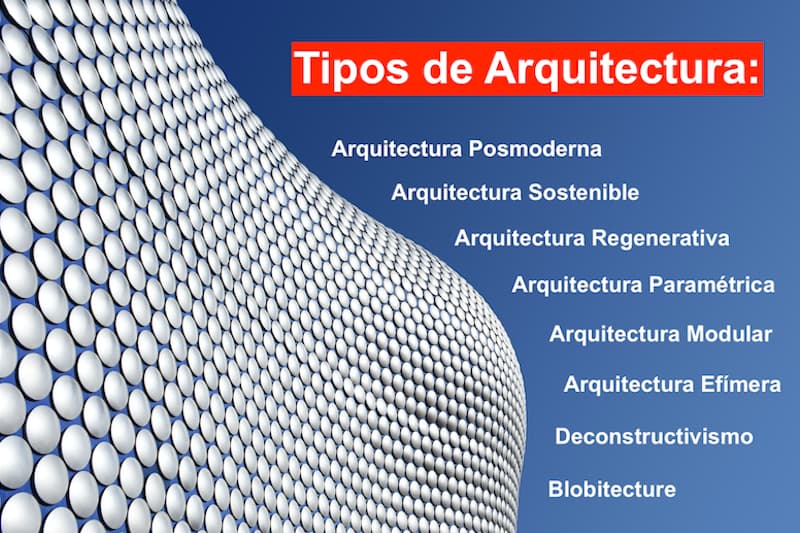
Tipos de Arquitectura: Explorando Más Allá de los Diseños Convencionales

FRASES DE ARQUITECTOS

Roles Arquitectura y Construcción (Profesiones Arquitectura)

Certificaciones para Arquitectos: Avanzando en la Excelencia Profesional

Roles BIM más Demandados en la Industria de la Construcción y el Sector AECO

Software BIM para Proyectos de Arquitectura y Construcción

Tecnología BIM: Beneficios y Ventajas en el sector AECO: Arquitectura, Ingeniería, Construcción y Operaciones

Modelo BIM

Modelo MEP

BIM 3D 4D 5D 6D 7D

AECO: Sector Arquitectura, Ingeniería, Construcción y Operaciones

Avances Tecnológicos en la Industria de la Construcción

Normas Técnicas de Edificación
!Explora el Mejor Directorio de Construcción! 🚧 🏗️ 👷♂️ (Sólo en ArquitecturaCarreras.com)


www.jmhdezhdez.com
Arquitectura, Ingeniería y Documentación Técnica AECO
